Chart comparing James, Proverbs and Jesus (see the full article on this subject by referring to the post called: James, a transitional primer echoing the words of Jesus and Proverbs to Jewish people)
An indication that James is writing with Jewish people in mind is his constant use of terms and ideas from the book of Proverbs. In fact, some have called James the Proverbs of the New Testament. A significant number of the issues the writer of Proverbs addresses are the same issues James addresses. “James is like the book of Proverbs because of its pithy, practical, and pointed counsel regarding the importance of harmonizing one’s walk with one’s talk! Though James is a letter, with its many wise sayings its tone is similar to that of Proverbs.”
James also overlaps consistently with the words of Jesus, from using many of the same ideas to using the exact same wording! This is not surprising since both Jesus and James are dealing with similar issues facing Jewish people and their relationship with God and with one another.
2. Difficult or negative themes: Testing/temptation/tempt/entice/cause to sin, death, murder/kill/shed blood, sin/sinner, evil, devil/satan, world/ungodly/wicked, pleasure, desire, adultery doubt, birth
3. Virtues: Wisdom, know/you know, patience/perseverance/stand firm, faith/trust, prayer, pure/purity/purify, righteous/upright/do right, confess/repent, fear of the Lord/live in fear of God, (Good) fruit, firstfruits
4. God/Lord/Father, bless/blessing/blessed, law, Sum of law: love others, God’s/Jesus’ Word, truth, judge/judgment, save
5. Good counsel: riches, the Poor, tomorrow, listen, life, swearing/vows, our spirit
6. Vocatives
7. Realm of nature: Wind, withering grass/fading flowers, fire, water, figs/olives, sow/ harvest, rain, heaven/sky/God’s realm, sun
The following is a chart for easy reference to see how James, Proverbs and what Jesus said overlaps.
Key term
James
Proverbs
Jesus
Relational terms
Tongue
1:26: If anyone considers himself religious and yet does not keep a tight rein on his tongue, he deceives himself and his religion is worthless. 3:1-12
17:20: A man of perverse heart does not prosper; he whose tongue is deceitful falls into trouble. 6:16, 10:19-20: 13:3, 15:2, 15:4, 18:21, 18:28, 21:6, 21:23, 25:15, 25:23, 26:28, 28:23, 31:26
Does not use the word “tongue” literally. See next section on speech acts
Word/Speech/say/speak
3:2: We all stumble in many ways. If anyone is never at fault in what he says, he is a perfect man, able to keep his whole body in check. 1:3, 1:22-23, 2:3, 2:16, 2:18, 3:2, 4:13, 4:15
8:8: All the words of my mouth are just; none of them is crooked or perverse. 8:7: My mouth speaks what is true, for my lips detest wickedness. 22:1 He who loves a pure heart and whose speech is gracious will have the king for his friend. word=30+X
Mat. 12:36-37: But I tell you that men will have to give account on the day of judgment for every careless word they have spoken. 37For by your words you will be acquitted, and by your words you will be condemned.” Mat. 5:22, 6:7, 6:31, 7:4, 7:21-23, 12:33-37, 17:20-22, Lk. 6:45, 12:10
Quarrels/fights/grumble/slander
4:1-2: “What causes fights and quarrels among you? Don’t they come from your desires that battle within you? 2You want something but don’t get it. You kill and covet, but you cannot have what you want. You quarrel and fight. You do not have, because you do not ask God.” 2:7, 4:11, 5:9
17:14: Starting a quarrel is like breaching a dam; so drop the matter before a dispute breaks out. 10:18, 13:10, 15:18, 17:19, 20:3, 22:10, 26:20, 30:10
Mat. 15:19: For out of the heart come evil thoughts, murder, adultery, sexual immorality, theft, false testimony, slander. Mk. 7:22
Anger/hot-tempered/hot headed
1:19-20: My dear brothers, take note of this: Everyone should be quick to listen, slow to speak and slow to become angry, for man’s anger does not bring about the righteous life that God desires.
29:11: A fool gives full vent to his anger, but a wise man keeps himself under control. 15:1, 20:2, 21:14, 22:24, 27:4, 29:8, 30:33 hot tempered: 14:6, 15:8, 19:19, 22:24, 29:22
Mat. 5:22: But I tell you that anyone who is angry with his brother will be subject to judgment. 18:34
Favoritism/discrimination/oppress/contempt vs. the poor
2:1,4: My brothers, as believers in our glorious Lord Jesus Christ, don’t show favoritism. have you not discriminated among yourselves and become judges with evil thoughts? 2:9, 5:4-6
14:31: He who oppresses the poor shows contempt for their Maker, but whoever is kind to the needy honors God. 17:5: He who mocks the poor shows contempt for their Maker; whoever gloats over disaster will not go unpunished. 22:16, 28:3, 29:13
Lk.14:12-14: (13: But when you give a banquet, invite the poor, the crippled, the lame, the blind, and you will be blessed.) Lk. 14:8-10
Humble/humility
4:10: Humble yourselves before the Lord, and he will lift you up. 4:6: But he gives us more grace. That is why Scripture says: “God opposes the proud but gives grace to the humble.
22:4: Humility and the fear of the Lord bring wealth and honor and life. 3:34, 6:3,, 15:33, 18:12
Mat. 23:12: For whoever exalts himself will be humbled, and whoever humbles himself will be exalted. Mat. 11:29, 18:4
pride/proud
4:6: But he gives us more grace. That is why Scripture says: “God opposes the proud but gives grace to the humble. 1:9-10
8:13: To fear the Lord is to hate evil; I hate pride and arrogance, evil behavior and perverse speech. 3:34, 11:2, 18:12, 21:24, 29:23
See exalt verses below.
Boast/exalt
4:16: As it is, you boast and brag. All such boasting is evil. 3:5, 3:14
27:1: Do not boast about tomorrow, for you do not know what a day may bring forth. 25:14, 25:26, 30:22
Mat. 23:12: For whoever exalts himself will be humbled, and whoever humbles himself will be exalted. (X3)
Judge (one another)
4:11-12: Brothers, do not slander one another. Anyone who speaks against his brother or judges him speaks against the law and judges it. When you judge the law, you are not keeping it, but sitting in judgment on it. There is only one Lawgiver and Judge, the one who is able to save and destroy. But you—who are you to judge your neighbor? 2:4
31:9: Speak up and judge fairly; defend the rights of the poor and needy.”
Mat. 7:1-5: Do not judge, or you too will be judged. 2For in the same way you judge others, you will be judged, and with the measure you use, it will be measured to you. Lk. 6:37, Jn. 8:15
Deceive
1:22: Do not merely listen to the word, and so deceive yourselves. Do what it says. 1:16, 1:26
24:28: Do not testify against your neighbor without cause, or use your lips to deceive. 14:15, 26:19
24:24: For false Christs and false prophets will appear and perform great signs and miracles to deceive even the elect—if that were possible. Mat. 24:4-5, 24:11.
Envy
3:16: For where you have envy and selfish ambition, there you find disorder and every evil practice. 3:14
14:30: A heart at peace gives life to the body, but envy rots the bones. 3:31, 23:17, 24:1
3:9: With the tongue we praise our Lord and Father, and with it we curse men, who have been made in Godʼs likeness.
20:20: If a man curses his father or mother, his lamp will be snuffed out in pitch darkness. 3:33, 11:26, 28:27, 30:11
Lk. 6:8: bless those who curse you, pray for those who mistreat you. (Mat. 5:44), Mat. 15:4, 25:41
Peacemakers/seek peace
3:18: But the wisdom that comes from heaven is first of all pure; then peace-loving, considerate, submissive, full of mercy and good fruit, impartial and sincere. Peacemakers who sow in peace raise a harvest of righteousness. 3:17
12:20: There is deceit in the hearts of those who plot evil, but joy for those who promote peace. 3:17,
Mat. 5:8: Blessed are the peacemakers, for they will be called sons of God.
Love
2:8: If you really keep the royal law found in Scripture, “Love your neighbor as yourself,” you are doing right. 1:12, 2:5
10:12: Hatred stirs up dissension, but love covers over all wrongs. 3:12, 8:17, 8:21, 14:22, 15:9, 16:6, 21:21
Mat. 12:37-40: Jesus replied: “ ‘Love the Lord your God with all your heart and with all your soul and with all your mind.’ This is the first and greatest commandment. And the second is like it: ‘Love your neighbor as yourself.’ All the Law and the Prophets hang on these two commandments.” Mat. 12:18, 24:12, Lk. 11:42, Jn. 13:34, 14:15, 14:21, 14:23-24, 15:9-10, 15:12-13, 15:17, 16:27
Mercy
3:17: But the wisdom that comes from heaven is first of all pure; then peace-loving, considerate, submissive, full of mercy and good fruit, impartial and sincere. 2:13, 5:11
18:23: A poor man pleads for mercy, but a rich man answers harshly. 21:10, 28:13
Mat. 5:7: Blessed are the merciful, for they will be shown mercy. Mat. 9:13, 12:7, 23:23, Mk. 5:19
Neighbor
2:8: If you really keep the royal law found in Scripture, “Love your neighbor as yourself,” you are doing right. 4:12b: But you—who are you to judge your neighbor?
3:29: Do not plot harm against your neighbor, who lives trustfully near you.
19:19: honor your father and mother,’ and ‘love your neighbor as yourself.’”
Workers (deserve their wages)
5:4: Look! The wages you failed to pay the workmen who mowed your fields are crying out against you. The cries of the harvesters have reached the ears of the Lord Almighty.
12:14: From the fruit of his lips a man is filled with good things as surely as the work of his hands rewards him. (31:9: Speak up and judge fairly; defend the rights of the poor and needy.”)
Lk. 10:7: Stay in that house, eating and drinking whatever they give you, for the worker deserves his wages. Do not move around from house to house.
2. Difficult or negative themes
Testing/temptation/tempt, entice, cause to sin
1:13-14: When tempted, no one should say, “God is tempting me.” For God cannot be tempted by evil, nor does he tempt anyone; 14but each one is tempted when, by his own evil desire, he is dragged away and enticed. 1:2, 1:12,
1:10: My son, if sinners entice you, do not give in to them. 16:29, 17:13, 27:21,
Mat. 6:13:And lead us not into temptation, but deliver us from the evil one.’ Mat. 18:6, 26:41, Lk. 22:46
Death
1:15: Then, after desire has conceived, it gives birth to sin; and sin, when it is full-grown, gives birth to death. 5:20
14:12: There is a way that seems right to a man, but in the end it leads to death. 10:2, 11:4, 11:19, 13:14, 14:27, 18:21, 19:18, 21:25, 23:14, 24:11 die-7X
Jn. 5:24: “I tell you the truth, whoever hears my word and believes him who sent me has eternal life and will not be condemned; he has crossed over from death to life. Jn. 8:51. Die=6:49-50, 58, 8:21,24, 11:25-6. 12:24
Murder/kill/shed blood
2:11: For he who said, “Do not commit adultery,” also said, “Do not murder.” If you do not commit adultery but do commit murder, you have become a lawbreaker. 4:2b: You kill and covet, but you cannot have what you want. 5:6: You have condemned and murdered innocent men, who were not opposing you.
1:16: for their feet rush into sin, they are swift to shed blood. 28:17: A man tormented by the guilt of murder will be a fugitive till death; let no one support him. 29:10: Bloodthirsty men hate a man of integrity and seek to kill the upright.
Mk. 7:21: For from within, out of men’s hearts, come evil thoughts, sexual immorality, theft, murder, adultery, Mk. 10:19a: You know the commandments: ‘Do not murder, do not commit adultery,
Sin/sinner
1:15: Then, after desire has conceived, it gives birth to sin; and sin, when it is full-grown, gives birth to death. 2:9, 4:8, 4:17, 5:15-16, 5:20
29:16: When the wicked thrive, so does sin, but the righteous will see their downfall. 1:10, 1:16, 5:22, 10:19, 11:31, 12:13, 13:21-22, 14:9, 14:21, 14:34, 16:6, 17:19, 20:9, 21:4, 23:17, 24:9, 28:13, 29:6, 29:16, 29:22
Mat. 13:41: The Son of Man will send out his angels, and they will weed out of his kingdom everything that causes sin and all who do evil. Mat. 6:15, 9:13, 18:15, 23:32, 26:28, Lk.6:23-24, 7:47, 11:4, 15:7, 17:1-3, 17:3-4, 24:47, Jn. 8:24,16:8-9, 20:23,
Evil
1:13-14: For God cannot be tempted by evil, nor does he tempt anyone; but each one is tempted when, by his own evil desire, he is dragged away and enticed. 1:21, 2:4, 3:6, 3:8, 4:16
11:6: The righteousness of the upright delivers them, but the unfaithful are trapped by evil desires. 45X
Mat. 15:19: For out of the heart come evil thoughts, murder, adultery, sexual immorality, theft, false testimony, slander. 25X
Devil/Satan
3:15: Such “wisdom” does not come down from heaven but is earthly, unspiritual, of the devil. 4:7: Submit yourselves, then, to God. Resist the devil, and he will flee from you.
No direct reference
Jn. 8:44: You belong to your father, the devil, and you want to carry out your fatherʼs desire. He was a murderer from the beginning, not holding to the truth, for there is no truth in him. When he lies, he speaks his native language, for he is a liar and the father of lies. Mat. 11:39, 25:41, Jn. 6:70. Satan: Mat. 4:10, 12:26-27, 16:23, Mk. 3:23, 4:15, Lk. 10:18, 13:16, 22:31
World (ungodly/wicked)
4:4: You adulterous people, don’t you know that friendship with the world is hatred toward God? Anyone who chooses to be a friend of the world becomes an enemy of God.
11:31: If the righteous receive their due on earth, how much more the ungodly and the sinner! 5:22: The evil deeds of a wicked man ensnare him; the cords of his sin hold him fast.
Jn. 14:17: the Spirit of truth. The world cannot accept him, because it neither sees him nor knows him. But you know him, for he lives with you and will be in you. Jn. 15:19: If you belonged to the world, it would love you as its own. As it is, you do not belong to the world, but I have chosen you out of the world. That is why the world hates you. 17:15: My prayer is not that you take them out of the world but that you protect them from the evil one. 100X
Pleasure
4:3: When you ask, you do not receive, because you ask with wrong motives, that you may spend what you get on your pleasures.
10:23a: A fool finds pleasure in evil conduct,
Lk. 8:14: The seed that fell among thorns stands for those who hear, but as they go on their way they are choked by life’s worries, riches and pleasures, and they do not mature.
Desire
1:14: But each one is tempted when, by his own evil desire, he is dragged away and enticed.
11:6: The righteousness of the upright delivers them, but the unfaithful are trapped by evil desires. 6:25 (lust)
Mk. 4:19: but the worries of this life, the deceitfulness of wealth and the desires for other things come in and choke the word, making it unfruitful. Mat. 5:28 (lust)
Adultery
2:11: For he who said, “Do not commit adultery, also said, “Do not murder.” If you do not commit adultery but do commit murder, you have become a lawbreaker.
6:32: But a man who commits adultery lacks judgment; whoever does so destroys himself. 6:24, 26, 29, 7:10-27 Wayward: 20:16, 27:13, Indescreet: 11:22
Mt. 5:27-28: “You have heard that it was said, ‘Do not commit adultery.’28But I tell you that anyone who looks at a woman lustfully has already committed adultery with her in his heart. Mat. 5:32, 5:19, 19:9, 19:18
Doubt
1:6: But when he asks, he must believe and not doubt, because he who doubts is like a wave of the sea, blown and tossed by the wind.
?
Mat. 21:21: Jesus replied, “I tell you the truth, if you have faith and do not doubt, not only can you do what was done to the fig tree, but also you can say to this mountain, ‘Go, throw yourself into the sea,’ and it will be done. Lk. 24:38, Jn. 20:27
Birth (both good and bad)/produce
1:15: Then, after desire has conceived, it gives birth to sin; and sin, when it is full-grown, gives birth to death. 1:18
30:33: For as churning the milk produces butter, and as twisting the nose produces blood, so stirring up anger produces strife.” Many verses of actions leading to good or bad consequences.
Jn. 3:16: Flesh gives birth to flesh, but the Spirit gives birth to spirit.
3. Virtues
Wisdom
3:13-18: Who is wise and understanding among you? Let him show it by his good life, by deeds done in the humility that comes from wisdom. But if you harbor bitter envy and selfish ambition in your hearts, do not boast about it or deny the truth. Such “wisdom” does not come down from heaven but is earthly, unspiritual, of the devil. For where you have envy and selfish ambition, there you find disorder and every evil practice. But the wisdom that comes from heaven is first of all pure; then peace-loving, considerate, submissive, full of mercy and good fruit, impartial and sincere. Peacemakers who sow in peace raise a harvest of righteousness.
4:5-7: Get wisdom, get understanding; do not forget my words or swerve from them. Do not forsake wisdom, and she will protect you; love her, and she will watch over you. Wisdom is supreme; therefore get wisdom. Though it cost all you have, get understanding. 59X
Lk. 21:15: For I will give you words and wisdom that none of your adversaries will be able to resist or contradict. Mat. 7:24, 11:19, 24:45, 25:1-8, Lk. 7:35, 11:31, 11:49, 12:42,
Know/You know
4:14: Why, you do not even know what will happen tomorrow. What is your life? You are a mist that appears for a little while and then vanishes. 1:3, 3:1, 4:4, 5:11
27:1: Do not boast about tomorrow, for you do not know what a day may bring forth. 4:19, 10:32, 27:1 knowledge-50X
Mat. 24:42: “Therefore keep watch, because you do not know on what day your Lord will come. Mat. 7:11, 9:6, 11:27, 12:7, 16:3, 20:22, 20:25, 22:29, 24:33, 24:26, 25:13
Patience, persevere, perseverance/stand firm
5:7-11: Be patient, then, brothers, until the Lord’s coming. See how the farmer waits for the land to yield its valuable crop and how patient he is for the autumn and spring rains. You too, be patient and stand firm, because the Lordʼs coming is near. Don’t grumble against each other, brothers, or you will be judged. The Judge is standing at the door! Brothers, as an example of patience in the face of suffering, take the prophets who spoke in the name of the Lord. As you know, we consider blessed those who have persevered. You have heard of Job’s perseverance and have seen what the Lord finally brought about. The Lord is full of compassion and mercy.
10:25: When the storm has swept by, the wicked are gone, but the righteous stand firm forever. 12:7, 14:29, 15:18, 16:32, 19:11, 25:15
Mat. 24:12-13: Because of the increase of wickedness, the love of most will grow cold, but he who stands firm to the end will be saved. Mat. 10:22,, Mk. 13:13, Lk. 21:19.
Faith/Trust
2:22-24: You see that his faith and his actions were working together, and his faith was made complete by what he did. And the scripture was fulfilled that says, “Abraham believed God, and it was credited to him as righteousness,” and he was called God’s friend. You see that a person is justified by what he does and not by faith alone. 1:3, 2:5, 2:14, 2:17-20, 2:26, 5:15
3:5: Trust in the Lord with all your heart and lean not on your own understanding; 3:5, 11:28, 16:20, 22:29, 28:25-26, 29:25 Faithful/unfaithful 17X
Jn. 14:1: “Do not let your hearts be troubled. Trust in God; trust also in me. Mat. 6:30b, 8:10b, 8:26b, 9:22, 9:29-30a, 13:58, 15:28, 16:8, 17:20, 20:21, 24:10, Mk. 16:14, Lk. 17:5, 18:8, 22:32, Jn. 14:12
Prayer
5:13-18: Is any one of you in trouble? He should pray. Is anyone happy? Let him sing songs of praise. Is any one of you sick? He should call the elders of the church to pray over him and anoint him with oil in the name of the Lord. And the prayer offered in faith will make the sick person well; the Lord will raise him up. If he has sinned, he will be forgiven. Therefore confess your sins to each other and pray for each other so that you may be healed. The prayer of a righteous man is powerful and effective.
15:29: The Lord is far from the wicked but he hears the prayer of the righteous. 15:8, 28:29
Mk. 11:24: Therefore I tell you, whatever you ask for in prayer, believe that you have received it, and it will be yours.
Mat. 11:25: And when you stand praying, if you hold anything against anyone, forgive him, so that your Father in heaven may forgive you your sins.” 40+X
Pure/purity/purify
4:8: Come near to God and he will come near to you. Wash your hands, you sinners, and purify your hearts, you double-minded. 1:27, 3:17
15:26: The Lord detests the thoughts of the wicked, but those of the pure are pleasing to him. 20:9, 2011, 22:11, 30:12
Mat. 5:8: Blessed are the pure in heart, for they will see God.
Righteous/upright/do right
2:8: If you really keep the royal law found in Scripture, “Love your neighbor as yourself,” you are doing right. 2:23: And the scripture was fulfilled that says, “Abraham believed God, and it was credited to him as righteousness,” and he was called God’s friend. 1:20, 2:21, 25, 3:18, 5:16
8:20: I walk in the way of righteousness, along the paths of justice, 15:9: The Lord detests the way of the wicked but he loves those who pursue righteousness. 100X
5:6: Blessed are those who hunger and thirst for righteousness, for they will be filled. 50X
Confess/repent
5:16: Therefore confess your sins to each other and pray for each other so that you may be healed. The prayer of a righteous man is powerful and effective.
28:13: He who conceals his sins does not prosper, but whoever confesses and renounces them finds mercy.
Mk. 1:5: The time has come,” he said. “The kingdom of God is near. Repent and believe the good news!” Lk. 17:3: “If your brother sins, rebuke him, and if he repents, forgive him. 4If he sins against you seven times in a day, and seven times comes back to you and says, ‘I repent,’ forgive him.” Mat. 4:17, 11:20-21, 12:41, 21:32, Mk. 1:15, Lk. 5;32, 13:3,5, 15:7, 15:10, 16:30, 24:47
Fear of the Lord/live in fear of God
2:12-13: Speak and act as those who are going to be judged by the law that gives freedom, 13because judgment without mercy will be shown to anyone who has not been merciful. Mercy triumphs over judgment! 4:4-10, 5:1-5
1:7: The fear of the Lord is the beginning of knowledge, but fools despise wisdom and discipline. 11 more X
Lk. 12:5: But I will show you whom you should fear: Fear him who, after the killing of the body, has power to throw you into hell. Yes, I tell you, fear him.
(Good) Fruit/firstfruits
3:17: But the wisdom that comes from heaven is first of all pure; then peace-loving, considerate, submissive, full of mercy and good fruit, impartial and sincere. 1:18 (firstfruits)
11:30: The fruit of the righteous is a tree of life, and he who wins souls is wise. 8:19, 12:14, 13:2, 18:21
Jn. 15:8: This is to my Fatherʼs glory, that you bear much fruit, showing yourselves to be my disciples. Mat. 7:16-20, 12:33, 13:22, 21:43, Jn. 15:2, 15:4-5, 15:16
4. God, His Word, Law, Truth
God/Lord/Father
4:10: Humble yourselves before the Lord, and he will lift you up. Lord=14X God=20X Father=1:17, 1:27, 3:9
3:33-34: The Lord’s curse is on the house of the wicked, but he blesses the home of the righteous. 34He mocks proud mockers but gives grace to the humble. 22:4: Humility and the fear of the Lord bring wealth and honor and life. Lord=95X God-10X Father 3X
Mat.11:25: At that time Jesus said, “I praise you, Father, Lord of heaven and earth, because you have hidden these things from the wise and learned, and revealed them to little children. Mk. 12:29: The most important one,” answered Jesus, “is this: ‘Hear, O Israel, the Lord our God, the Lord is one. 30Love the Lord your God with all your heart and with all your soul and with all your mind and with all your strength. Lord ?X God ?X Father ?X
Bless, blessing, blessed
1:12: Blessed is the man who perseveres under trial, because when he has stood the test, he will receive the crown of life that God has promised to those who love him.
16:20: Whoever gives heed to instruction prospers, and blessed is he who trusts in the Lord. 20X
5:10: Blessed are those who are persecuted because of righteousness, for theirs is the kingdom of heaven. 35X
Law
2:10-12: For whoever keeps the whole law and yet stumbles at just one point is guilty of breaking all of it. For he who said, “Do not commit adultery,” also said, “Do not murder.” If you do not commit adultery but do commit murder, you have become a lawbreaker. Speak and act as those who are going to be judged by the law that gives freedom,
28:4: Those who forsake the law praise the wicked, but those who keep the law resist them. 28:7, 28:9, 29:18, 31:5
Mat. 7:12: So in everything, do to others what you would have them do to you, for this sums up the Law and the Prophets. Mat. 5:17-18, 11:13, 12:5, 12:12, 22:40, 23:23, Mk. 2:26, 3:4, 10:5, Lk. 10:26, 16:7, 24:44, Jn. 7:19, 7:23, Jn. 8:17, 10:34, 15:25
Sum of law: Love neighbor/others
2:8-9: If you really keep the royal law found in Scripture, “Love your neighbor as yourself,” you are doing right. But if you show favoritism, you sin and are convicted by the law as lawbreakers.
10:2 Hatred stirs up dissension, but love covers over all wrongs.
Mat. 22:37-40: “ ‘Love the Lord your God with all your heart and with all your soul and with all your mind.’ This is the first and greatest commandment. And the second is like it: ‘Love your neighbor as yourself.’ All the Law and the Prophets hang on these two commandments.”
(God’s/Jesus’) Word
1:8, 20: He chose to give us birth through the word of truth, that we might be a kind of firstfruits of all he created. Therefore, get rid of all moral filth and the evil that is so prevalent and humbly accept the word planted in you, which can save you. Do not merely listen to the word, and so deceive yourselves. Do what it says. Anyone who listens to the word but does not do what it says is like a man who looks at his face in a mirror and, after looking at himself, goes away and immediately forgets what he looks like.
30:5-6: Every word of God is flawless; he is a shield to those who take refuge in him. Do not add to his words, or he will rebuke you and prove you a liar.
Jn. 17:17: Sanctify them by the truth; your word is truth. Mat. 4:4: Jesus answered, “It is written: ‘Man does not live on bread alone, but on every word that comes from the mouth of God.’” Mat. 7:24, 26, 12:7, 13:20-23, 15:6, 24:35, 27:35, Mk. 7:13, 8:38, 13:31, Lk. 11:28, Jn. 5:24, 5:38, 6:63, 8:37, 8:51, 8:55, 10:35, 12:47-48, 14:10, 14:24, 15:3, 15:7, 15:20, 17:6, 17:8, 17:14
Truth
1:18: He chose to give us birth through the word of truth, that we might be a kind of firstfruits of all he created. 3:14, 5:19
23:23: Buy the truth and do not sell it; get wisdom, discipline and understanding. 16:13 Truthful: 12:7, 12:19, 12:22, 14:5
Jn. 8:31-32: If you hold to my teaching, you are really my disciples. Then you will know the truth, and the truth will set you free.” Jn. 17:17: Sanctify them by the truth; your word is truth. Jn. 3:21, 4:23-24, 5:33, 7:18, 8:40, 8:44-46, 14:6 I tell you the truth 78X
Judge, judgment
5:9: Donʼt grumble against each other, brothers, or you will be judged. The Judge is standing at the door! 2:12, 3:1, 4:12
31:9: Speak up and judge fairly; defend the rights of the poor and needy.” Judgment as wisdom: 10:21b: fools die for lack of judgment. 15+X
Mat 7:1-2: Do not judge, or you too will be judged. For in the same way you judge others, you will be judged, and with the measure you use, it will be measured to you. 30+
Save
1:21: Therefore, get rid of all moral filth and the evil that is so prevalent and humbly accept the word planted in you, which can save you.
2:12: Wisdom will save you from the ways of wicked men, from men whose words are perverse, 2:16, 14:25, 23:14
Mt. 10:22: All men will hate you because of me, but he who stands firm to the end will be saved. Lk. 9:10: For the Son of Man came to seek and to save what was lost.” Jn. 12:47b: For I did not come to judge the world, but to save it. 20X
5. Good Counsel
Riches
1:10-11: But the one who is rich should take pride in his low position, because he will pass away like a wild flower. For the sun rises with scorching heat and withers the plant; its blossom falls and its beauty is destroyed. In the same way, the rich man will fade away even while he goes about his business
11:28: Whoever trusts in his riches will fall, but the righteous will thrive like a green leaf. 23:5: Cast but a glance at riches, and they are gone, for they will surely sprout wings and fly off to the sky like an eagle. 20+X
Mat. 6:19-21: Do not store up for yourselves treasures on earth, where moth and rust destroy, and where thieves break in and steal. But store up for yourselves treasures in heaven, where moth and rust do not destroy, and where thieves do not break in and steal. For where your treasure is, there your heart will be also. Riches: Mk. 10:24, Lk. 8:14, 16:11 Rich: Mat. 19:23-24, Lk. 6:24, 12:16, 12:1, 14:12, 16:1, 16:21-22
The Poor
2:5-6a: Listen, my dear brothers: Has not God chosen those who are poor in the eyes of the world to be rich in faith and to inherit the kingdom he promised those who love him? 6But you have insulted the poor. 2:2-6
14:31: He who oppresses the poor shows contempt for their Maker, but whoever is kind to the needy honors God. 30+X
Lk. 14:L13: But when you give a banquet, invite the poor, the crippled, the lame, the blind, 14and you will be blessed. Although they cannot repay you, you will be repaid at the resurrection of the righteous.” 20+X
Tomorrow
4:13-15: Now listen, you who say, “Today or tomorrow we will go to this or that city, spend a year there, carry on business and make money.” Why, you do not even know what will happen tomorrow. What is your life? You are a mist that appears for a little while and then vanishes. Instead, you ought to say, “If it is the Lord’s will, we will live and do this or that.”
27:1 Do not boast about tomorrow, for you do not know what a day may bring forth. 3:28
Mat. 6:34: Therefore do not worry about tomorrow, for tomorrow will worry about itself. Each day has enough trouble of its own. 6:30, 34, Lk. 13:32-33
Listen
1:22-23: Do not merely listen to the word, and so deceive yourselves. Do what it says. Anyone who listens to the word but does not do what it says is like a man who looks at his face in a mirror.
22:17: Pay attention and listen to the sayings of the wise; apply your heart to what I teach, 27X
Jn. 10:27: My sheep listen to my voice; I know them, and they follow me. Jn. 18:37b: Everyone on the side of truth listens to me.” 35X
Life
3:13: Who is wise and understanding among you? Let him show it by his good life, by deeds done in the humility that comes from wisdom. 1:12, 1:20, 3:6, 4:14
3:21-22: My son, preserve sound judgment and discernment, do not let them out of your sight; 22they will be life for you, an ornament to grace your neck. 49X
Jn. 6:63: The Spirit gives life; the flesh counts for nothing. The words I have spoken to you are spirit and they are life. 100X
Swearing/vows
5:12: Above all, my brothers, do not swear—not by heaven or by earth or by anything else. Let your “Yes” be yes, and your “No,” no, or you will be condemned.
20:25: It is a trap for a man to dedicate something rashly and only later to consider his vows.
Mat. 5:34-37: But I tell you, Do not swear at all: either by heaven, for it is God’s throne; 35or by the earth, for it is his footstool; or by Jerusalem, for it is the city of the Great King. 36And do not swear by your head, for you cannot make even one hair white or black. 37Simply let your ‘Yes’ be ‘Yes,’ and your ‘No,’ ‘No’; anything beyond this comes from the evil one.
Our spirit
2:26: As the body without the spirit is dead, so faith without deeds is dead. 4:5: Or do you think Scripture says without reason that the spirit he caused to live in us envies intensely?
20:7 The lamp of the Lord searches the spirit of a man; it searches out his inmost being.
Mt. 26:41: Watch and pray so that you will not fall into temptation. The spirit is willing, but the body is weak.” Lk. 23:46. Jn. 3:6, 4:23-24
6. Vocatives
5:1: Now listen, you rich people
___________________ 2:20: You foolish man,
__________________ 4:8b: purify your hearts, you double-minded. __________________ 4:4: You adulterous people
___________________ 3:13: Who is wise and understanding among you? Let him show it by his good life, by deeds done in the humility that comes from wisdom. -4:8: Wash your hands, you sinners
23:22: Listen to your father,
___________________ 8:5b: you who are foolish, gain understanding. __________________
__________________
___________________ 23:19: Listen, my son, and be wise, and keep your heart on the right path.
-8:4 To you, O men, -8:5 you simple ones My son (many) -6:3b: Go and humble yourself -6:5: Free yourself, like a gazelle -6:6: Go to the ant, you sluggard; consider its ways and be wise! -1:22: “How long will you simple ones love your simple ways? How long will mockers delight in mockery and fools hate knowledge?
Mat. 15:10: Jesus called the crowd to him and said, “Listen and understand ___________________ Lk. 11:40: You foolish people! Did not the one who made the outside make the inside also? _________________. Mat. 7:5, 15:7, 22:18: Hypocrite! Mat. 23:13-29: Scribes and Pharisees, hypocrites! ___________________ Mat. 16:14: A wicked and adulterous generation looks for a miraculous sign, ___________________ 7:24: Therefore everyone who hears these words of mine and puts them into practice is like a wise man who built his house on the rock. Mat. 3.7; 12.34; 23.33 Brood of vipers -Mat 9:2 My child, -Mat. 9:22 Daughter -Mat. 15:28 Woman. -Mat. 6:30; 8.26; 14.31; 16.8: people of little faith. -Mat.23.16, 24: “blind guides” -Mat. 23:17: blind fools -Mt. 23.19: blind men -Mat.17:17: faithless generation -Mat. 26:50 My friend (to Judas)
Realms of Nature
Wind (instability)
1:6: But when he asks, he must believe and not doubt, because he who doubts is like a wave of the sea, blown and tossed by the wind.
25:14: Like clouds and wind without rain is a man who boasts of gifts he does not give.
11:7: What did you go out into the desert to see? A reed swayed by the wind?
Withering grass and fading flowers
1:10-11: But the one who is rich should take pride in his low position, because he will pass away like a wild flower. 11For the sun rises with scorching heat and withers the plant; its blossom falls and its beauty is destroyed. In the same way, the rich man will fade away even while he goes about his business.
27:25: When the hay is removed and new growth appears and the grass from the hills is gathered in,
Mat. 6:30: If that is how God clothes the grass of the field, which is here today and tomorrow is thrown into the fire, will he not much more clothe you, O you of little faith?
Fire
3:5-6: Likewise the tongue is a small part of the body, but it makes great boasts. Consider what a great forest is set on fire by a small spark. The tongue also is a fire, a world of evil among the parts of the body. It corrupts the whole person, sets the whole course of his life on fire, and is itself set on fire by hell.
16:27: A scoundrel plots evil, and his speech (tongue) is like a scorching fire. 6:27, 30:16b
Jn. 15:6: If anyone does not remain in me, he is like a branch that is thrown away and withers; such branches are picked up, thrown into the fire and burned. Mat. 5:22, 13:40, 18:8-9, 25:41, Mk. 9:48, Lk. 12:49, 17:29
water
3:11-12: Can both fresh water and salt water flow from the same spring? 12My brothers, can a fig tree bear olives, or a grapevine bear figs? Neither can a salt spring produce fresh water.
18:4: The words of a man’s mouth are deep waters, but the fountain of wisdom is a bubbling brook. 14X
Jn. 7:38: Whoever believes in me, as the Scripture has said, streams of living water will flow from within him.” 35+X
Figs (Olives)
3:12: 12My brothers, can a fig tree bear olives, or a grapevine bear figs? Neither can a salt spring produce fresh water.
27:18: He who tends a fig tree will eat its fruit, and he who looks after his master will be honored.
Mat. 17:16: By their fruit you will recognize them. Do people pick grapes from thornbushes, or figs from thistles? 9X
Sow, harvest
3:18: Peacemakers who sow in peace raise a harvest of righteousness.
11:18: The wicked man earns deceptive wages, but he who sows righteousness reaps a sure reward. 22:8: He who sows wickedness reaps trouble, and the rod of his fury will be destroyed.
13:37: He answered, “The one who sowed the good seed is the Son of Man. 38The field is the world, and the good seed stands for the sons of the kingdom. 17 (not including PP)
Rain
5:8: Be patient, then, brothers, until the Lord’s coming. See how the farmer waits for the land to yield its valuable crop and how patient he is for the autumn and spring rains. 5:17-18
16:15: When a king’s face brightens, it means life; his favor is like a rain cloud in spring. 16:15, 25:14, 25:23, 26:1, 25:15, 28:3
Mat. 5:45: that you may be sons of your Father in heaven. He causes his sun to rise on the evil and the good, and sends rain on the righteous and the unrighteous. Mt. 7:25, 7:27, Lk. 12:54
Heaven/sky/God’s realm
5:18: Again he prayed, and the heavens gave rain, and the earth produced its crops. 3:17: But the wisdom that comes from heaven is first of all pure; then peace-loving, considerate, submissive, full of mercy and good fruit, impartial and sincere. 1:17, 3:15, 5:12
3:19: By wisdom the Lord laid the earth’s foundations, by understanding he set the heavens in place; 8:27: I was there when he set the heavens in place, when he marked out the horizon on the face of the deep, 30:4a: Who has gone up to heaven and come down? 25:3 (Earth: 3:19, 8:16, 8:26, 8:29, 11:31, 17:24, 25:3, 26:23, 30:4, 30:14, 30:21, 30:24)
Mk. 14:62: “I am,” said Jesus. “And you will see the Son of Man sitting at the right hand of the Mighty One and coming on the clouds of heaven.” 5:16: In the same way, let your light shine before men, that they may see your good deeds and praise your Father in heaven. 11:25a: At that time Jesus said, “I praise you, Father, Lord of heaven and earth, 152X
sun
1:11: For the sun rises with scorching heat and withers the plant; its blossom falls and its beauty is destroyed. In the same way, the rich man will fade away even while he goes about his business.
–
Mat. 13:6: But when the sun came up, the plants were scorched, and they withered because they had no root. Mat. 5:45, 13:43, 24:29
The following is what I shared during the Rolling Hills (Meadowbrook, Ohio) Distinguished Alumni Celebration on April 22, 2023.
Good evening. When Kim said she was going to nominate me for this I was very surprised and humbled, thinking “Are you serious? Then when I was selected, I was even more humbled and overwhelmed. Thank you to the committee, and also to Kim. Looking at the list of some of the previous inductees, seeing the hero veterans and service-folks, educators, medical professionals, amazing athletes (in fact my fellow inductees were star athletes at the school), the sports legends, I said wow. I scored a total of two points in my illustrious sports career. One point for 3rd in the 880 in 8th grade where we tied the meet, and I kicked an extra point in a reserve game my sophomore year, crucial since we won 33-0 instead of 32-0. I may have set a record by being cut from the 7th grade, 8th grade and 12th grade basketball teams.
Coach McGrew gave me a chance to be on the varsity football kick-off team my junior year, though that play was over in five seconds of game time on the other side of the field. But on Monday I was the starting running back and linebacker for the Reserve team. On one of the first plays I went around left end and gained, 3,5,7 yards, but my blocker stopped in front of me, I was tackled from behind, almost broke my ankle and was out for the season.
Kim mentioned I was voted most shy and the most spirited. I was so awkward around girls, my mind just went blank! (I wrote a book about that! A serious comedy, a bit like this talk.) As for “spirited”, I was a big mouth at the games. But I have always thought that most spirited may have had a double meaning because of being “religious”. I had gone to church for as long as I can remember. Before my Senior year I went to that Christian music festival at Asbury, Kentucky, where I made a drastic change from knowing about Jesus to knowing Him personally. Then came the Bible verses on the bulletin board and the invocation and benediction at graduation. I thank my pastor, the late Louise Rogers, who was such a help to me. Of course I cannot fail to mention the influence my Dad had on me. He passed away this past December. He was a man of honesty, integrity and treated people with the upmost fairness, building his businesses by word of mouth alone.
As for my teachers, Kim mentioned Mr. Lyons, my FFA teacher for four years, who was a man of the upmost integrity and also a man of deep faith. Kim also mentioned Mrs. Bryant, my college prep research teacher. I wanted to do a presentation using my lamb on Jesus as the Good shepherd, the lost sheep, Psalm 23, and she agreed. But when I went to the principal’s office to get permission to leave, he refused so she marched down to his office, I could hear them “discussing it”, then she came out and said, “Go get your lamb!”
After graduation I went to Malone College in Canton to study to be a preacher. However during college I found out that at least 3000 languages in the world have no Bible, and basically nothing in their language, and, knowing how important the Bible was to me, thought that was so sad. At that time small Byesville had 12 churches, so maybe I could go overseas where there was great need. But to help people have the Bible in their own language, you had to take graduate classes in linguistics, of which I knew nothing about. However they had a summer session in North Dakota so I went, thinking I could go see some prairie dogs, flunk out there, then maybe go and be a Bible teacher somewhere overseas. Among various classes, we studied how to learn an unwritten language. Here they told us of a colleague who had arrived to a village in a canoe and, wanting to quickly begin learning the language, pointed to the canoe to get their word for that. They said numa. She wrote that down “numa”, canoe. Then she pointed at a tree and again they said numa. Thinking she must be getting the word for wood, she pointed at some grass and they said numa again. Turns out in that culture you point with your chin, and numa meant finger.
By a miracle I passed these classes, and during the third and final semester in Dallas, you have to decide what country you want to go to. Kim mentioned that I had spent 6 weeks in the Philippines so I put that first, then Papua New Guinea where there are at least 800 language groups, the South Pacific (because who doesn’t want to translate on the beach) and Anywhere. They assigned me to Mexico.
Mexico had stopped giving resident visas to foreigners, but Wycliffe thought I could handle that for some reason, so I first went to Mexico on a tourist visa and got permission in 1986, so 37 years ago, for an overnight visit to one small Mixtec village in the state of Oaxaca.
There are over 7000 languages in the world. Mexico has 70 major languages (Nahuatl/Aztec, Mayan, Zapotec) plus their unintelligible variants, over 350 languages in total. One of these major languages, as Kim mentioned, is Mixtec, with its at least 60 variants representing a half a million people.
That night, in 1986, in this small Mixtec village, I met a man named Sebastian, and when he learned I wanted to learn Mixtec to help them make books, including translating the Bible into Mixtec, he was willing to go with me the next day to a large far away tourist city to help me because I could not stay in the village. Sebastian only had a second grade education, leaving school to start living a hard life plowing the rocky fields and making palm baskets, which sold for a little over a dollar a dozen. When he was in his 50’s a school teacher came to the town and started a Bible study. Sebastian had learned some basic Spanish, but his wife and many of the others attending this study did not know any Spanish at all. So he went out, bought a notebook, invented his own alphabet of this previously unwritten language and began translating his favorite passages into Mixtec so people could understand them. He says the first time he read it to the people, they cried. This is the person God led me to that first night in the village, when I had to leave the next day.
After three years of very brief visits and taking relatives of Sebastian to Tucson to learn their language and culture, Mexico began to give study visas which permitted me to actually live in Sebastian’s village. It was during this time in Tucson that I met Judith, who had also prepared to be a linguist/translator. We married and began this adventure together.
Our times in this first village, where we spent 22 years, were filled with the friendliness and hospitality of the people. It was basic living, at first the outhouse was a block down the road, there was an outside spigot for water (though when it rained there was running water inside), we had a dirt floor in our house and there were no phones in the village. We continued working with Sebastian and others in the village, learning this unwritten language, analyzing the grammar, developing the alphabet, making basic literacy books, a primer and going door to door with the new publications.
I am non-musical (even though I sang: Thank God I’m a Country Boy” at a school gong show since I looked a lot like John Denver) so it was a challenge since Mixtec is a tonal language, so ndoꞌo̱ means basket, ndo̱ꞌo means adobe, ndóꞌo̱ means tail, ndoꞌó means you all, ndóꞌo means it is happening, and ndoꞌo mean it will happen. So a tonal language like Chinese.
My wife Judith is the more gifted linguist, and working with Mixtec speakers, compiled a grammar book of the language and later a Mixtec-Spanish dictionary. The New Testament was eventually finished and recorded and there was a celebration of the book in 2008. I am much less shy when talking in Mixtec and can say that my best friends in the world are the Mixtec people I have gotten to know over the years. My love of sports led to playing on the town basketball team, which led to relationships with team members and people in other villages in the area where outsiders are normally not very welcome. (Though young and quick beats tall and slow!) I am actually considered tall there, 5’10 ½’’.
I have been a translation consultant for over 20 years, teaching workshops and helping teams from different languages throughout Mexico with their translations, and in 2009 I was assigned as a consultant in residence for the Ayutla Mixtec language project. As Kim mentioned, over 10,000 Mixtec people live in 36 mountain villages a couple hours from Acapulco, and it is one of the poorest and most monolingual areas in Mexico. Working with two Mixtec coworkers, we made books and the NT was recorded and a celebration was held in 2017. Work continues on the first 39 books of the Bible.
There are still many minority languages in the world without any written material. Many of these groups have been marginalized, including many outsiders saying these languages are not real languages, just a bunch of grunts. One of joys of this work has been to see people valuing their language and culture, of not being ashamed to be Mixtec and to speak the Mixtec language. This is their mother tongue, and it speaks to the heart.
Besides the written publications, both these Mixtec variants now have many materials on the internet and for their cell phones, including Play Store apps and YouTube videos of songs. We also distribute Scripture audio players to the many villages.
Kim suggested I could given so advice, so as for advice I could give, judging ourselves and comparing ourselves to others can be one of the most destructive things we can do. May we have enough confidence so that if people bully us, shame us, say things that “could” offend us, are better athletes than us (you can see I can relate to all of these!), better-looking than us, are more talented than us, make more money than us, have more “fun” than us, may we just let them do their thing while we move forward, improving ourselves where we can, being content and staying true to our values and our convictions.
I was so shy, I was rejected by many sports teams, I felt isolated and at times ignored, but while that was not “fun”, it did not deter me. Most things of worth in life are achieved not by going through the easy way, but via suffering, hard times and disappointments. We need to have people in our lives we respect who will help us in such times. That is so important, having people come along beside us, and the other inductees mentioned special people, including teachers, who helped them along the way.
The values of honesty, being helpful, treating people with respect, were instilled in me by my parents (I am thankful my mom is here with me tonight, and my Dad looking down from heaven). Along with that, my personal guide is the Bible, my relationship with Jesus, my Savior, and my aim is for His teachings to be the foundation of all I do. And if I screw up, I acknowledge it, ask Him for forgiveness and move on.
I thank the Lord for all the people He has placed in my life, from both the US and Mexico, who have helped me so much. With God, no matter whatever crazy things are going on around us or to us, there is a rock, a foundation, a peace that passes all understanding, an eternal hope. The most faithful people of the Bible were the ones who suffered the most. It is almost certain that things are going to get harder and harder and I pray that you take the time and the effort to make sure you have a firm foundation to make it through. Thank you very much and God bless.
Joni Erickson was seventeen years old when she dove off a pier in a lake, hit a rock underneath the water and was paralyzed from the shoulders down. She was a Christian and this shook her faith. As time went on many Christians prayed for her to be able to walk again. She believed God could do that but it never happened. Many people communicated to her that her lack of healing was caused by a lack of faith or hidden sin. She just didn’t believe enough that God would heal her, they said.
Is that what the Bible says about suffering, that if we just believe enough we can basically “make” God heal us or deliver us from hard times? Did Joni just lack having enough faith? Was God’s grace not sufficient enough?
The following are some examples from the Bible that deal with this. In this world we experience many problems. Most of us have undoubtedly passed through times of suffering, sickness, distress or abuse, “weaknesses” which we felt we could not bear, so it is something we all must deal with and generates many questions and doubts about God and His love.
Jesus
When we are in the middle of difficult times we may be able to relate to Jesus’ statement that it is like “a cup of suffering.” He was about to suffer greatly over the next twenty-four hours with the mocking, beating, abuse and inhumane crucifixion. His greatest suffering was revealed when He said, “My God, my God, why have you forsaken me?” All the sins of the world were placed on Him; He died in our place; and for a short time He was made to be sin. He became an anathema. While in Gethsemane Jesus knew what lay ahead and Mark 14:36 shares how He faced the situation, praying: “Abba, Father,” he cried out, “everything is possible for you. Please take this cup of suffering away from me. Yet I want your will to be done, not mine.”
Jesus prayed that those awful coming hours would be taken away. Luke says He was sweating blood, a sign of extreme stress. He returned three times to pray the same thing and still endured unspeakable suffering.
Jesus’ example for us was to ask God for deliverance. We may yearn for deliverance, cry for it, plead for it, pray over and over about it, rebuke the devil. We can also search our own heart for unforgiveness or other sins. Jesus was sinless and yet still suffered. But in the end, no matter what let us, like Jesus, keep loving God, keep seeking His will, rest in His grace and never doubt that He loves us. Jesus told his disciples to prepare for hard times, warning them in John 16:33: “I have told you all this so that you may have peace in me. Here on earth you will have many trials and sorrows. But take heart, because I have overcome the world.”
Paul declares in Romans 8:35: “Who shall separate us from the love of Christ?” He then goes on to list fifteen things that cannot separate us from His love, ending with: “nor anything else in all creation, will be able to separate us from the love of God that is in Christ Jesus our Lord.” This passage makes it clear that no matter what is happening to us (trouble or hardship or persecution or famine or nakedness or danger or sword, etc.), no matter what the devil or the world throws at us, God is with us and still loves us unconditionally. He does so because of what Jesus did for us by enduring that cup of suffering and giving His life to die in our place, restoring our relationship with God.
It takes more faith to be faithful and to rest in His love when we are not healed, when we do not receive the miracle, the deliverance. God has promised us His unfailing love, joy, peace, hope, eternal life, His presence (you are not alone!). He does heal! He does do miracles! But how do we respond when it doesn’t happen or “takes too long”? Will we keep loving and trusting Him no matter what? We may go through a season of doubt, our emotions may scream at us that we do not “feel” peace, nor joy nor hope. Depression may set in. But in the end, when the hard times come, let us cling to the truth of the Bible. We may not “feel” happy, it will definitely not be “fun”, but we can have a joy that passes all understanding.
We may have a hard time believing that God is truly loving because of traumatic experiences in the past. Countless prayers may have gone unanswered. We may have had negative experiences with religious people, grown up in a dysfunctional family situation, been physically or sexually abused, had a chronic illness for years, experienced the death of a loved one, or have felt alone and unloved, an outcast for so many years. We may have been involved in some really awful sin. We see the mess the world is in. These or other difficult experiences may have “soured” us to the idea of God’s love. It may be hard to believe but He was with us then and He is still here! He never leaves nor forsakes us. His power works best in weakness. Let us consider how Paul dealt with such disappointments in his life.
Paul
Paul is an amazing example of loving God no matter what and he shows us that there is nothing wrong with wholeheartedly asking God to remove the suffering, to pray about it over and over. What happened to Paul is another instance of where a great pillar of the faith asked for something, pleaded for something, but did not receive the answer he was hoping for.
“I have received such wonderful revelations from God. So to keep me from becoming proud, I was given a thorn in my flesh, a messenger from Satan to torment me and keep me from becoming proud. Three different times I begged the Lord to take it away. Each time he said, “My grace is all you need.My power works best in weakness.” So now I am glad to boast about my weaknesses, so that the power of Christ can work through me. That’s why I take pleasure in my weaknesses, and in the insults, hardships, persecutions, and troubles that I suffer for Christ. For when I am weak, then I am strong.” (2 Cor. 12:7-10)
Jesus compared His coming trials to “a cup of suffering.” Here Paul calls his “a thorn in the flesh.” You may have had what felt like thorns in the flesh. Paul asked three times for his thorn to be removed, like Jesus asked three times for the cup to be taken away. In both cases it didn’t happen. Did Paul lack faith? Did God stop loving him? Did he have some hidden sin! No. How did God respond to Paul?
“My grace is sufficient for you. My power works best in weakness.” Not the response we are usually seeking when we are praying for deliverance! Then Paul says a remarkable thing: “I take pleasure in my weaknesses, and in the insults, hardships, persecutions, and troubles that I suffer for Christ. For when I am weak, then I am strong.” When we have a personal, intimate, alive, loving relationship with God, after the praying, crying and pleading, like Paul, this is where we need to end up. Having a faith that He is there, that He loves me, His grace is sufficient for me. I am not alone.
When Paul thought he was going to die, he placed his life fully in the hands of God. “We think you ought to know, dear brothers and sisters, about the trouble we went through in the province of Asia. We were crushed and overwhelmed beyond our ability to endure, and we thought we would never live through it. In fact, we expected to die. But as a result, we stopped relying on ourselves and learned to rely only on God, who raises the dead. And he did rescue us from mortal danger, and he will rescue us again. We have placed our confidence in him, and he will continue to rescue us.” (2 Cor. 1:9-11)
In Acts 16 Paul and his coworker Silas were severely beaten and placed in the deepest, smelliest, most wretched part of the prison. But Paul did not moan nor complain. “Around midnight Paul and Silas were praying and singing hymns to God, and the other prisoners were listening. Suddenly, there was a massive earthquake, and the prison was shaken to its foundations. All the doors immediately flew open, and the chains of every prisoner fell off!” They sang, witnessing to the other prisoners. God rescued them and even the jailer came to faith because, filled with peace, they kept their eyes on Jesus!
The New Testament constantly speaks of Paul having this attitude as he served God. “Not that I was ever in need, for I have learned how to be content with whatever I have. I know how to live on almost nothing or with everything. I have learned the secret of living in every situation, whether it is with a full stomach or empty, with plenty or little. For I can do everything through Christ, who gives me strength.”
Notice that these “whatever circumstance” verses are the context of Philippians 4:13: “I can do all things through Christ who strengthens me.” Another way of stating this verse is, “By Jesus power/help, I can put up with/endure through anything.” Cold, hot, full, hungry, in prison (as he was in Acts and when he wrote this letter and others), free, sick, well, living, dying, rich, poor, homeless, married, single. Whatever is going on in my life I will keep loving God and know without a doubt that He loves me and will help me through it.
Other “circumstances”
“Five times I received from the Jews the forty lashes minus one. Three times I was beaten with rods, once I was stoned, three times I was shipwrecked, I spent a night and a day in the open sea, I have been constantly on the move. I have been in danger from rivers, in danger from bandits, in danger from my own countrymen, in danger from Gentiles; in danger in the city, in danger in the country, in danger at sea; and in danger from false brothers. I have labored and toiled and have often gone without sleep; I have known hunger and thirst and have often gone without food; I have been cold and naked. Besides everything else, I face daily the pressure of my concern for all the churches.” (2 Cor. 11:24-28)
For Paul, even death is not the worse thing that could happen to him. “I’m torn between two desires: I long to go and be with Christ, which would be far better for me. But for your sakes it is better that I continue to live.” (Phil. 1:23-24)
Even if your suffering seems to be leading to your death keep loving and trusting God. A number of times I visited friends who died within a month. I went to try and encourage them and they could not stop trying to encourage me, to be a blessing to me. In each case I left much more blessed and inspired by them than I was able to bless or encourage them. Their loving relationship with God before the trial was strong and so their faith in God was strong no matter what.
No matter the sin, there is forgiveness!
In 1 Timothy 1:15 Paul declares: “Christ Jesus came into the world to save sinners—of whom I am the worst.” No matter what we have done, there is forgiveness. Paul had a lot to repent of, seeking to persecute and kill many of Jesus’ followers. He reflects in wonder: “I was shown mercy so that in me, the worst of sinners, Christ Jesus might display his unlimited patience as an example for those who would believe on him and receive eternal life.” If we have repented we no longer need to live in guilt. God has wiped the record clean, shows grace and loves us no matter what we have done.
The disciples
Eleven of the twelve disciples, tradition says, died as martyrs. The Book of Acts details how much a number of them suffered just as Jesus said they would. John is the only one who apparently died a natural death. Tradition says he was thrown into a pot of boiling oil but escaped to the island of Patmos where he wrote the book of Revelation.
Acts 12:1-5 gives us pause to consider what happened to two of the disciples. “About that time King Herod Agrippa began to persecute some believers in the church. He had the apostle James (John’s brother) killed with a sword. When Herod saw how much this pleased the Jewish people, he also arrested Peter. (This took place during the Passover celebration.) Then he imprisoned him, placing him under the guard of four squads of four soldiers each. Herod intended to bring Peter out for public trial after the Passover. But while Peter was in prison, the church prayed very earnestly for him.”
James, the brother of John, whom we read about so much in the Gospels, a man Jesus invested so much of His life to teach and disciple (one of the big three of Peter, James and John), was suddenly killed by Herod. No miraculous deliverance, no instant resurrection. Dead. Then Herod arrested Peter and planned to kill him the next day. But in Peter’s case God sent an angel and saved him. We see prayer as a pivotal part of that as well as what we now know about God’s plan for his life. So why is it that God “let” Herod kill James but He intervened to save Peter? Did James lack faith? Did God love him less? Did he have some secret sin? No! We know Herod was evil, so in essence what happened to James was a consequence of Herod’s sin.
The Old Testament heroes of faith
Of the many Biblical examples of godly people suffering in this world consider Hebrews 11:35b-40, the chapter which tells us about the heroes of the faith. “But others were tortured, refusing to turn from God in order to be set free. They placed their hope in a better life after the resurrection. Some were jeered at, and their backs were cut open with whips. Others were chained in prisons. Some died by stoning, some were sawed in half, and others were killed with the sword. Some went about wearing skins of sheep and goats, destitute and oppressed and mistreated. They were too good for this world, wandering over deserts and mountains, hiding in caves and holes in the ground. All these people earned a good reputation because of their faith, yet none of them received all that God had promised. For God had something better in mind for us, so that they would not reach perfection without us.” This list alone should dispel any notion that suffering is necessarily caused by a lack of faith or the idea that God does not love us if trials are pounding us down.
There is a continual contrast in the Bible between heaven and the world. This world is governed and controlled in so many ways by the devil, who is called the god of this world. Through Jesus we can have victory over the devil. Yet this world is not heaven. Suffering is a part of life. Jesus, Paul and the disciples, the prophets were not exempt from it, and neither are we. Rev. 21:4 says of heaven: “He will wipe every tear from their eyes, and there will be no more death or sorrow or crying or pain. All these things are gone forever.” That infers that tears, death, sorrow, crying and pain are a part of this world. God gives us peace, inner joy, hope, His presence, His love. His grace is sufficient in such weaknesses, but being His child does not mean that we will not suffer in this world.
Where else can we go? May we be like Peter who said to Jesus when He asked if they wanted to leave Him like others: “Lord, to whom shall we go? You have the words of eternal life.” (John 6:68)
Joni Erickson eventually turned her suffering and confusion into a life-changing ministry to thousands upon thousands of people, both to those who have a disability and those who do not. As she says, “I would rather be in this chair knowing Him, than on my feet without Him.”
Storms
In Mark 4:37-40, Jesus rebukes the wind and the rain and calms the storm. Did Jesus send the storm so that He could then calm it? No. Storms are a part of this natural world. How we respond to the storm is the more important question. Will we let the storms blow our trust in God and His love away or will we cling more closely to Him, whether we live or die. Jesus, who calmed the storm, can calm our fears.
May we keep a close loving relationship with God at all times as we face storms, refusing to allow others or our own hearts to question His love for us. Let us not accuse ourselves or others of lacking faith, for to do so would be to question the faith of Jesus, Paul, the disciples, Stephen, who was stoned, the Old Testament heroes of the faith, and many others. When we suffer, may we remember that we are in good company and that God is with us. May we stand firm as they did knowing His power is shown great in our weaknesses, no matter what is happening. His grace is sufficient for us!
Photo is from the Museum of the Temple, in Jerusalem. The apostle Paul says of the return of Jesus: “For the Lord himself will come down from heaven with a commanding shout, with the voice of the archangel, and with the trumpet call of God.” Events at Asbury and other places around the country and even the world recently have awakened a call to repentance, exalting God and seriously considering our eternal destiny. So I decided to take the part of a tribute to my Dad, who passed away December 20, 2022, that I wrote and shared at his funeral which focuses in on this and share it here.
When we all stand before God after we die, it is not about us, it is all about Jesus. Many people will try and make it about themselves, and say they tried to live a good life. But good deeds do not erase our sins. God is holy, perfect and we can only enter into His presence if we are sinless. But the Bible says that all sinned and come short of the glory of God. That is why God sent Jesus to die in our place, to take the punishment we deserve. As a result, as we bow down to Him, surrender to Him, trust him and confess our sins to Him (turn our back on sin mentally and physically), God erases all our sins and makes us worthy to enter into His holy presence. If there is any other way to God than through what Jesus did for us, then Jesus died in vain. It is impossible to come before God on our own merit. It is all about Jesus.
This is what Christmas is all about. Maybe the best Christmas verse is: “For God so loved the world that He gave His only begotten son, that whoever believes in Him will not perish, but have eternal life.” Eternal life. Our hope. Because of Jesus. The next verse says: “For God did not send His Son into the world to condemn the world, but that the world might be saved through Him.” Our sins were going to separate us from God, but Jesus came so that God can forgive and accept us.
Now, on this earth, once we give our lives to Jesus and trust him, the Bible says we become born again, are a new creation, we receive the Holy Spirit, and it is through God’s power and help that we are then able to do things that please Him, to do good deeds and truly love Him and other people.
But when we stand before God, it is all about Jesus, not about any good we did in this world. The most important of God’s commands is that we accept this free gift of grace that God gives us out of His love. How can we say that we love God with all our heart, soul, mind and strength if we reject His most precious, costly gift, Jesus? So it all comes down to Jesus. He is our hope and assurance. Jesus, all the apostles and most of the prophets suffered and died for following God. But they lived in hope, the assurance of knowing God loved them and that they would be with Him forever and ever.
Jesus boils this down in John 14. In verse 1-2, He says: “Don’t let your hearts be troubled. Trust in God, and trust also in me. There is more than enough room in my Father’s home. If this were not so, would I have told you that I am going to prepare a place for you?” Then in 14:6: “I am the way, the truth, and the life. No one can come to the Father except through me.”
Life may be hard for you now, but if you have surrendered your life to Jesus, He is with you and can fill you with peace, joy and hope. He has also prepared a place for you and will lead you into the presence of God. So when we stand before Him in that final day we must not make it about ourselves, for on our own merit we cannot stand before God. We can only stand before Him because of what Jesus did for us. Many verses proclaim this, but here is what Titus 3:5-6 says: “he saved us, not because of the righteous things we had done, but because of his mercy. He washed away our sins, giving us a new birth and new life through the Holy Spirit. He generously poured out the Spirit upon us through Jesus Christ our Savior.”
Español:
La foto es del museo del Templo en Jerusalén. Recuerden lo que dice el apóstol Pablo del regreso de Jesús: “Porque el Señor mismo con voz de mando, con voz de arcángel, y con trompeta de Dios, descenderá del cielo.” Compartí el mensaje de Jesús con mi papá unas dos semanas antes que murió y lo siguiente es más o menos lo que le dije.
Cuando lleguemos ante Dios al morir, no tiene nada que ver con nosotros, la única cosa que importa es Jesús. En aquel tiempo mucha gente va a tratar de poner el enfoque en ellos mismos diciendo que trataron de vivir una buena vida. Pero haciendo buenas obras no borra ningún pecado. Dios es santo, perfecto y solamente podemos entrar a Su presencia si no tenemos ningún pecado. Pero la Biblia dice que todos somos pecadores y destituidos de la gloria de Dios. Por eso Dios mandó Jesús a este mundo y murió en nuestro lugar para tomar el castigo que nos toca. Por eso, si doblamos las rodillas (y el corazón) ante Él, nos rendimos ante Él, confiamos en Él y confesamos nuestros pecados, dando la espalda a ellos mentalmente y físicamente, Dios borra todos nuestros pecados y nos hace dignos para entra en su santa presencia. Si haya otra camino para entrar la presencia de Dios aparte de lo que hizo Jesús por nosotros, entonces Jesús murió en vano. Es imposible entrar a la presencia de Dios por nuestros propios méritos. Solo es por Jesus.
Esto es el mensaje de la Navidad. Tal vez el mejor versículo para la Navidad es este: “Porque de tal manera amó Dios al mundo, que ha dado a su Hijo unigénito, para que todo aquel que en él cree, no se pierda, mas tenga vida eterna.” Vida eterna. Nuestra seguridad. Solo por Jesús. El siguiente versículo dice así: “Porque no envió Dios a su Hijo al mundo para condenar al mundo, sino para que el mundo sea salvo por él.” Nuestros pecados iban a separarnos de Dios por la eternidad, pero vino Jesús para que Dios nos puede perdonar y aceptarnos.
Ahora, que estamos viviendo en este mundo, una vez que entregamos nuestras vidas a Jesús y pongamos toda nuestra confianza en Él, la Biblia dice que nacimos de nuevo, que somos una nueva creación y que recibimos el Espíritu Santo. Entonces por medio del poder de Dios vamos a poder hacer cosas agradables ante Él, el poder de hacer buenas obras y en verdad amar a Dios y los de más.
Pero cuando llegue él día en que estemos ante Dios, todo tiene que ver con Jesús y nada con las cosas buenas que hemos hecho en este mundo. El mandamiento más importante de Dios es que aceptemos ese regalo gratis de Su gracia que nos da por Su amor. ¿Como podemos decir que amamos a Dios con todo nuestro corazón, alma, mente y fuerza si rechazamos ese regalo tan precioso y costoso, quien es Jesús. Todo tiene que ver con Jesús. Él es nuestra esperanza y seguridad de vida eterna. Jesús, los apóstoles y casi todos los profetas sufrieron y murieron por seguir a Dios. Pero estaban llenos de esperanza y seguridad, seguros que Dios les ama y que iban a vivir con Dios para siempre.
Jesús enseña esto es Juan 14. En versículos 1 y 2 dice: “No se turbe vuestro corazón; creéis en Dios, creed también en mí. En la casa de mi Padre muchas moradas hay; si así no fuera, yo os lo hubiera dicho; voy, pues, a preparar lugar para vosotros.” Y luego Jesús dice en versículo 6: “Yo soy el camino, y la verdad, y la vida; nadie viene al Padre, sino por mí.”
Tu vida ahora tal vez es difícil, pero si ha entregado tu vida a Jesús, Él está contigo y puede llenar tu corazón con paz, gozo, esperanza y seguridad. Él también ha preparado un lugar para ti y va a guiarte a la presencia de Dios. Entonces cuando llegue aquel día que estemos ante Dios, no deberíamos poner el enfoque en nosotros mismos, porque por nuestros propios méritos no podemos entrar a la presencia de Dios. Solamente podemos quedarnos bien ante Él y vivir con Él para siempre por medio de lo que hizo Jesús. Hay muchos versículos que habla de esto, pero aquí pongo Tito 3:5 y 6: “nos salvó, no por obras de justicia que nosotros hubiéramos hecho, sino por su misericordia, por el lavamiento de la regeneración y por la renovación en el Espíritu Santo, el cual derramó en nosotros abundantemente por Jesucristo nuestro Salvador.”
This is a draft version of an article I am writing on James. It is not yet finished, but has enough information in it so far that it can be valuable as is until I can finish it. Last updated 07-24-2024
Introduction:
I have been thinking about the book of James for a long time. Specifically I attended a translation workshop on the book, helped Mixtec speakers translate it into Tezoatlán Mixtec and Ayutla Mixtec of Mexico and have checked the book as a consultant in several other Mexican languages. All the preparation, exegesis, study, translating, checking, etc. led to having a number of questions about the book and its purpose. The most basic issue, and a key to resolving many of the other questions and translating the book accurately, is trying to determine who James’ intended audience is.
Some of the answers to this question of the target audience, and the ways it has affected how I understand James’ purpose for writing this book are significantly different than many commentaries I studied and sermons I have heard. I will share some of my unique conclusions. If in the end you do not agree with my conclusions, that is of course fine, I just ask that you consider the book from this unique perspective.
Who is James writing to?
The key to understanding the book of James is determining who is his audience? Many seem to interpret James as if he were writing like Paul, focusing on Gentiles, specifically Christian gentiles. However the thesis of this paper is that his principle audience is Jews, as he states from the very beginning in 1:1: “James, a servant of God and of the Lord Jesus Christ, to the twelve tribes scattered among the nations.” Literally he says he is speaking to Jewish people.
Some have taken this phrase as his way of speaking of the “new” Israel, with Christians as the people God has now chosen as His special people. Adding to this interpretation, they say, is that at James’ time, there were not twelve tribes of Israel. Ten had been carried away to Assyria around 720 BC, and only two confirmed tribes are left. However, the fact that James adds, “scattered among the nations” could cover even some people from the “lost” tribes, some of which, though living far away, may still retain some of their Jewishness, and who are still heirs in a special way of the promise God made to Abraham.
Many of the issues James brings up in this book deal directly with the problems that the Jewish people were experiencing as they lived in a Greco-Roman culture. More and more Jewish people, especially those living far away from the religious center of Jerusalem, were moving farther away from the law and the basic moral tenets of being Jewish and were conforming to the world. A prime example of a group of people doing this, even though they were living in the heart of Judea, were the Sadducees, more of a political group than religious who were conforming more to the Greco-Roman culture than being faithful to the law and teaching of Moses.
Much of Paul’s teaching is to instruct new Christians in the faith and to keep them from being led away by false teachings and temptations, but the fact is that significant amounts of Jews were moving away from the law, especially the moral law, and living like the pagans. The difference between the teachings of James and Paul will be discussed in more detail later, but suffice to say Paul is mainly speaking to Gentiles while James’ message is directed to his fellow Jewish people, focusing his letter on the issues facing them as Jews
James can be viewed as a transition primer, or a bridge from being a “good” Jew to faith in Jesus. He deals with the most basic parts of faith in God, obeying God and living as God taught. James is taking on the misguided idea that just because they are Jews, they are God’s people and saved, without regard to how they live. Like Jesus said in John: “Don’t think that since you are descendants of Abraham, that you will escape.” He wants the listeners to live like God wants, like their ancestors had taught them, without overly focusing on Jesus. Yet!
He starts with setting the firm foundation: follow the two greatest commandments, just as Jesus taught them: “To love God with all our heart, soul, mind and strength, and to love our neighbor as ourselves.” It would be nice to see James, part 2, where one might expect that he would get to the main point, writing more directly so that they will realize that Jesus is the fulfillment of all that is in the Old Testament, and guide them to give their lives to Him. Then they would understand, as Hebrews explains, and as Paul shows with many OT prophesies, that Jesus is the only way to become right with God.
In fact, if would be more logical if James came before Hebrews in the New Testament. James prepares them to have a closer relationship with God, to obey Him and to love Him and others, then Hebrews goes “straight to the chase” about how Jesus is the whole point of the Old Testament. James essentially wants them to be like the Bereans, to search the Scriptures and find that Jesus is the truth, the fulfillment of the Old Testament.
What are the causes of the problems James addresses?
We can theorize of what influences are affecting the people James is speaking to. If they are living where there are synagogues and significant influences of legalism and the type of issues that Jesus faced with the Pharisee and Sadducees, then the people may be going “through the motions” of obeying the law and traditions outwardly, but not living for God in their daily lives, their hearts being far from him. The more likely scenario would be that these Jewish people are living among the Gentiles and are drifting away and being corrupted by the Gentiles just as had happened to their ancestors. Could they be falling into idol worship and many of the sins that the Gentiles revel in?
In contrast to Paul is speaking to Gentiles who grew up doing these types of sins, and who used to see nothing wrong in doing them. James is speaking to people who theoretically know how God wants them to live, whose law, assuming most know more or less what it says, prohibit all these sins. But quite possibly because of Gentile influence and their own sinful natures they are dabbling in these pagan sins. The Jews are mostly aware that they are breaking God’s laws when they sin like this, while the Gentiles think it is all normal to live such a life.
As a result, James purpose in writing the book is to lead them back to even the most basic teachings of how God wants them to live and to relate to Him. Every single verse in James is directly related to his purpose. With the overall goal of eventually bridging this to faith in Jesus.
“If the several passages referring to Christ were eliminated, the whole epistle would be as proper in the canon of the Old Testament as it is in the New Testament. In fact, the epistle could be described as an interpretation of the Old Testament law and the Sermon on the Mount in the light of the Gospel of Christ.” (Unger’s Bible Handbook, p. 783)
Brothers
Related to this question of who James is directing his letter to is the concept of “brothers”, a word he uses at least fifteen times in this short book. (1:2a: “Consider it pure joy, my brothers,”) As a translation consultant, I check what are known as back translations, where someone from a minority language translates the text of their translation of a Scripture book “back” into Spanish. For example, a translation in Mixtec may say, “Kúꞌu̱ nda̱ꞌo ini Ndios saꞌa̱ ña̱yuu ndéi ña̱yuú yóꞌo”, and the back translation would be: “God loves very much the people of this world.” I have seen a number of back translation of “brothers” which say, “brothers and sisters who believe in Jesus.” Now this would be okay if James was a letter written by Paul to Gentile Christians, but, is it okay for the book of James which I posit was written to Jewish people, many of whom where not Christians, or at the very least, immature Christians with extremely limited knowledge of Jesus?
It was very common for letters written from a Jewish writer to other Jews to use the term “brothers.” In the New Testament, when one of the apostles is speaking to a group of fellow Jews, it is common to use brothers. In Acts, Peter uses this kind of relational vocative a number of times, for example: Acts 2:14: “Fellow Jews and all of you who live in Jerusalem”, 2:22: “Men of Isrel”, 2:29: “Brothers, I can tell you confidently that the patriarch David died and was buried”, in 3:12 “People of Israel….” 3:17: “Now, brothers, I know that you acted in ignorance, as did your leaders.” 4:8: “Rulers and elders of the people!”
While it is true that brothers is also used in Acts to refer as “Christian” brothers, fellow believers, in the context of James, it seems more appropriate to assume that he is writing mainly to fellow Jews, his people, his brothers (and sisters). James, in Acts 15:13 addresses the Christian Jewish assembly in the following way: “Brothers, listen to me.”
Paul is an interesting case in Acts, for many times he knows that he has a mixed audience, speaking to both Jews and Gentiles. In 14:16, in the synagogue, he starts out saying: “Men of Israel and you Gentiles who worship God, listen to me!” Then in vs. 26: “Brothers, children of Abraham, and you God-fearing Gentiles,”. Then as he comes to his “climax” he combines them all by saying, “Therefore, my brothers,”. In Acts 22:1, as he is about to share his testimony in Jerusalem to mainly Jews, he starts out saying: “Brothers and fathers, listen now to my defense.” And in 23:1, defending himself before the Jewish council: “My brothers, I have fulfilled my duty to God in all good conscience to this day.” Finally in 28:17: Three days later he called together the leaders of the Jews. When they had assembled, Paul said to them: “My brothers,”.
(Proverbs is addressed from 10 on, My son.)
Paul compared to James
Paul speaks mainly to the Gentiles in the majority of his letters, with a focus on teaching the basic truths about Jesus and confronting false teachings, many which come from the Judiazers, trying to build up the church to maturity. Romans is usually the book many point to where Paul seems to have a mixed audience in mind, trying to explain what God did through Jesus to both Jews and Gentiles, with some sections an obvious message to the Jews, and others seeminly directed toward the Gentiles.
In considering how the audience and themes James is focusing on is very different than the issues Paul was addressing, it is valuable to discuss Paul’s message to the Gentiles, since James, as has been noted, is not focusing on the Gentiles, but the Jews. Paul has a two part program when speaking to the Gentiles. First and foremost is to present Jesus as the only way to God, God’s way to become right with Him, the perfect sacrifice for sin who died in our place. While we were yet sinners He died for us. He reconciles us to God, He is our righteousness, the fulfillment of all the OT prophecies. He is the foundation, the most basic part of the message. The only faith that leads us to God and eternal life is in Jesus. Trust in Him!
However, Paul is dealing mostly with Gentiles whose whole life have been the complete opposite of doing God’s will, a lifestyle of abandonment to sin and mostly ignorance or disdain for what God commands, coming out of such a pagan background. Paul knows they need a transformation of the heart and mind, not only to put their trust and faith in Jesus but also the power to live a life pleasing to God. He knows and teaches that this is only possible through the indwelling of the Holy Spirit. Because of the radical change needed from their old life to their new life, they also are in desperate need of solid teaching on how to live. Throughout Paul’s letters he has at least twelve lists of three or more sins that in his experience with the Gentile people he has ministered to need the most correction. Every such list except for one includes at least three sexual sins (James does not deal directly with sex), and they all also include many relational sins, how to get along, especially when you have new immature congregations that include both Jews and Gentiles, a significant clash of cultures and backgrounds.
This all is complicated by the Judiaizers, who, also knowing how “pagan” the Gentiles are, thinking that trusting in Jesus is not enough, are trying to change their “religion”, from pagan to Jewish proselytes, which include a lot of outward rules and laws like circumcision, food regulations, celebrating the Jewish festivals, etc. They are basically treating Jesus as an add-on to making the Gentiles into Jews. Paul rejects this, of course, proclaiming that Jesus is the one and only way to God, and instead of trying to change their lives by changing their religion, he sets out intensely teaching them, “Now that we have faith in Jesus, how then shall we live via the power of the Holy Spirit?” Thus the 12+ lists of the predominate sins he sees them dealing with as he goes from place to place and new church to new church.
James is coming at this from a different perspective. The main people he is writing to, Jews, are the heirs of God’s promises. They have the background of God’s laws and for the most part know how He wants them to live. However, because of some of the factors mentioned earlier, they have drifted away from His perfect law and instructions, be it because of the flesh or Gentile, worldly influence. So he is asking the people to come back to God, to rebuild that foundation that their people have had since Abraham, and as they do this, they will see the need of Jesus. Not Jesus as an add-on to the law, but as the fulfillment of the law, then One the law has been pointing to the whole time. They of course will also need the Holy Spirit to make them new creatures like everyone else, but James writes as though they do have an excellent foundation from which to start from, and if they understand it correctly, it will help lead them to Jesus, both for salvation, and also for a transformed life.
Another interesting point is that James, though he mentions the law, does not mention any of the ceremonial laws, like circumcision, food laws, festivals, sacrifices, etc. Paul mentions all these things to the Gentiles, but with the point being that they do not have to perform all these because it is not necessary for them to convert o Judaism, but to put their faith in Jesus, and Paul’s instructions and lists help them to know how to live a life pleasing to God. One might think that James, if he is speaking to Jews, might mention them, but his focus in entirely on relationships, their relationship with God (love God), and with other (love your neighbor). It are these moral aspects of the law that James focuses on.
James focuses on their Jewishness like Jesus did
To help understand the form in which James presents his advice and teaching in this book, and to reinforce the idea that it is directed primarily to Jews, consider how Jesus taught his Jewish audience, what things he focused on and said, several which have been already mentioned. Consider especially how Jesus spoke to the Pharisees, people who were sometimes proud, hypocritical and did not always show love to others, issues James is dealing with in this book. Or how John the Baptist spoke to his Jewish audience, or even Peter in Acts, talking to the Jewish people. In James, while some or even many are Christians, he is not focusing on this, he is focusing on their Jewishness, just a Jesus did with the people He spoke to. James is rebuking the people for actions and attitudes which are very similar to the ones Jesus was concerned with.
The following passages represent a few instances where Jesus rebuked the Jewish people in a similar way in which James does:
Hypocrisy: Say you believe in God but do not follow His commands
Mat. 23:23: “Woe to you, teachers of the law and Pharisees, you hypocrites! You give a tenth of your spices—mint, dill and cummin. But you have neglected the more important matters of the law—justice, mercy and faithfulness.” (Examples in James and/or Proverbs)
Mark 7:6-8: He replied, “Isaiah was right when he prophesied about you hypocrites; as it is written: “ ‘These people honor me with their lips, but their hearts are far from me. They worship me in vain; their teachings are but rules taught by men.’ You have let go of the commands of God and are holding on to the traditions of men.
James 1:22-27, 2:15-17, 3:9-10, 3:14-16, 4:1-6, 4:8, 4:11, 5:1-6
Showing preference
Mat. 23:6: “they love the place of honor at banquets and the most important seats in the synaogues”;
Luke 14:8-10: “When someone invites you to a wedding feast, do not take the place of honor, for a person more distinguished than you may have been invited. If so, the host who invited both of you will come and say to you, ‘Give this man your seat.’ Then, humiliated, you will have to take the least important place. But when you are invited, take the lowest place, so that when your host comes, he will say to you, ‘Friend, move up to a better place.’ Then you will be honored in the presence of all your fellow guests.”
Luke 14:12-14: “When you put on a luncheon or a banquet,” he said, “don’t invite your friends, brothers, relatives, and rich neighbors. For they will invite you back, and that will be your only reward.Instead, invite the poor, the crippled, the lame, and the blind.Then at the resurrection of the righteous, God will reward you for inviting those who could not repay you.”
James 2:1-9, 5:1-6
The concept of faith in James, Paul and Jesus’ teachings
Here is a good place to discuss maybe the most controversial part of James.
2:14-24: What good is it, my brothers, if a man claims to have faith but has no deeds? Can such faith save him? Suppose a brother or sister is without clothes and daily food. If one of you says to him, “Go, I wish you well; keep warm and well fed,” but does nothing about his physical needs, what good is it? In the same way, faith by itself, if it is not accompanied by action, is dead. But someone will say, “You have faith; I have deeds.” Show me your faith without deeds, and I will show you my faith by what I do. You believe that there is one God. Good! Even the demons believe that—and shudder. You foolish man, do you want evidence that faith without deeds is useless? Was not our ancestor Abraham considered righteous for what he did when he offered his son Isaac on the altar? You see that his faith and his actions were working together, and his faith was made complete by what he did. And the scripture was fulfilled that says, “Abraham believed God, and it was credited to him as righteousness,” and he was called God’s friend. You see that a person is justified by what he does and not by faith alone.
In the same way, was not even Rahab the prostitute considered righteous for what she did when she gave lodging to the spies and sent them off in a different direction? As the body without the spirit is dead, so faith without deeds is dead.
The problem this passage has caused is based on the misguided idea that James talks about faith in the same way Paul talks about faith in his letters. The previous discussion about Jews and their issues (not Christians per se) being the focus of James’ letter and not Gentile Christians, who are Paul’s main target audience, is why it is so important to understand the great difference between the two authors in regards to audience and goals of their letters. If we suppose that James uses his voc-abulary the same as Paul does, then we do his book a great disservice.
The faith that James talks about here is not saving faith, it is a faith that in some ways is closer to belief, as he uses the example of the devil “believing in God” but not serving Him. Jesus Himself said similar things to the Jews when He taught, about how they were not really descendants of Abraham because they did not really believe in God nor follow His commands. In fact, he said the father of the Pharisees was the devil. He said things like them tithing but lacking righteousness, of being hypocrites for so many man-made laws that went against the spirit of what Moses taught. They showed no compassion for the poor, the downtrodden, the “sinners.” They travel across the world to make a convert and this person end of much farther from God than they were to start with. He pointed out the big difference between outwardly keeping the law and having a heart that was far from God. This is exactly what James is doing here. Legalistically keeping the law while having a heart far from God, a heart that does not follow the two commands that Jesus focused on, loving God and loving others, is worthless.
The words James are echoing here are not those of Paul and saving faith in Jesus, but of Jesus Himself, of how true love, faith, trust in God will lead us to serve Him and love others. It will affect our actions. We will not just give the law of Moses lip-service, we will obey it as God directs. The faith here is directed to God, not trying to get them to have faith in Jesus (yet!). Have faith in God! Trust Him! Love Him! Act like you are His people! Move His law from your head and lips to your heart and actions! To obey is better than sacrifice!
All this, as already mentioned, is foundational, it is transitional, to move them closer to God, with the assumption being that in his next letter, put all the focus on Jesus! Martin Luther had a problem with this letter apparently because he was reading it as if Paul was writing. He may have thought differently if he had read it as if Jesus were the One talking, Jesus revealing to the people the heart of God and, in many ways, like John the Baptist, teaching to prepare them for the ultimate truth and power of salvation, which was what He was soon accomplish via the cross and the resurrection. When we read James, let us not read it like we are reading Paul writing to Gentile Christians but read it like Jesus talking to fellow Jews, preparing them to have faith in Him.
Religion (thrēskeia) religion/piety
The terms religion and religious appear only five times in the entire Bible. Of these
instances, three are found in James’ epistle: James 1:26 (2X), James 1:27 The usage of religion in 1:27 is the only reference in Scripture where it is used in a positive way.
Paul does not talk this way. He uses terms like in Christ, the Way (piety), etc. (Acts 26:5 -our Jewish religion and 1 Tim 5:4 piety?)
Prayer in the Jewish synagogue
Assuming this letter is addressed primarily to Jews and their issues and not directed specifically to Christians, each time James mentions meeting together and about what happens in meetings, he is most likely referring to the Jewish synagogue and not the house churches Paul spoke in and to so much, though of course Paul also spent a lot of time sharing in synagogues. In fact, since many included Jews who formerly had spent their time since childhood there in worship, reading Scripture, prayer, etc., these same patterns were adopted in their Christian form in the house churches. We of course know that in Jesus’ time there was a problem in the synagogues of certain proud people taking the best seats and humiliating those they considered less religious. We see this same favoritism and pride happening in the meetings in the book of James, and he firmly rebukes them for this.
Before adopting the word “synagogue” (place of gathering), these “houses” were known as the “place of prayer.” This began around 250 B.C. but in the first century, “place of gathering” began to replace “place of prayer”, but both were in use during the apostolic age.
This brings us to a passage in James where applying this knowledge is basic to understanding the context. James 5:13-16: Is any one of you in trouble? He should pray. Is anyone happy? Let him sing songs of praise. Is any one of you sick? He should call the elders of the church to pray over him and anoint him with oil in the name of the Lord. And the prayer offered in faith will make the sick person well; the Lord will raise him up. If he has sinned, he will be forgiven. Therefore confess your sins to each other and pray for each other so that you may be healed. The prayer of a righteous man is powerful and effective.
While everything mentioned is this passage happened in Christian house churches, it also all happened in synagogues. Prayer, singing songs, calling the elders, confessing sin, praying for others. How does James continue after talking about praying sick for people during these meetings? He gives us the example of a Jewish prophet. James 5:17-18: Elijah was a man just like us.He prayed earnestly that it would not rain, and it did not rain on the land for three and a half years. Again he prayed, and the heavens gave rain, and the earth produced its crops. Many other passages in the Old Testament tell of other similar prayers of Elijah, Elisha, Isaiah prayed for king Hezekiah and he was healed, and so many more. So while this passage in James can apply to house churches, it is the thesis of this paper that this scene is taken from a synagogue.
James is very different than other New Testament books
To show even more some of the differences between James, Paul and other (Gentile-directed) letters in the New Testament, below is a chart of some key words used in a number of NT books of similar size, specifically the key terms Jesus, Christ and Gospel. The number count is based on the occurrences in the more literal King James version:
Book (KJV)
Jesus
Christ
Gospel
Galatians
19
44
14
Ephesians
21
53
4
Philippians
22
42
9
Colossians
8
29
2
1 Thes
18
16
6
1 Tim
15
17
1
1 Peter
11
27
4
James
2
2
0
As noted in the chart, the Jesus and Christ are only found twice in the book of James, and both times together. 1:1: “James, a servant of God and of the Lord Jesus Christ, to the twelve tribes scattered among the nations.” And 2:1: “My brothers, as believers in our glorious Lord Jesus Christ, don’t show favoritism.”
Note that many other words Paul regularly uses are not in this book. At least three of the non-Pauline books also focus their message in on the Jews. Hebrews speaks directly to Jews, but more directly than James, explaining, like Paul, that Jesus is the fulfillment of all the Jewish laws and prophecies. The primary audience of Hebrews is obviously Jewish Christians who are suffering. 1 and 2 Peter are similar, speaking encouragement to Jewish Christians who are suffering.
References from the Old Testament
Like Paul, James also uses references from the Old Testament in his teaching and correction. James, in Acts 15 and writing the letters to the Gentiles, states that: “For these laws of Moses have been preached in Jewish synagogues in every city on every Sabbath for many generations.” The idea being that at least some of the Gentiles who are converts and God-fearers (i.e. Cornelius) know a fair amount of the Old Testament and so it can be used to teach certain truths about God to them as well as to Jews. I have mentioned all the similarities to Proverbs. James also lists a number of Old Testament heroes:
Abraham: 2:21-23: “Was not our ancestor Abraham considred righteous for what he did when he offered his son Isaac on the altar? 22You see that his faith and his actions were working together, and his faith was made complete by what he did. 23And the scripture was fulfilled that says, “Abraham believed God, and it was credited to him as righteousness,” and he was called God’s friend.”
Job: 5:11: “You have heard of Job’s perseverance and have seen what the Lord finally brought about. The Lord is full of compassion and mercy.”
Elijah: 5:17-18: “Elijah was a man just like us. He prayed earnestly that it would not rain, and it did not rain on the land for three and a half years. Again he prayed, and the heavens gave rain, and the earth produced its crops.”
Rahab: 2:25: “Rahab the prostitute is another example. She was shown to be right with God by her actions when she hid those messengers and sent them safely away by a different road.”
Comparing James, Proverbs and Jesus
Another indication that James is writing with Jewish people in mind is his constant use of terms and ideas from the book of Proverbs. In fact, some have called James the Proverbs of the New Testament. A significant number of the issues the writer of Proverbs addresses are the same issues James addresses. “James is like the book of Proverbs because of its pithy, practical, and pointed counsel regarding the importance of harmonizing one’s walk with one’s talk! Though James is a letter, with its many wise sayings its tone is similar to that of Proverbs.” (f)
James also overlaps consistently with the words of Jesus, from using many of the same ideas to using the exact same wording! This is not surprising, since as we have seen, both Jesus and James are dealing with similar issues facing Jewish people and their relationship with God and with one another.
2. Difficult or negative themes: Testing/temptation/tempt/entice/cause to sin, death, murder/kill/shed blood, sin/sinner, evil, devil/satan, world/ungodly/wicked, pleasure, desire, adultry doubt, birth
3. Virtues: Wisdom, know/you know, patience/perseverance/stand firm, faith/trust, prayer, pure/purity/purify, righteous/upright/do right, confess/repent, fear of the Lord/live in fear of God, (Good) fruit, firstfruits
4. God/Lord/Father, bless/blessing/blessed, law, Sum of law: love others, God’s/Jesus’ Word, truth, judge/judgment, save
5. Good counsel: riches, the Poor, tomorrow, listen, life, swearing/vows, our spirit
6. Vocatives
7. Realm of nature: Wind, withering grass/fading flowers, fire, water, figs/olives, sow/ harvest, rain, heaven/sky/God’s realm, sun
James: 1:26: If anyone considers himself religious and yet does not keep a tight rein on his tongue, he deceives himself and his religion is worthless.
3:1-12
Proverbs: 6:16: There are six things the Lord hates, seven that are detestable to him: haughty eyes, a lying tongue, hands that shed innocent blood,
10:19-20: When words are many, sin is not absent, but he who holds his tongue is wise.
The tongue of the righteous is choice silver, but the heart of the wicked is of little value.
13:3 says, “Those who control their tongue will have a long life; opening your mouth can ruin everything.”
15:2: “The tongue of the wise makes knowledge appealing, but the mouth of a fool belches out foolishness.”
15:4: “Gentle words are a tree of life; a deceitful tongue crushes the spirit.”
17:20: A man of perverse heart does not prosper; he whose tongue is deceitful falls into trouble.
18:21: “The tongue can bring death or life; those who love to talk will reap the consequences.”
18:28: Even a fool is thought wise if he keeps silent, and discerning if he holds his tongue.
21:6: A fortune made by a lying tongue is a fleeting vapor and a deadly snare
21:23: “Watch your tongue and keep your mouth shut, and you will stay out of trouble.”
25:15: Through patience a ruler can be persuaded, and a gentle tongue can break a bone.
25:23: “As surely as a north wind brings rain, so a gossiping tongue causes anger!”
26:28: A lying tongue hates those it hurts, and a flattering mouth works ruin.
28:23: He who rebukes a man will in the end gain more favor than he who has a flattering tongue.
31:26: She speaks with wisdom, and faithful instruction is on her tongue.
Jesus: No use of the literal word tongue, but lots of speech acts like in next section:
Word/speech/say/speak (James used “word” as the message, which is discussed in point 4)
James: 1:13: When tempted, no one should say, “God is tempting me.” For God cannot be tempted by evil, nor does he tempt anyone;
2:3: If you show special attention to the man wearing fine clothes and say, “Here’s a good seat for you,” but say to the poor man, “You stand there” or “Sit on the floor by my feet,”
2:16: If one of you says to him, “Go, I wish you well; keep warm and well fed,” but does nothing about his physical needs, what good is it?
2:18: But someone will say, “You have faith; I have deeds.”
Show me your faith without deeds, and I will show you my faith by what I do.
3:2: We all stumble in many ways. If anyone is never at fault in what he says, he is a perfect man, able to keep his whole body in check.
4:13: Now listen, you who say, “Today or tomorrow we will go to this or that city, spend a year there, carry on business and make money.”
4:15: Instead, you ought to say, “If it is the Lordʼs will, we will live and do this or that.”
(Scripture says: 2:23, 4:5-6)
Proverbs: 8:8: All the words of my mouth are just; none of them is crooked or perverse.
8:7: My mouth speaks what is true, for my lips detest wickedness.
22:1 He who loves a pure heart and whose speech is gracious will have the king for his friend.
word=30+X
Jesus: Mat. 6:7: And when you pray, do not keep on babbling like pagans, for they think they will be heard because of their many words.
Mat. 5:22: Again, anyone who says to his brother, ‘Raca’ is answerable to the Sanhedrin. But anyone who says, ‘You fool!’ will be in danger of the fire of hell.
Mat. 6:31: So do not worry, saying, ‘What shall we eat?’ or ‘What shall we drink?’ or ‘What shall we wear?’
Mat. 7:4: How can you say to your brother, ‘Let me take the speck out of your eye,’ when all the time there is a plank in your own eye?
Mat. 7:21-23: Not everyone who says to me, ‘Lord, Lord,’ will enter the kingdom of heaven, but only he who does the will of my Father who is in heaven. 22Many will say to me on that day, ‘Lord, Lord, did we not prophesy in your name, and in your name drive out demons and perform many miracles?’ 23Then I will tell them plainly, ‘I never knew you. Away from me, you evildoers!’
Mat. 12:33-37 (36-37: But I tell you that men will have to give account on the day of judgment for every careless word they have spoken. 37For by your words you will be acquitted, and by your words you will be condemned.”)
Mat. 15:8: “ ‘These people honor me with their lips, but their hearts are far from me.
Mat. 17:20-22: He replied, “Because you have so little faith. I tell you the truth, if you have faith as small as a mustard seed, you can say to this mountain, ‘Move from here to there’ and it will move. Nothing will be impossible for you.”
Lk 6:45 The good man brings good things out of the good stored up in his heart, and the evil man brings evil things out of the evil stored up in his heart. For out of the overflow of his heart his mouth speaks.
Lk. 12:10 And everyone who speaks a word against the Son of Man will be forgiven, but anyone who blasphemes against the Holy Spirit will not be forgiven.
Quarrels/fights/grumble/slander
James: 2:7: Are they not the ones (rich) who are slandering the noble name of him to whom you belong?
4:1-2: “What causes fights and quarrels among you? Don’t they come from your desires that battle within you? 2You want something but don’t get it. You kill and covet, but you cannot have what you want. You quarrel and fight. You do not have, because you do not ask God.”
4:11 “Brothers, do not slander one another. Anyone who speaks against his brother or judges him speaks against the law and judges it.”
5:9: Don’t grumble against each other, brothers, or you will be judged.
Proverbs: 13:10: Pride only breeds quarrels, but wisdom is found in those who take advice.
15:18: A hot-tempered man stirs up dissension, but a patient man calms a quarrel.
17:14: Starting a quarrel is like breaching a dam; so drop the matter before a dispute breaks out.
17:19: He who loves a quarrel loves sin; he who builds a high gate invites destruction.
20:3: t is to a man’s honor to avoid strife, but every fool is quick to quarrel.
22:10: Drive out the mocker, and out goes strife; quarrels and insults are ended.
26:20: Drive out the mocker, and out goes strife; quarrels and insults are ended.
S: 10:18: He who conceals his hatred has lying lips, and whoever spreads slander is a fool.
30:10: “Do not slander a servant to his master, or he will curse you, and you will pay for it.
Jesus: Mat. 15:19: For out of the heart come evil thoughts, murder, adultery, sexual immorality, theft, false testimony, slander.
James: 1:19-20: My dear brothers, take note of this: Everyone should be quick to listen, slow to speak and slow to become angry, for man’s anger does not bring about the righteous life that God desires.
Favoritism/discrimination/oppress/contempt vs. the poor
James:
2:1-4: My brothers, as believers in our glorious Lord Jesus Christ, don’t show favoritism. Suppose a man comes into your meeting wearing a gold ring and fine clothes, and a poor man in shabby clothes also comes in. If you show special attention to the man wearing fine clothes and say, “Here’s a good seat for you,” but say to the poor man, “You stand there” or “Sit on the floor by my feet,” have you not discriminated among yourselves and become judges with evil thoughts?
2:9: : ““Love your neighbor as yourself,” you are doing right. But if you show favoritism, you sin and are convicted by the law as lawbreakers.”
5:4-6: Look! The wages you failed to pay the workmen who mowed your fields are crying out against you. The cries of the harvesters have reached the ears of the Lord Almighty. 5You have lived on earth in luxury and self-indulgence. You have fattened yourselves in the day of slaughter. 6You have condemned and murdered innocent men, who were not opposing you.
Proverbs: 14:31: He who oppresses the poor shows contempt for their Maker, but whoever is kind to the needy honors God.
17:5: He who mocks the poor shows contempt for their Maker; whoever gloats over disaster will not go unpunished.
22:16: He who oppresses the poor to increase his wealth and he who gives gifts to the rich—both come to poverty.
28:3: A ruler who oppresses the poor is like a driving rain that leaves no crops.
29:13: The poor man and the oppressor have this in common: The Lord gives sight to the eyes of both.
Jesus: Lk. 14:8-10: When someone invites you to a wedding feast, do not take the place of honor, for a person more distinguished than you may have been invited. If so, the host who invited both of you will come and say to you, ‘Give this man your seat.’ Then, humiliated, you will have to take the least important place. But when you are invited, take the lowest place, so that when your host comes, he will say to you, ‘Friend, move up to a better place.’ Then you will be honored in the presence of all your fellow guests.
Lk.14:12-14: (13:But when you give a banquet, invite the poor, the crippled, the lame, the blind, 14and you will be blessed. )
Humble/humility (usually contrasted with pride)
James 4:6: But he gives us more grace. That is why Scripture says: “God opposes the proud but gives grace to the humble.”
4:10: Humble yourselves before the Lord, and he will lift you up.
Proverbs 3:34: He mocks proud mockers but gives grace to the humble.
6:3b: Go and humble yourself; press your plea with your neighbor!
11:12: When pride comes, then comes disgrace, but with humility comes wisdom.
15:33: The fear of the Lord teaches a man wisdom, and humility comes before honor.
18:12: Before his downfall a man’s heart is proud, but humility comes before honor.
22:4: Humility and the fear of the Lord bring wealth and honor and life.
Jesus: Mat. 11:29: Take my yoke upon you and learn from me, for I am gentle and humble in heart, and you will find rest for your souls.
Mat. 18:4: Therefore, whoever humbles himself like this child is the greatest in the kingdom of heaven.
Mat. 23:12: For whoever exalts himself will be humbled, and whoever humbles himself will be exalted.
Pride/proud
James: 4:6: But he gives us more grace. That is why Scripture says: “God opposes the proud but gives grace to the humble.
1:9-10: The brother in humble circumstances ought to take pride in his high position. 10But the one who is rich should take pride in his low position, because he will pass away like a wild flower.
Proverbs: 8:13: To fear the Lord is to hate evil; I hate pride and arrogance, evil behavior and perverse speech.
3:34: He mocks proud mockers but gives grace to the humble
11:2: When pride comes, then comes disgrace, but with humility comes wisdom.
18:12: Before his downfall a manʼs heart is proud, but humility comes before honor.
21:24: The proud and arrogant man—“Mocker” is his name; he behaves with overweening pride.
29:23: A man’s pride brings him low, but a man of lowly spirit gains honor.
Jesus: see exalt below.
Boast/exalt
James 3:5: Likewise the tongue is a small part of the body, but it makes great boasts. Consider what a great forest is set on fire by a small spark.
3:14: But if you harbor bitter envy and selfish ambition in your hearts, do not boast about it or deny the truth.
4:16: As it is, you boast and brag. All such boasting is evil.
Proverbs 25:14: Like clouds and wind without rain is a man who boasts of gifts he does not give.
27:1: Do not boast about tomorrow, for you do not know what a day may bring forth.
25:26: Do not exalt yourself in the kingʼs presence, and do not claim a place among great men;
30:22: “If you have played the fool and exalted yourself, or if you have planned evil, clap your hand over your mouth!
Jesus: Mat. 23:12: For whoever exalts himself will be humbled, and whoever humbles himself will be exalted. (X3)
Judge (one another)
James: 2:4: have you not discriminated among yourselves and become judges with evil thoughts?
4:11-12: Brothers, do not slander one another. Anyone who speaks against his brother or judges him speaks against the law and judges it. When you judge the law, you are not keeping it, but sitting in judgment on it. There is only one Lawgiver and Judge, the one who is able to save and destroy. But you—who are you to judge your neighbor?
Proverbs 31:9: Speak up and judge fairly; defend the rights of the poor and needy.”
Jesus: Mat. 7:1-5: Do not judge, or you too will be judged. 2For in the same way you judge others, you will be judged, and with the measure you use, it will be measured to you.
Lk. 6:37: Do not judge, and you will not be judged. Do not condemn, and you will not be condemned. Forgive, and you will be forgiven.
Jn. 8:15: You judge by human standards; I pass judgment on no one.
Deceive
James: 1:22: Do not merely listen to the word, and so deceive yourselves. Do what it says.
1:16, 1:26
Proverbs: 24:28: Do not testify against your neighbor without cause,
or use your lips to deceive.
14:15, 26:19
Jesus: Mat. 24:4-5: Jesus answered: “Watch out that no one deceives you. 5For many will come in my name, claiming, ‘I am the Christ,’ and will deceive many.
24:11: and many false prophets will appear and deceive many people.
24:24: For false Christs and false prophets will appear and perform great signs and miracles to deceive even the elect—if that were possible.
Envy
James: 3:14: But if you harbor bitter envy and selfish ambition in your hearts, do not boast about it or deny the truth.
3:16: For where you have envy and selfish ambition, there you find disorder and every evil practice.
Proverbs: 3:31: Do not envy a violent man or choose any of his ways,
14:30: A heart at peace gives life to the body, but envy rots the bones.
23:17a: Do not let your heart envy sinners,
24:1: Do not envy wicked men, do not desire their company;
James: 3:9: With the tongue we praise our Lord and Father, and with it we curse men, who have been made in Godʼs likeness.
Proverbs: 20:20: If a man curses his father or mother, his lamp will be snuffed out in pitch darkness.
3:33: The Lordʼs curse is on the house of the wicked, but he blesses the home of the righteous.
11:26: People curse the man who hoards grain, but blessing crowns him who is willing to sell.
28:27: He who gives to the poor will lack nothing, but he who closes his eyes to them receives many curses.
30:11:“There are those who curse their fathers and do not bless their mothers
Jesus: Lk. 6:8: bless those who curse you, pray for those who mistreat you.
(Mat. 5:44): But I tell you: Love your enemies (bless those who curse you, do good to those who hate you) and pray for those who persecute you,
Mat. 15:4: For God said, ‘Honor your father and mother’ and ‘Anyone who curses his father or mother must be put to death.
Mat. 25:41: Then he will say to those on his left, ‘Depart from me, you who are cursed, into the eternal fire prepared for the devil and his angels.
Peacemakers/seek peace
James 3:18: But the wisdom that comes from heaven is first of all pure; then peace-loving, considerate, submissive, full of mercy and good fruit, impartial and sincere. Peacemakers who sow in peace raise a harvest of righteousness. (3:17 peace-loving)
Proverbs 12:20: There is deceit in the hearts of those who plot evil, but joy for those who promote peace.
Jesus: Mat. 5:8: Blessed are the peacemakers, for they will be called sons of God.
Love
James 1:12: Blessed is the man who perseveres under trial, because when he has stood the test, he will receive the crown of life that God has promised to those who love him.
2:5: Listen, my dear brothers: Has not God chosen those who are poor in the eyes of the world to be rich in faith and to inherit the kingdom he promised those who love him?
2:8: If you really keep the royal law found in Scripture, “Love your neighbor as yourself,” you are doing right.
Proverbs: 3:12: because the Lord disciplines those he loves, as a father the son he delights in.
8:17: I love those who love me, and those who seek me find me.
8:21: bestowing wealth on those who love me and making their treasuries full.
10:12: Hatred stirs up dissension, but love covers over all wrongs.
14:22: But those who plan what is good find love and faithfulness.
15:9: The Lord detests the way of the wicked but he loves those who pursue righteousness.
16:6: Through love and faithfulness sin is atoned for; through the fear of the Lord a man avoids evil.
21:21: He who pursues righteousness and love finds life, prosperity and honor.
Jesus (love enemies, Father loves the Son, Son loves Father plus…)
Mat. 12:18: Here is my servant whom I have chosen, the one I love, in whom I delight;
Mat. 12:37-40: Jesus replied: “ ‘Love the Lord your God with all your heart and with all your soul and with all your mind.’ This is the first and greatest commandment. And the second is like it: ‘Love your neighbor as yourself.’ All the Law and the Prophets hang on these two commandments.”
Mat. 24:12: Because of the increase of wickedness, the love of most will grow cold,
Lk. 11:42: Woe to you Pharisees, because you give God a tenth of your mint, rue and all other kinds of garden herbs, but you neglect justice and the love of God. You should have practiced the latter without leaving the former undone.
Jn. 13:34: A new command I give you: Love one another. As I have loved you, so you must love one another. By this all men will know that you are my disciples, if you love one another.”
Jn. 14:15: If you love me, you will obey what I command.
14:21: Whoever has my commands and obeys them, he is the one who loves me. He who loves me will be loved by my Father, and I too will love him and show myself to him.”
Jn. 14:23-24: Jesus replied, “If anyone loves me, he will obey my teaching. My Father will love him, and we will come to him and make our home with him. He who does not love me will not obey my teaching. These words you hear are not my own; they belong to the Father who sent me.
Jn. 15:9-10: As the Father has loved me, so have I loved you. Now remain in my love. If you obey my commands, you will remain in my love, just as I have obeyed my Father’s commands and remain in his love.
Jn. 15:12-13: My command is this: Love each other as I have loved you. Greater love has no one than this, that he lay down his life for his friends.
Jn. 15:17: This is my command: Love each other.
Jn. 16:27: No, the Father himself loves you because you have loved me and have believed that I came from God.
Mercy
James 2:13: because judgment without mercy will be shown to anyone who has not been merciful. Mercy triumphs over judgment!
3:17: But the wisdom that comes from heaven is first of all pure; then peace-loving, considerate, submissive, full of mercy and good fruit, impartial and sincere.
5:11: As you know, we consider blessed those who have persevered. You have heard of Job’s perseverance and have seen what the Lord finally brought about. The Lord is full of compassion and mercy.
Proverbs 18:23: A poor man pleads for mercy, but a rich man answers harshly.
21:10: The wicked man craves evil; his neighbor gets no mercy from him.
28:13: He who conceals his sins does not prosper, but whoever confesses and renounces them finds mercy.
Jesus: Mat. 5:7: Blessed are the merciful, for they will be shown mercy.
Mat. 9:13: But go and learn what this means: ‘I desire mercy, not sacrifice.’ For I have not come to call the righteous, but sinners.”
Mat. 12:7: If you had known what these words mean, ‘I desire mercy, not sacrifice,’ you would not have condemned the innocent.
Mat. 23:23: “Woe to you, teachers of the law and Pharisees, you hypocrites! You give a tenth of your spices—mint, dill and cummin. But you have neglected the more important matters of the law—justice, mercy and faithfulness. You should have practiced the latter, without neglecting the former.
Mk. 5:19: Jesus did not let him, but said, “Go home to your family and tell them how much the Lord has done for you, and how he has had mercy on you.”
Neighbor
James: 2:8: If you really keep the royal law found in Scripture, “Love your neighbor as yourself,” you are doing right.
4:12b: But you—who are you to judge your neighbor?
Proverbs: 3:29: Do not plot harm against your neighbor, who lives trustfully near you.
Jesus: 19:19: honor your father and mother,’ and ‘love your neighbor as yourself.’
Workers (deserve their wages)
James: 5:4: Look! The wages you failed to pay the workmen who mowed your fields are crying out against you. The cries of the harvesters have reached the ears of the Lord Almighty.
Proverbs: 12:14: From the fruit of his lips a man is filled with good things as surely as the work of his hands rewards him.
(31:9: Speak up and judge fairly; defend the rights of the poor and needy.”)
Jesus: Lk. 10:7: Stay in that house, eating and drinking whatever they give you, for the worker deserves his wages. Do not move around from house to house.
2. Testing/temptation/tempt/entice/cause to sin, death, murder/kill,shed blood, sin/sinner, evil, devil/satan, world, pleasure, desire , adultery, doubt, birth
Testing/temptation/tempt/entice/cause to sin
James: 1:2: Consider it pure joy, my brothers, whenever you face trials of many kinds, 3because you know that the testing of your faith develops perseverance.
1:12: Blessed is the man who perseveres under trial, because when he has stood the test, he will receive the crown of life that God has promised to those who love him.
1:13-14: When tempted, no one should say, “God is tempting me.” For God cannot be tempted by evil, nor does he tempt anyone; 14but each one is tempted when, by his own evil desire, he is dragged away and enticed.
Proverbs: 17:3:The crucible for silver and the furnace for gold, but the Lord tests the heart.
27:21: The crucible for silver and the furnace for gold, but man is tested by the praise he receives.
1:10: My son, if sinners entice you, do not give in to them.
16:29: A violent man entices his neighbor and leads him down a path that is not good.
Jesus: Mat. 6:13:And lead us not into temptation, but deliver us from the evil one.’
Mat. 18:6: But if anyone causes one of these little ones who believe in me to sin, it would be better for him to have a large millstone hung around his neck and to be drowned in the depths of the sea.
Mat. 26:41: “Watch and pray so that you will not fall into temptation. The spirit is willing, but the body is weak.”
Lk. 22:46: “Why are you sleeping?” he asked them. “Get up and pray so that you will not fall into temptation.”
Death
James 1:15: Then, after desire has conceived, it gives birth to sin; and sin, when it is full-grown, gives birth to death.
5:20: remember this: Whoever turns a sinner from the error of his way will save him from death and cover over a multitude of sins.
Proverbs: Wayward woman leads to death
10:2: Ill-gotten treasures are of no value, but righteousness delivers from death.
11:4: Wealth is worthless in the day of wrath, but righteousness delivers from death.
11:19: The truly righteous man attains life, but he who pursues evil goes to his death.
13:14: The teaching of the wise is a fountain of life, turning a man from the snares of death.
14:12: There is a way that seems right to a man, but in the end it leads to death.
14:27: The fear of the Lord is a fountain of life, turning a man from the snares of death.
18:21: The tongue has the power of life and death, and those who love it will eat its fruit.
19:18: Discipline your son, for in that there is hope; do not be a willing party to his death.
21:25: The sluggard’s craving will be the death of him, because his hands refuse to work.
23:14: Punish him with the rod and save his soul from death.
24:11: Rescue those being led away to death; hold back those staggering toward slaughter.
Jesus in John:
5:24: “I tell you the truth, whoever hears my word and believes him who sent me has eternal life and will not be condemned; he has crossed over from death to life.
8:51: I tell you the truth, if anyone keeps my word, he will never see death.”
Murder/kill/shed blood
James: 2:11: For he who said, “Do not commit adultery,” also said, “Do not murder.” If you do not commit adultery but do commit murder, you have become a lawbreaker.
4:2b: You kill and covet, but you cannot have what you want.
5:6: You have condemned and murdered innocent men, who were not opposing you.
Proverbs: 1:16: for their feet rush into sin, they are swift to shed blood.
28:17: A man tormented by the guilt of murder will be a fugitive till death;
let no one support him.
29:10: Bloodthirsty men hate a man of integrity and seek to kill the upright.
Jesus: Mk. 7:21: For from within, out of men’s hearts, come evil thoughts, sexual immorality, theft, murder, adultery,
Mk. 10:19a: You know the commandments: ‘Do not murder, do not commit adultery,
Sin/sinner
James 1:15: Then, after desire has conceived, it gives birth to sin; and sin, when it is full-grown, gives birth to death.
2:9: But if you show favoritism, you sin and are convicted by the law as lawbreakers.
4:8: Come near to God and he will come near to you. Wash your hands, you sinners, and purify your hearts, you double-minded.
4:17: Anyone, then, who knows the good he ought to do and doesn’t do it, sins.
5:15-16: And the prayer offered in faith will make the sick person well; the Lord will raise him up. If he has sinned, he will be forgiven. Therefore confess your sins to each other and pray for each other so that you may be healed. The prayer of a righteous man is powerful and effective.
5:20: remember this: Whoever turns a sinner from the error of his way will save him from death and cover over a multitude of sins.
Proverbs: 23X
1:10: My son, if sinners entice you, do not give in to them.
1:16: for their feet rush into sin, they are swift to shed blood.
5:22: The evil deeds of a wicked man ensnare him; the cords of his sin hold him fast.
10:19: When words are many, sin is not absent, but he who holds his tongue is wise.
11:31: If the righteous receive their due on earth, how much more the ungodly and the sinner!
12:13:An evil man is trapped by his sinful talk, but a righteous man escapes trouble.
13:21-22: Misfortune pursues the sinner, but prosperity is the reward of the righteous. A good man leaves an inheritance for his children’s children, but a sinner[s wealth is stored up for the righteous.
14:9: Fools mock at making amends for sin, but goodwill is found among the upright.
14:21: He who despises his neighbor sins, but blessed is he who is kind to the needy.
14:34: Righteousness exalts a nation, but sin is a disgrace to any people.
16:6: Through love and faithfulness sin is atoned for; through the fear of the Lord a man avoids evil.
17:19: He who loves a quarrel loves sin; he who builds a high gate invites destruction.
20:9: Who can say, “I have kept my heart pure; I am clean and without sin”?
21:4: Haughty eyes and a proud heart, the lamp of the wicked, are sin!
23:17: Do not let your heart envy sinners, but always be zealous for the fear of the Lord.
24:9: The schemes of folly are sin, and men detest a mocker.
28:13: He who conceals his sins does not prosper, but whoever confesses and renounces them finds mercy.
29:6: An evil man is snared by his own sin, but a righteous one can sing and be glad.
29:16: When the wicked thrive, so does sin, but the righteous will see their downfall.
29:22: An angry man stirs up dissension, and a hot-tempered one commits many sins.
Jesus: Mat. 6:15: But if you do not forgive men their sins, your Father will not forgive your sins.
Mat. 13:41: The Son of Man will send out his angels, and they will weed out of his kingdom everything that causes sin and all who do evil.
Mat. 18:15: “If your brother sins against you, go and show him his fault, just between the two of you. If he listens to you, you have won your brother over.
Mat. 23:32: Fill up, then, the measure of the sin of your forefathers!
Mat. 26:28: This is my blood of the covenant, which is poured out for many for the forgiveness of sins.
Lk. 7:47: Therefore, I tell you, her many sins have been forgiven—for she loved much. But he who has been forgiven little loves little.”
Lk. 11:4: Forgive us our sins, for we also forgive everyone who sins against us.
Lk. 17:1-3: “Things that cause people to sin are bound to come, but woe to that person through whom they come. 2It would be better for him to be thrown into the sea with a millstone tied around his neck than for him to cause one of these little ones to sin. 3So watch yourselves.
Lk. 17:3-4: If your brother sins, rebuke him, and if he repents, forgive him. 4If he sins against you seven times in a day, and seven times comes back to you and says, ‘I repent,’ forgive him.”
Lk. 24:47: and repentance and forgiveness of sins will be preached in his name to all nations, beginning at Jerusalem.
Jn. 8:24: I told you that you would die in your sins; if you do not believe that I am the one I claim to be,a you will indeed die in your sins.”
Jn. 16:8-9: When he comes, he will convict the world of guilt in regard to sin and righteousness and judgment: 9in regard to sin, because men do not believe in me;
Jn. 20:23: If you forgive anyone his sins, they are forgiven; if you do not forgive them, they are not forgiven.”
Mat. 9:13: ..for I have not come to call the righteous, but sinners.”
Lk. 6:32-24: If you love those who love you, what credit is that to you? Even ‘sinners’ love those who love them. 33And if you do good to those who are good to you, what credit is that to you? Even ‘sinners’ do that. 34And if you lend to those from whom you expect repayment, what credit is that to you? Even ‘sinners’ lend to ‘sinners,’ expecting to be repaid in full.
Lk. 15:7: I tell you that in the same way there will be more rejoicing in heaven over one sinner who repents than over ninety-nine righteous persons who do not need to repent.
Evil
James 1:13-14: For God cannot be tempted by evil, nor does he tempt anyone; but each one is tempted when, by his own evil desire, he is dragged away and enticed.
1:21: Therefore, get rid of all moral filth and the evil that is so prevalent and humbly accept the word planted in you, which can save you.
2:4: have you not discriminated among yourselves and become judges with evil thoughts?
3:6: The tongue also is a fire, a world of evil among the parts of the body. It corrupts the whole person, sets the whole course of his life on fire, and is itself set on fire by hell.
3:8: but no man can tame the tongue. It is a restless evil, full of deadly poison.
3:16: For where you have envy and selfish ambition, there you find disorder and every evil practice.
4:16: As it is, you boast and brag. All such boasting is evil.
Proverbs: 11:6: The righteousness of the upright delivers them, but the unfaithful are trapped by evil desires.
45X
Jesus: Mat. 15:19: For out of the heart come evil thoughts, murder, adultery, sexual immorality, theft, false testimony, slander.
25X
Devil/satan
James: 3:15: Such “wisdom” does not come down from heaven but is earthly, unspiritual, of the devil.
4:7: Submit yourselves, then, to God. Resist the devil, and he will flee from you.
Proverbs: No direct reference
Jesus: Mat. 13:39: and the enemy who sows them is the devil. The harvest is the end of the age, and the harvesters are angels.
Mat. 25:41: “Then he will say to those on his left, ‘Depart from me, you who are cursed, into the eternal fire prepared for the devil and his angels.
Jn. 6:70: Then Jesus replied, “Have I not chosen you, the Twelve? Yet one of you is a devil!”
Jn. 8:44: You belong to your father, the devil, and you want to carry out your fatherʼs desire. He was a murderer from the beginning, not holding to the truth, for there is no truth in him. When he lies, he speaks his native language, for he is a liar and the father of lies.
Satan: Mat. 4:10: Jesus said to him, “Away from me, Satan! For it is written: ‘Worship the Lord your God, and serve him only
Mat. 12:26-27: If Satan drives out Satan, he is divided against himself. How then can his kingdom stand? And if I drive out demons by Beelzebub, by whom do your people drive them out? So then, they will be your judges.
Mat. 16:23: Jesus turned and said to Peter, “Get behind me, Satan! You are a stumbling block to me; you do not have in mind the things of God, but the things of men.”
Mk. 3:23: So Jesus called them and spoke to them in parables: “How can Satan drive out Satan?
Mk. 4:15: Some people are like seed along the path, where the word is sown. As soon as they hear it, Satan comes and takes away the word that was sown in them.
Lk. 10:18: He replied, “I saw Satan fall like lightning from heaven.
Lk. 13:16: Then should not this woman, a daughter of Abraham, whom Satan has kept bound for eighteen long years, be set free on the Sabbath day from what bound her?
Lk. 22:31: “Simon, Simon, Satan has asked to sift youa as wheat.
World (ungodly/wicked)
James: 4:4: You adulterous people, don’t you know that friendship with the world is hatred toward God? Anyone who chooses to be a friend of the world becomes an enemy of God.
Proverbs: 11:31: If the righteous receive their due on earth, how much more the ungodly and the sinner!
5:22: The evil deeds of a wicked man ensnare him; the cords of his sin hold him fast.
Jesus: Jn. 14:17: the Spirit of truth. The world cannot accept him, because it neither sees him nor knows him. But you know him, for he lives with you and will be in you.
Jn. 15:19: If you belonged to the world, it would love you as its own. As it is, you do not belong to the world, but I have chosen you out of the world. That is why the world hates you.
17:15: My prayer is not that you take them out of the world but that you protect them from the evil one.
100X
Pleasure
James: 4:3: When you ask, you do not receive, because you ask with wrong motives, that you may spend what you get on your pleasures.
Proverbs: 10:23a: A fool finds pleasure in evil conduct,
Jesus: Lk. 8:14: The seed that fell among thorns stands for those who hear, but as they go on their way they are choked by life’s worries, riches and pleasures, and they do not mature.
Desire
James: 1:14: But each one is tempted when, by his own evil desire, he is dragged away and enticed.
Proverbs: 11:6: The righteousness of the upright delivers them, but the unfaithful are trapped by evil desires.
Jesus: Mk. 4:19: but the worries of this life, the deceitfulness of wealth and the desires for other things come in and choke the word, making it unfruitful.
Mat. 5:28: But I tell you that anyone who looks at a woman lustfully has already committed adultery with her in his heart
Adultery
James: 2:11: For he who said, “Do not commit adultery, also said, “Do not murder.” If you do not commit adultery but do commit murder, you have become a lawbreaker.
Proverbs: 6:32: But a man who commits adultery lacks judgment; whoever does so destroys himself.
6:24-29: keeping you from the immoral woman, from the smooth tongue of the wayward wife.
25Do not lust in your heart after her beauty or let her captivate you with her eyes,
26for the prostitute reduces you to a loaf of bread, and the adulteress preys upon your very life.
27Can a man scoop fire into his lap without his clothes being burned? 28Can a man walk on hot coals without his feet being scorched? 29So is he who sleeps with another man’s wife;
no one who touches her will go unpunished.
7:10-27 (10:Then out came a woman to meet him, dressed like a prostitute and with crafty intent. 19-20: My husband is not at home; he has gone on a long journey. 20He took his purse filled with money and will not be home till full moon.” )
Wayward: 20:16/27:13: Take the garment of one who puts up security for a stranger; hold it in pledge if he does it for a wayward woman.
Indescreet: 11:22: Like a gold ring in a pig’s snout is a beautiful woman who shows no discretion.
Jesus: Mt. 5:27-28: “You have heard that it was said, ‘Do not commit adultery.’28But I tell you that anyone who looks at a woman lustfully has already committed adultery with her in his heart.
Mat. 5:32: But I tell you that anyone who divorces his wife, except for marital unfaithfulness, causes her to become an adulteress, and anyone who marries the divorced woman commits adultery.
15:19: For out of the heart come evil thoughts, murder, adultery, sexual immorality, theft, false testimony, slander.
19:9: I tell you that anyone who divorces his wife, except for marital unfaithfulness, and marries another woman commits adultery.”
19:18 “Which ones?” the man inquired. Jesus replied, “ ‘Do not murder, do not commit adultery, do not steal, do not give false testimony,
Doubt
James: 1:6: But when he asks, he must believe and not doubt, because he who doubts is like a wave of the sea, blown and tossed by the wind.
Proverbs: ?
Jesus: Mat. 21:21: Jesus replied, “I tell you the truth, if you have faith and do not doubt, not only can you do what was done to the fig tree, but also you can say to this mountain, ‘Go, throw yourself into the sea,’ and it will be done.
Lk. 24:38: He said to them, “Why are you troubled, and why do doubts rise in your minds?
Jn. 20:27: Then he said to Thomas, “Put your finger here; see my hands. Reach out your hand and put it into my side. Stop doubting and believe.”
Birth (both good and bad)/produce
James: 1:15: Then, after desire has conceived, it gives birth to sin; and sin, when it is full-grown, gives birth to death.
1:18: He chose to give us birth through the word of truth, that we might be a kind of firstfruits of all he created.
Proverbs: 30:33: For as churning the milk produces butter, and as twisting the nose produces blood, so stirring up anger produces strife.”
Many verses of actions leading to good or bad consequences.
Jesus: Jn. 3:16: Flesh gives birth to flesh, but the Spirit gives birth to spirit.
3. Virtues: Wisdom, know, faith, perseverance, prayer, pure/purity/purify, righteous/upright/do right, confess/repent, fear of the Lord/live w/o fear of God/(good)fruit/firstfruits
Wisdom:
James: 3:13-18: Who is wise and understanding among you? Let him show it by his good life, by deeds done in the humility that comes from wisdom. But if you harbor bitter envy and selfish ambition in your hearts, do not boast about it or deny the truth. Such “wisdom” does not come down from heaven but is earthly, unspiritual, of the devil. For where you have envy and selfish ambition, there you find disorder and every evil practice. But the wisdom that comes from heaven is first of all pure; then peace-loving, considerate, submissive, full of mercy and good fruit, impartial and sincere. Peacemakers who sow in peace raise a harvest of righteousness.
Proverbs: 4:5-7: Get wisdom, get understanding; do not forget my words or swerve from them.
Do not forsake wisdom, and she will protect you; love her, and she will watch over you. Wisdom is supreme; therefore get wisdom. Though it cost all you have, get understanding.
59X
Jesus: Mat. 7:24:
Mat. 11:19b: ’ But wisdom is proved right by her actions.”
Mat. 12:42b: for she came from the ends of the earth to listen to Solomon’s wisdom, and now one greater than Solomon is here.
Mat. 24:45: “Who then is the faithful and wise servant, whom the master has put in charge of the servants in his household to give them their food at the proper time?
Mat. 25:1-8: “At that time the kingdom of heaven will be like ten virgins who took their lamps and went out to meet the bridegroom. 2Five of them were foolish and five were wise. 3The foolish ones took their lamps but did not take any oil with them. 4The wise, however, took oil in jars along with their lamps. 5The bridegroom was a long time in coming, and they all became drowsy and fell asleep. 6“At midnight the cry rang out: ‘Hereʼs the bridegroom! Come out to meet him!’ 7“Then all the virgins woke up and trimmed their lamps. 8The foolish ones said to the wise, ‘Give us some of your oil; our lamps are going out.’
Lk. 7:35: But wisdom is proved right by all her children.”
Lk. 11:31: The Queen of the South will rise at the judgment with the men of this generation and condemn them; for she came from the ends of the earth to listen to Solomonʼs wisdom, and now one greater than Solomon is here.
Lk. 11:49: Because of this, God in his wisdom said, ‘I will send them prophets and apostles, some of whom they will kill and others they will persecute.’
Lk. 21:15: For I will give you words and wisdom that none of your adversaries will be able to resist or contradict.
Know/You know
James: 1:3: because you know that the testing of your faith develops perseverance.
3:1: Not many of you should presume to be teachers, my brothers, because you know that we who teach will be judged more strictly.
4:4: You adulterous people, don’t you know that friendship with the world is hatred toward God? Anyone who chooses to be a friend of the world becomes an enemy of God.
4:14: Why, you do not even know what will happen tomorrow. What is your life? You are a mist that appears for a little while and then vanishes.
4:17: Anyone, then, who knows the good he ought to do and doesn’t do it, sins.
5:11: As you know, we consider blessed those who have persevered. You have heard of Job’s perseverance and have seen what the Lord finally brought about. The Lord is full of compassion and mercy.
Proverbs: (lots of verses 50? with knowledge)
4:19: But the way of the wicked is like deep darkness; they do not know what makes them stumble.
10:32: The lips of the righteous know what is fitting, but the mouth of the wicked only what is perverse.
27:1: Do not boast about tomorrow, for you do not know what a day may bring forth.
Jesus: (God knows and..)
Mat. 7:11: If you, then, though you are evil, know how to give good gifts to your children, how much more will your Father in heaven give good gifts to those who ask him!
Mat. 9:6: But so that you may know that the Son of Man has authority on earth to forgive sins….” Then he said to the paralytic, “Get up, take your mat and go home.”
Mat. 11:27: All things have been committed to me by my Father. No one knows the Son except the Father, and no one knows the Father except the Son and those to whom the Son chooses to reveal him.
Mat. 12:7: If you had known what these words mean, ‘I desire mercy, not sacrifice,’ you would not have condemned the innocent.
Mat. 16:3: and in the morning, ‘Today it will be stormy, for the sky is red and overcast.’ You know how to interpret the appearance of the sky, but you cannot interpret the signs of the times.
Mat. 20:22: You don’t know what you are asking,” Jesus said to them. “Can you drink the cup I am going to drink?” “We can,” they answered.
Mat. 20:25: Jesus called them together and said, “You know that the rulers of the Gentiles lord it over them, and their high officials exercise authority over them.
Mat. 22:29: Jesus replied, “You are in error because you do not know the Scriptures or the power of God.
Mat. 24:33: Even so, when you see all these things, you know that it is near, right at the door.
Mat. 24:26: No one knows about that day or hour, not even the angels in heaven, nor the Son, but only the Father.
Mat. 24:42: “Therefore keep watch, because you do not know on what day your Lord will come.
25:13: “Therefore keep watch, because you do not know the day or the hour.
Patience, persevere, perseverance/stand firm
James: 1:3-4: because you know that the testing of your faith develops perseverance. Perseverance must finish its work so that you may be mature and complete, not lacking anything.
1:12: Blessed is the man who perseveres under trial, because when he has stood the test, he will receive the crown of life that God has promised to those who love him.
5:7-11: Be patient, then, brothers, until the Lord’s coming. See how the farmer waits for the land to yield its valuable crop and how patient he is for the autumn and spring rains. You too, be patient and stand firm, because the Lordʼs coming is near. Don’t grumble against each other, brothers, or you will be judged. The Judge is standing at the door! Brothers, as an example of patience in the face of suffering, take the prophets who spoke in the name of the Lord. As you know, we consider blessed those who have persevered. You have heard of Job’s perseverance and have seen what the Lord finally brought about. The Lord is full of compassion and mercy.
Proverbs: 10:25: When the storm has swept by, the wicked are gone, but the righteous stand firm forever.
12:7: Wicked men are overthrown and are no more, but the house of the righteous stands firm.
Jesus Mat. 10:22: All men will hate you because of me, but he who stands firm to the end will be saved.
Mat. 24:12-13: Because of the increase of wickedness, the love of most will grow cold, but he who stands firm to the end will be saved.
Lk. 21:19: By standing firm you will gain life.
Faith, trust
James 1:3:because you know that the testing of your faith develops perseverance.
2:5: Listen, my dear brothers: Has not God chosen those who are poor in the eyes of the world to be rich in faith and to inherit the kingdom he promised those who love him?
2:14: What good is it, my brothers, if a man claims to have faith but has no deeds? Can such faith save him?
2:17-20: In the same way, faith by itself, if it is not accompanied by action, is dead. But someone will say, “You have faith; I have deeds.” Show me your faith without deeds, and I will show you my faith by what I do. You believe that there is one God. Good! Even the demons believe that—and shudder. You foolish man, do you want evidence that faith without deeds is useless?
2:22-24: You see that his faith and his actions were working together, and his faith was made complete by what he did. And the scripture was fulfilled that says, “Abraham believed God, and it was credited to him as righteousness,” and he was called God’s friend. You see that a person is justified by what he does and not by faith alone.
2:26: As the body without the spirit is dead, so faith without deeds is dead.
5:15: And the prayer offered in faith will make the sick person well; the Lord will raise him up. If he has sinned, he will be forgiven.
Proverbs: 17X faithful, unfaithful
3:5: Trust in the Lord with all your heart and lean not on your own understanding;
11:28: Whoever trusts in his riches will fall, but the righteous will thrive like a green leaf.
16:20: Whoever gives heed to instruction prospers, and blessed is he who trusts in the Lord.
22:29: So that your trust may be in the Lord, I teach you today, even you.
28:25-26: A greedy man stirs up dissension, but he who trusts in the Lord will prosper. He who trusts in himself is a fool, but he who walks in wisdom is kept safe.
29:25: Fear of man will prove to be a snare, but whoever trusts in the Lord is kept safe.
Jesus: Jn. 14:1: “Do not let your hearts be troubled. Trust in God; trust also in me.
Mat. 6:30b: will he not much more clothe you, O you of little faith?
Mat. 8:10b: “I tell you the truth, I have not found anyone in Israel with such great faith.
Mat. 8:26a: He replied, “You of little faith, why are you so afraid?”
Mt. 9:22: Some men brought to him a paralytic, lying on a mat. When Jesus saw their faith, he said to the paralytic, “Take heart, son; your sins are forgiven.”
Mat. 9:22: Jesus turned and saw her. “Take heart, daughter,” he said, “your faith has healed you.” And the woman was healed from that moment.
Mat. 9:29-30a: Then he touched their eyes and said, “According to your faith will it be done to you”; 30and their sight was restored.
Mat. 13:58: And he did not do many miracles there because of their lack of faith.
Mat. 15:28: Then Jesus answered, “Woman, you have great faith! Your request is granted.” And her daughter was healed from that very hour.
Mat. 16:8: Aware of their discussion, Jesus asked, “You of little faith, why are you talking among yourselves about having no bread?
Mat. 17:20: He replied, “Because you have so little faith. I tell you the truth, if you have faith as small as a mustard seed, you can say to this mountain, ‘Move from here to there’ and it will move. Nothing will be impossible for you.”
Mat. 20:21: Jesus replied, “I tell you the truth, if you have faith and do not doubt, not only can you do what was done to the fig tree, but also you can say to this mountain, ‘Go, throw yourself into the sea,’ and it will be done.
Mat. 24:10: At that time many will turn away from the faith and will betray and hate each other,
Mk. 16:14: Later Jesus appeared to the Eleven as they were eating; he rebuked them for their lack of faith and their stubborn refusal to believe those who had seen him after he had risen.
Lk. 17:5: The apostles said to the Lord, “Increase our faith!” 6He replied, “If you have faith as small as a mustard seed, you can say to this mulberry tree, ‘Be uprooted and planted in the sea,’ and it will obey you.
Lk. 18:8: I tell you, he will see that they get justice, and quickly. However, when the Son of Man comes, will he find faith on the earth?”
Lk. 22:32: But I have prayed for you, Simon, that your faith may not fail. And when you have turned back, strengthen your brothers.”
Jn. 14:12: I tell you the truth, anyone who has faith in me will do what I have been doing. He will do even greater things than these, because I am going to the Father.
Prayer
James 5:13-18: Is any one of you in trouble? He should pray. Is anyone happy? Let him sing songs of praise. Is any one of you sick? He should call the elders of the church to pray over him and anoint him with oil in the name of the Lord. And the prayer offered in faith will make the sick person well; the Lord will raise him up. If he has sinned, he will be forgiven. Therefore confess your sins to each other and pray for each other so that you may be healed. The prayer of a righteous man is powerful and effective.
Proverbs: 15:8: The Lord detests the sacrifice of the wicked, but the prayer of the upright pleases him.
15:29: The Lord is far from the wicked but he hears the prayer of the righteous.
28:9: If anyone turns a deaf ear to the law, even his prayers are detestable.
Jesus: Mat. 5:44: But I tell you: Love your enemies and pray for those who persecute you,
Mat. 6:5-13
Mat. 21:13: “It is written,” he said to them, “ ‘My house will be called a house of prayer,’e but you are making it a ‘den of robbers.’
Mat. 21:22: If you believe, you will receive whatever you ask for in prayer.”
Mat. 24:20: Pray that your flight will not take place in winter or on the Sabbath.
Mat. 26:36b: Sit here while I go over there and pray.”
Mat. 26:41: “Watch and pray so that you will not fall into temptation. The spirit is willing, but the body is weak.”
Mk. 9:29: He replied, “This kind can come out only by prayer.
Mk. 11:24-25: Therefore I tell you, whatever you ask for in prayer, believe that you have received it, and it will be yours. 25And when you stand praying, if you hold anything against anyone, forgive him, so that your Father in heaven may forgive you your sins.”
Mk. 12:40: They devour widows’ houses and for a show make lengthy prayers. Such men will be punished most severely.”
Lk. 18:10-11a: Two men went up to the temple to pray, one a Pharisee and the other a tax collector. 11The Pharisee stood up and prayed about himself:
Jn. 17:9: I pray for them. I am not praying for the world, but for those you have given me, for they are yours.
Jn. 17:15: My prayer is not that you take them out of the world but that you protect them from the evil one.
Jn. 17:20: My prayer is not for them alone. I pray also for those who will believe in me through their message,
Pure/purity/purify
James: 1:27: Religion that God our Father accepts as pure and faultless is this: to look after orphans and widows in their distress and to keep oneself from being polluted by the world.
3:17: But the wisdom that comes from heaven is first of all pure; then peace-loving, considerate, submissive, full of mercy and good fruit, impartial and sincere.
4:8: Come near to God and he will come near to you. Wash your hands, you sinners, and purify your hearts, you double-minded.
Proverbs: 15:26: The Lord detests the thoughts of the wicked, but those of the pure are pleasing to him.
20:9: Who can say, “I have kept my heart pure; I am clean and without sin”?
20:11: Even a child is known by his actions, by whether his conduct is pure and right.
22:11: He who loves a pure heart and whose speech is gracious will have the king for his friend.
30:12: those who are pure in their own eyes and yet are not cleansed of their filth;
Jesus: Mat. 5:8: Blessed are the pure in heart, for they will see God.
Righteous/upright/do right
James: 2:8: If you really keep the royal law found in Scripture, “Love your neighbor as yourself,” you are doing right.
2:23: And the scripture was fulfilled that says, “Abraham believed God, and it was credited to him as righteousness,” and he was called God’s friend.
1:20: for manʼs anger does not bring about the righteous life that God desires.
2:21: Was not our ancestor Abraham considered righteous for what he did when he offered his son Isaac on the altar?
2:25: In the same way, was not even Rahab the prostitute considered righteous for what she did when she gave lodging to the spies and sent them off in a different direction?
3:18: Peacemakers who sow in peace raise a harvest of righteousness.
5:16: Therefore confess your sins to each other and pray for each other so that you may be healed. The prayer of a righteous man is powerful and effective.
Proverbs: 8:20: I walk in the way of righteousness, along the paths of justice,
15:9: The Lord detests the way of the wicked but he loves those who pursue righteousness.
100X
Jesus: 5:6: Blessed are those who hunger and thirst for righteousness,
for they will be filled.
50X
Confess/repent
James: 5:16: Therefore confess your sins to each other and pray for each other so that you may be healed. The prayer of a righteous man is powerful and effective.
Proverbs: 28:13: He who conceals his sins does not prosper, but whoever confesses and renounces them finds mercy.
Jesus: Mat. 4:17: From that time on Jesus began to preach, “Repent, for the kingdom of heaven is near.”
Mat. 11:20-21: Then Jesus began to denounce the cities in which most of his miracles had been performed, because they did not repent. “Woe to you, Korazin! Woe to you, Bethsaida! If the miracles that were performed in you had been performed in Tyre and Sidon, they would have repented long ago in sackcloth and ashes.
Mat. 12:41: The men of Nineveh will stand up at the judgment with this generation and condemn it; for they repented at the preaching of Jonah, and now onee greater than Jonah is here.
Mat. 21:32: For John came to you to show you the way of righteousness, and you did not believe him, but the tax collectors and the prostitutes did. And even after you saw this, you did not repent and believe him.
Mk. 1:15: The time has come,” he said. “The kingdom of God is near. Repent and believe the good news!”
Lk. 5:32: I have not come to call the righteous, but sinners to repentance.”
Lk. 13:3-5: I tell you, no! But unless you repent, you too will all perish. 4Or those eighteen who died when the tower in Siloam fell on them—do you think they were more guilty than all the others living in Jerusalem? 5I tell you, no! But unless you repent, you too will all perish.”
Lk. 15:7: I tell you that in the same way there will be more rejoicing in heaven over one sinner who repents than over ninety-nine righteous persons who do not need to repent.
Lk. 15:10: In the same way, I tell you, there is rejoicing in the presence of the angels of God over one sinner who repents.”
Lk. 16:30: ‘No, father Abraham,’ he said, ‘but if someone from the dead goes to them, they will repent.’
Lk. 17:3: “If your brother sins, rebuke him, and if he repents, forgive him. 4If he sins against you seven times in a day, and seven times comes back to you and says, ‘I repent,’ forgive him.”
Lk. 24:47: and repentance and forgiveness of sins will be preached in his name to all nations, beginning at Jerusalem.
Fear of the Lord/live w/o fear of God
James: 2:12-13: Speak and act asthose who are going to be judged by the law that gives freedom, 13because judgment without mercy will be shown to anyone who has not been merciful. Mercy triumphs over judgment!
4:4-10: You adulterous people, donʼt you know that friendship with the world is hatred toward God? Anyone who chooses to be a friend of the world becomes an enemy of God. 5Or do you think Scripture says without reason that the spirit he caused to live in us envies intensely? 6But he gives us more grace. That is why Scripture says: “God opposes the proud but gives grace to the humble.”7Submit yourselves, then, to God. Resist the devil, and he will flee from you. 8Come near to God and he will come near to you. Wash your hands, you sinners, and purify your hearts, you double-minded. 9Grieve, mourn and wail. Change your laughter to mourning and your joy to gloom. 10Humble yourselves before the Lord, and he will lift you up.
5:1-5: Now listen, you rich people, weep and wail because of the misery that is coming upon you. 2Your wealth has rotted, and moths have eaten your clothes. 3Your gold and silver are corroded. Their corrosion will testify against you and eat your flesh like fire. You have hoarded wealth in the last days. 4Look! The wages you failed to pay the workmen who mowed your fields are crying out against you. The cries of the harvesters have reached the ears of the Lord Almighty. 5You have lived on earth in luxury and self-indulgence. You have fattened yourselves in the day of slaughter.
Proverbs: 1:7: The fear of the Lord is the beginning of knowledge,
but fools despise wisdom and discipline.
11 more X
Jesus: Lk. 12:5: But I will show you whom you should fear: Fear him who, after the killing of the body, has power to throw you into hell. Yes, I tell you, fear him.
(Good) Fruit/firstfruits
James: 3:17: But the wisdom that comes from heaven is first of all pure; then peace-loving, considerate, submissive, full of mercy and good fruit, impartial and sincere.
1:18: He chose to give us birth through the word of truth, that we might be a kind of firstfruits of all he created.
Proverbs: 11:30: The fruit of the righteous is a tree of life, and he who wins souls is wise.
8:19:My fruit is better than fine gold; what I yield surpasses choice silver.
12:14: From the fruit of his lips a man is filled with good things as surely as the work of his hands rewards him
13:2: From the fruit of his lips a man enjoys good things, but the unfaithful have a craving for violence.
18:21: The tongue has the power of life and death, and those who love it will eat its fruit.
Jesus: Jn. 15:8: This is to my Fatherʼs glory, that you bear much fruit, showing yourselves to be my disciples.
Mat. 7:16-20: By their fruit you will recognize them. Do people pick grapes from thornbushes, or figs from thistles? 17Likewise every good tree bears good fruit, but a bad tree bears bad fruit. 18A good tree cannot bear bad fruit, and a bad tree cannot bear good fruit. 19Every tree that does not bear good fruit is cut down and thrown into the fire. 20Thus, by their fruit you will recognize them.
12:33: Make a tree good and its fruit will be good, or make a tree bad and its fruit will be bad, for a tree is recognized by its fruit.
13:22: The one who received the seed that fell among the thorns is the man who hears the word, but the worries of this life and the deceitfulness of wealth choke it, making it unfruitful.
21:43: “Therefore I tell you that the kingdom of God will be taken away from you and given to a people who will produce its fruit.
Jn. 15:2: He cuts off every branch in me that bears no fruit, while every branch that does bear fruit he prunes so that it will be even more fruitful.
15:4-5: Remain in me, and I will remain in you. No branch can bear fruit by itself; it must remain in the vine. Neither can you bear fruit unless you remain in me. 5“I am the vine; you are the branches. If a man remains in me and I in him, he will bear much fruit; apart from me you can do nothing.
15:16: You did not choose me, but I chose you and appointed you to go and bear fruit—fruit that will last. Then the Father will give you whatever you ask in my name.
4. God/Lord, bless/blessing/blessed, law, Sum of law: Love neighbor/others, God’s/Jesus Word, truth, judge/judgment, save
Lord( Father) 1:7: That man should not think he will receive anything from the Lord;
3:9: With the tongue we praise our Lord and Father, and with it we curse men, who have been made in God’s likeness.
4:10: Humble yourselves before the Lord, and he will lift you up.
4:15: Instead, you ought to say, “If it is the Lordʼs will, we will live and do this or that.”
5:4: Look! The wages you failed to pay the workmen who mowed your fields are crying out against you. The cries of the harvesters have reached the ears of the Lord Almighty.
5:10-11: Brothers, as an example of patience in the face of suffering, take the prophets who spoke in the name of the Lord. As you know, we consider blessed those who have persevered. You have heard of Job’s perseverance and have seen what the Lord finally brought about. The Lord is full of compassion and mercy.
5:14-15: Is any one of you sick? He should call the elders of the church to pray over him and anoint him with oil in the name of the Lord. And the prayer offered in faith will make the sick person well; the Lord will raise him up. If he has sinned, he will be forgiven. (If focus is on a synagogue, God the Father. If a house church, Jesus. Or both could be in his mind.)
Lord (Jesus): 1:1: James, a servant of God and of the Lord Jesus Christ, To the twelve tribes scattered among the nations: Greetings.
2:1 My brothers, as believers in our glorious Lord Jesus Christ, don’t show favoritism.
5:7-8: Be patient, then, brothers, until the Lordʼs coming. See how the farmer waits for the land to yield its valuable crop and how patient he is for the autumn and spring rains. You too, be patient and stand firm, because the Lordʼs coming is near
Proverbs: (95 times in Proverbs)
1:7: The fear of the Lord is the beginning of knowledge, but fools despise wisdom and discipline.
Bless, blessing, blessed
James: 1:12: Blessed is the man who perseveres under trial, because when he has stood the test, he will receive the crown of life that God has promised to those who love him.
1:25: But the man who looks intently into the perfect law that gives freedom, and continues to do this, not forgetting what he has heard, but doing it—he will be blessed in what he does.
5:11: As you know, we consider blessed those who have persevered. You have heard of Job’s perseverance and have seen what the Lord finally brought about. The Lord is full of compassion and mercy.
Proverbs: 3:13: Blessed is the man who finds wisdom, the man who gains understanding,
3:18: She (Wisdom) is a tree of life to those who embrace her; those who lay hold of her will be blessed.
3:33: The Lord’s curse is on the house of the wicked, but he blesses the home of the righteous.
10:6-7: Blessings crown the head of the righteous, but violence overwhelms the mouth of the wicked, The memory of the righteous will be a blessing, but the name of the wicked will rot.
11:11: Through the blessing of the upright a city is exalted, but by the mouth of the wicked it is destroyed.
14:21: He who despises his neighbor sins, but blessed is he who is kind to the needy.
16:20: Whoever gives heed to instruction prospers, and blessed is he who trusts in the Lord.
20:7: Whoever gives heed to instruction prospers, and blessed is he who trusts in the Lord.
22:9: A generous man will himself be blessed, for he shares his food with the poor.
28:14: Blessed is the man who always fears the Lord, but he who hardens his heart falls into trouble.
28:20: A faithful man will be richly blessed, but one eager to get rich will not go unpunished.
28:18: Where there is no revelation, the people cast off restraint; but blessed is he who keeps the law.
Jesus: Mat. 5:3-11,11:6, 13:16, 16:17, 21:9, 23:39, etc.: Blessed are/is…each time Jesus says this.
Law
James: 1:25: But the man who looks intently into the perfect law that gives freedom, and continues to do this, not forgetting what he has heard, but doing it—he will be blessed in what he does.
2:8-9: If you really keep the royal law found in Scripture, “Love your neighbor as yourself,” you are doing right. But if you show favoritism, you sin and are convicted by the law as lawbreakers.
2:10-12: For whoever keeps the whole law and yet stumbles at just one point is guilty of breakng all of it. For he who said, “Do not commit adultery,” also said, “Do not murder.” If you do not commit adultery but do commit murder, you have become a lawbreaker. Speak and act as those who are going to be judged by the law that gives freedom,
Proverbs: 28:4: Those who forsake the law praise the wicked, but those who keep the law resist them.
28:7: He who keeps the law is a discerning son, but a companion of gluttons disgraces his father.
28:9: If anyone turns a deaf ear to the law, even his prayers are detestable.
29:18: Where there is no revelation, the people cast off restraint; but blessed is he who keeps the law.
31:4-5: “It is not for kings, O Lemuel— not for kings to drink wine, not for rulers to crave beer,
lest they drink and forget what the law decrees, and deprive all the oppressed of their rights.
Jesus: Mat. 5:17-19: “Do not think that I have come to abolish the Law or the Prophets; I have not come to abolish them but to fulfill them. I tell you the truth, until heaven and earth disappear, not the smallest letter, not the least stroke of a pen, will by any means disappear from the Law until everything is accomplished. Anyone who breaks one of the least of these commandments and teaches others to do the same will be called least in the kingdom of heaven, but whoever practices and teaches these commands will be called great in the kingdom of heaven.
Mat. 7:12: So in everything, do to others what you would have them do to you, for this sums up the Law and the Prophets.
Mat. 12:5: Or haven’t you read in the Law that on the Sabbath the priests in the temple desecrate the day and yet are innocent?
Mat. 22:37-40: “ ‘Love the Lord your God with all your heart and with all your soul and with all your mind.’ This is the first and greatest commandment. And the second is like it: ‘Love your neighbor as yourself.’ All the Law and the Prophets hang on these two commandments.”
Mat. 23:23: Woe to you, teachers of the law and Pharisees, you hypocrites! You give a tenth of your spices—mint, dill and cummin. But you have neglected the more important matters of the law—justice, mercy and faithfulness. You should have practiced the latter, without neglecting the former
Mark 3:4: Then Jesus asked them, “Which is lawful on the Sabbath: to do good or to do evil, to save life or to kill?” But they remained silent.
Lk. 6:9: Then Jesus said to them, “I ask you, which is lawful on the Sabbath: to do good or to do evil, to save life or to destroy it?”
Lk. 16:16: “The Law and the Prophets were proclaimed until John. Since that time, the good news of the kingdom of God is being preached, and everyone is forcing his way into it.
Jn. 17:19: Has not Moses given you the law? Yet not one of you keeps the law. Why are you trying to kill me?”
Jn. 7:23: Now if a child can be circumcised on the Sabbath so that the law of Moses may not be broken, why are you angry with me for healing the whole man on the Sabbath?
Jn. 8:17-18: In your own Law it is written that the testimony of two men is valid. I am one who testifies for myself; my other witness is the Father, who sent me.”
Jn. 10:34-35: “Is it not written in your Law, ‘I have said you are gods’? If he called them ‘gods,’ to whom the word of God came—and the Scripture cannot be broken—
15:25: But this is to fulfill what is written in their Law: ‘They hated me without reason.’
(God’s) Word (same as law?)
James 1:18-24: He chose to give us birth through the word of truth, that we might be a kind of firstfruits of all he created. My dear brothers, take note of this: Everyone should be quick to listen, slow to speak and slow to become angry, for man’s anger does not bring about the righteous life that God desires. Therefore, get rid of all moral filth and the evil that is so prevalent and humbly accept the word planted in you, which can save you. Do not merely listen to the word, and so deceive yourselves. Do what it says. Anyone who listens to the word but does not do what it says is like a man who looks at his face in a mirror and, after looking at himself, goes away and immediately forgets what he looks like. But the man who looks intently into the perfect law that gives freedom, and continues to do this, not forgetting what he has heard, but doing it—he will be blessed in what he does.
Proverbs (my words and…)
30:5-6: Every word of God is flawless; he is a shield to those who take refuge in him. Do not add to his words, or he will rebuke you and prove you a liar.
Jesus: (My words and…) He also uses Scripture)
Mat. 4:4: Jesus answered, “It is written: ‘Man does not live on bread alone, but on every word that comes from the mouth of God.”
Mt. 13:20: The one who received the seed that fell on rocky places is the man who hears the word and at once receives it with joy.
Mat. 15:6: he is not to ‘honor his father’ with it. Thus you nullify the word of God for the sake of your tradition.
Lk. 8:11-15: “This is the meaning of the parable: The seed is the word of God. Those along the path are the ones who hear, and then the devil comes and takes away the word from their hearts, so that they may not believe and be saved. Those on the rock are the ones who receive the word with joy when they hear it, but they have no root. They believe for a while, but in the time of testing they fall away. The seed that fell among thorns stands for those who hear, but as they go on their way they are choked by lifeʼs worries, riches and pleasures, and they do not mature. But the seed on good soil stands for those with a noble and good heart, who hear the word, retain it, and by persevering produce a crop.
Lk. 8:21: He replied, “My mother and brothers are those who hear God’s word and put it into practice.”
Lk. 11:28: He replied, “Blessed rather are those who hear the word of God and obey it.
Jn. 5:37-38: And the Father who sent me has himself testified concerning me. You have never heard his voice nor seen his form, nor does his word dwell in you, for you do not believe the one he sent.
Jn. 14:24: He who does not love me will not obey my teaching. These words you hear are not my own; they belong to the Father who sent me.
Jn. 17:6: “I have revealed you to those whom you gave me out of the world. They were yours; you gave them to me and they have obeyed your word.
Jn. 17:8: For I gave them the words you gave me and they accepted them. They knew with certainty that I came from you, and they believed that you sent me.
17:14: I have given them your word and the world has hated them, for they are not of the world any more than I am of the world.
17:17: Sanctify them by the truth; your word is truth.
Judgement (God’s)
James: 2:12-13: Speak and act as those who are going to be judged by the law that gives freedom, because judgment without mercy will be shown to anyone who has not been merciful. Mercy triumphs over judgment!
3:1: Not many of you should presume to be teachers, my brothers, because you know that we who teach will be judged more strictly.
4:12: There is only one Lawgiver and Judge, the one who is able to save and destroy. But you—who are you to judge your neighbor?
5:9: Donʼt grumble against each other, brothers, or you will be judged. The Judge is standing at the door!
Proverbs: King should judge fairly (3X), Judgment (=discernment) 15X
Jesus: Mat 7:1-2: Do not judge, or you too will be judged. For in the same way you judge others, you will be judged, and with the measure you use, it will be measured to you.
Jn. 5:22: Moreover, the Father judges no one, but has entrusted all judgment to the Son,
Jn. 5:30: By myself I can do nothing; I judge only as I hear, and my judgment is just, for I seek not to please myself but him who sent me.
Jn. 8:15-16: You judge by human standards; I pass judgment on no one. But if I do judge, my decisions are right, because I am not alone. I stand with the Father, who sent me.
Jn. 12:47-8: As for the person who hears my words but does not keep them, I do not judge him. For I did not come to judge the world, but to save it. There is a judge for the one who rejects me and does not accept my words; that very word which I spoke will condemn him at the last day.
Save
James: 1:21: Therefore, get rid of all moral filth and the evil that is so prevalent and humbly accept the word planted in you, which can save you.
Proverbs: 2:12: Wisdom will save you from the ways of wicked men, from men whose words are perverse,
2:16: (Wisdom) It will save you also from the adulteress, from the wayward wife with her seductive words,
14:25: A truthful witness saves lives, but a false witness is deceitful.
23:14: Punish him with the rod and save his soul from death.
Jesus: Mt. 10:22: All men will hate you because of me, but he who stands firm to the end will be saved.
Lk. 9:10: For the Son of Man came to seek and to save what was lost.”
Jn. 12:47b: For I did not come to judge the world, but to save it.
5. Good counsel about riches, the poor, tomorrow, listen, life, Swearing/vows, our spirit
Riches:
James: 1:10-11: But the one who is rich should take pride in his low position, because he will pass away like a wild flower. For the sun rises with scorching heat and withers the plant; its blossom falls and its beauty is destroyed. In the same way, the rich man will fade away even while he goes about his business.
2:5-7: Listen, my dear brothers: Has not God chosen those who are poor in the eyes of the world to be rich in faith and to inherit the kingdom he promised those who love him? But you have insulted the poor. Is it not the rich who are exploiting you? Are they not the ones who are dragging you into court? Are they not the ones who are slandering the noble name of him to whom you belong?
5:1-6: Now listen, you rich people, weep and wail because of the misery that is coming upon you. Your wealth has rotted, and moths have eaten your clothes. Your gold and silver are corroded. Their corrosion will testify against you and eat your flesh like fire. You have hoarded wealth in the last days. Look! The wages you failed to pay the workmen who mowed your fields are crying out against you. The cries of the harvesters have reached the ears of the Lord Almighty. You have lived on earth in luxury and self-indulgence. You have fattened yourselves in the day of slaughter. You have condemned and murdered innocent men, who were not opposing you.
Proverbs: 11:28: Whoever trusts in his riches will fall, but the righteous will thrive like a green leaf.
18:23 A poor man pleads for mercy, but a rich man answers harshly.
22:1: A good name is more desirable than great riches; to be esteemed is better than silver or gold.
23:4: Do not wear yourself out to get rich; have the wisdom to show restraint.
23:5: Cast but a glance at riches, and they are gone, for they will surely sprout wings and fly off to the sky like an eagle.
27:24: riches do not endure forever, and a crown is not secure for all generations.
28:6: Better a poor man whose walk is blameless than a rich man whose ways are perverse. 28:11: A rich man may be wise in his own eyes, but a poor man who has discernment sees through him.
28:20: A faithful man will be richly blessed, but one eager to get rich will not go unpunished. 30:8: Keep falsehood and lies far from me; give me neither poverty nor riches, but give me only my daily bread.
Jesus: Mat. 6:19-21: Do not store up for yourselves treasures on earth, where moth and rust destroy, and where thieves break in and steal. But store up for yourselves treasures in heaven, where moth and rust do not destroy, and where thieves do not break in and steal. For where your treasure is, there your heart will be also.
Mat. 19:23-4: Then Jesus said to his disciples, “I tell you the truth, it is hard for a rich man to enter the kingdom of heaven. Again I tell you, it is easier for a camel to go through the eye of a needle than for a rich man to enter the kingdom of God.”
Lk. 6:24: But woe to you who are rich, for you have already received your comfort. Woe to you who are well fed now, for you will go hungry.
Lk. 8:14: The seed that fell among thorns stands for those who hear, but as they go on their way they are choked by lifeʼs worries, riches and pleasures, and they do not mature.
Lk. 12:21: “This is how it will be with anyone who stores up things for himself but is not rich toward God.” (+this parable of rich fool)
16:22 (parable of rich man and Lazarus) The rich man also died and was buried. In hell, where he was in torment, he looked up and saw Abraham far away, with Lazarus by his side.
The Poor
James: 2:5-6a: Listen, my dear brothers: Has not God chosen those who are poor in the eyes of the world to be rich in faith and to inherit the kingdom he promised those who love him? 6But you have insulted the poor.
2:2-6
Proverbs: 14:31: He who oppresses the poor shows contempt for their Maker,
but whoever is kind to the needy honors God.
30+X
Jesus: Lk. 14:L13: But when you give a banquet, invite the poor, the crippled, the lame, the blind, 14and you will be blessed. Although they cannot repay you, you will be repaid at the resurrection of the righteous.”
20+X
Tomorrow
James 4:13-15: Now listen, you who say, “Today or tomorrow we will go to this or that city, spend a year there, carry on business and make money.” Why, you do not even know what will happen tomorrow. What is your life? You are a mist that appears for a little while and then vanishes. Instead, you ought to say, “If it is the Lord’s will, we will live and do this or that.”
Proverbs 27:1 Do not boast about tomorrow, for you do not know what a day may bring forth.
Jesus: Mat. 6:34: Therefore do not worry about tomorrow, for tomorrow will worry about itself. Each day has enough trouble of its own.
Listen (as a command and statement)
James: 1:19: My dear brothers, take note of this: Everyone should be quick to listen, slow to speak and slow to become angry.
1:22-23: Do not merely listen to the word, and so deceive yourselves. Do what it says. Anyone who listens to the word but does not do what it says is like a man who looks at his face in a mirror.
2:5: Listen, my dear brothers: Has not God chosen those who are poor in the eyes of the world to be rich in faith and to inherit the kingdom he promised those who love him?
4:13: Now listen, you who say, “Today or tomorrow we will go to this or that city, spend a year there, carry on business and make money.”
5:1: Now listen, you rich people, weep and wail because of the misery that is coming upon you.
Proverbs: 1:5: let the wise listen and add to their learning, and let the discerning get guidance—
1:8: Listen, my son, to your fatherʼs instruction and do not forsake your motherʼs teaching.
4:1: Listen, my sons, to a fatherʼs instruction; pay attention and gain understanding.
4:10: Listen, my son, accept what I say, and the years of your life will be many.
4:20: My son, pay attention to what I say; listen closely to my words.
5:1: My son, pay attention to my wisdom, listen well to my words of insight, + others to son
8:6: Listen, for I have worthy things to say; I open my lips to speak what is right.
8:34: Blessed is the man who listens to me, watching daily at my doors, waiting at my doorway.
12:15: The way of a fool seems right to him, but a wise man listens to advice.
13:1: A wise son heeds his fatherʼs instruction, but a mocker does not listen to rebuke.
15:31: He who listens to a life-giving rebuke will be at home among the wise.
19:20: Listen to advice and accept instruction, and in the end you will be wise.
22:17: Pay attention and listen to the sayings of the wise; apply your heart to what I teach,
Jesus: Mat. 13:18: “Listen then to what the parable of the sower means:
Mat. 15:10: Jesus called the crowd to him and said, “Listen and understand.
Lk. 10:16: “He who listens to you listens to me; he who rejects you rejects me; but he who rejects me rejects him who sent me.”
Lk. 18:6: And the Lord said, “Listen to what the unjust judge says.
Jn. 6:45: It is written in the Prophets: ‘They will all be taught by God.’ Everyone who listens to the Father and learns from him comes to me.
Jn. 10:3: The watchman opens the gate for him, and the sheep listen to his voice. He calls his own sheep by name and leads them out.
Jn. 10:8: All who ever came before me were thieves and robbers, but the sheep did not listen to them.
Jn. 10:16: I have other sheep that are not of this sheep pen. I must bring them also. They too will listen to my voice, and there shall be one flock and one shepherd.
Jn. 10:27: My sheep listen to my voice; I know them, and they follow me.
Jn. 18:37b: Everyone on the side of truth listens to me.”
Life
James: 1:12: Blessed is the man who perseveres under trial, because when he has stood the test, he will receive the crown of life that God has promised to those who love him.
1:20: for man’s anger does not bring about the righteous life that God desires.
3:6: The tongue also is a fire, a world of evil among the parts of the body. It corrupts the whole person, sets the whole course of his life on fire, and is itself set on fire by hell.
3:13: Who is wise and understanding among you? Let him show it by his good life, by deeds done in the humility that comes from wisdom.
4:14: Why, you do not even know what will happen tomorrow. What is your life? You are a mist that appears for a little while and then vanishes.
Proverbs: 3:21-22: My son, preserve sound judgment and discernment, do not let them out of your sight; 22they will be life for you, an ornament to grace your neck.
49X
Jesus: Jn. 6:63: The Spirit gives life; the flesh counts for nothing. The words I have spoken to you are spirit and they are life.
100X
Swearing/vows
James: 5:2: Above all, my brothers, do not swear—not by heaven or by earth or by anything else. Let your “Yes” be yes, and your “No,” no, or you will be condemned.
Proverbs: 20:25: It is a trap for a man to dedicate something rashly
and only later to consider his vows.
Jesus: Mat. 5:34-37: But I tell you, Do not swear at all: either by heaven, for it is God’s throne; 35or by the earth, for it is his footstool; or by Jerusalem, for it is the city of the Great King. 36And do not swear by your head, for you cannot make even one hair white or black. 37Simply let your ‘Yes’ be ‘Yes,’ and your ‘No,’ ‘No’; anything beyond this comes from the evil one
Our spirit
James: 2:26: As the body without the spirit is dead, so faith without deeds is dead.
4:5: Or do you think Scripture says without reason that the spirit he caused to live in us envies intensely?
Proverbs: 20:7 The lamp of the Lord searches the spirit of a man; it searches out his inmost being.
Jesus: Mt. 26:41: Watch and pray so that you will not fall into temptation. The spirit is willing, but the body is weak.”
Lk. 23:46: Jesus called out with a loud voice, “Father, into your hands I commit my spirit.” When he had said this, he breathed his last.
Jn. 3:6: Flesh gives birth to flesh, but the Spirit gives birth to spirit.
4:23-24: Yet a time is coming and has now come when the true worshipers will worship the Father in spirit and truth, for they are the kind of worshipers the Father seeks. 24God is spirit, and his worshipers must worship in spirit and in truth.”
6. Vocatives:
James: 2:5: Listen, my dear brothers: Has not God chosen those who are poor in the eyes of the world to be rich in faith and to inherit the kingdom he promised those who love him?
2:20: You foolish man, do you want evidence that faith without deeds is useless?,
4:4: You adulterous people
4:8: Wash your hands, you sinners, and purify your hearts, you double-minded.
4:13: Now listen, you who say…
4:14: What is your life? You are a mist that appears for a little while and then vanishes.
5:1: Now listen, you rich people, weep and wail because of the misery that is coming upon you.
Proverbs: My son(s), others? 1:22, 8:5 you simple ones, 8:4 To you, O men,
Jesus: Mat. (3.7; 12.34; 23.33) Brood of vipers
Mat. 7:5 Hypocrite!, 15.7 and 22.18 in plural 23:13-29: (23.13-29), Jesus addresses his opponents several times as “scribes and Pharisees, hypocrites!” “hypocrites” in Luke 12.56 and 13.15,
Mat 9:2 My child, 9:22 Daughter
Mat. 15:28 Woman. Also to mother Jn. 2.4 and to Mary Magdalene in John 19.26 and 20.15
16:23 Get behind me, Satan
Mat. “people of little faith” occur (6.30; 8.26; 14.31; 16.8). Not exactly a vocative
“blind guides” in 23.16 and 24), (“blind fools” in 23.17), and (“blind men” in 23.19)
Mat. “faithless generation” in 17.17
Mat. 26:50 My friend (to Judas) In parables has negative connotation (Mat. 20.13; 22.12)
7. Realm of nature:
Wind (instability)
James: 1:6: But when he asks, he must believe and not doubt, because he who doubts is like a wave of the sea, blown and tossed by the wind.
Proverbs: 25:14: Like clouds and wind without rain is a man who boasts of gifts he does not give.
Jesus: 11:7: What did you go out into the desert to see? A reed swayed by the wind?
Withering grass and fading flowers
James: 1:10-11: But the one who is rich should take pride in his low position, because he will pass away like a wild flower. 11For the sun rises with scorching heat and withers the plant; its blossom falls and its beauty is destroyed. In the same way, the rich man will fade away even while he goes about his business.
Proverbs: 27:25: When the hay is removed and new growth appears and the grass from the hills is gathered in,
Jesus: Mat. 6:30: If that is how God clothes the grass of the field, which is here today and tomorrow is thrown into the fire, will he not much more clothe you, O you of little faith?
Fire
James: 3:5-6: Likewise the tongue is a small part of the body, but it makes great boasts. Consider what a great forest is set on fire by a small spark. The tongue also is a fire, a world of evil among the parts of the body. It corrupts the whole person, sets the whole course of his life on fire, and is itself set on fire by hell.
5:3: Your gold and silver are corroded. Their corrosion will testify against you and eat your flesh like fire. You have hoarded wealth in the last days.
Proverbs: 6:27: Can a man scoop fire into his lap without his clothes being burned?
16:27: A scoundrel plots evil, and his speech (tongue) is like a scorching fire.
30:16b: and fire, which never says, ‘Enough!’
Jesus: Mat. 5:22: But I tell you that anyone who is angry with his brother will be subject to judgment. Again, anyone who says to his brother, ‘Raca’ is answerable to the Sanhedrin. But anyone who says, ‘You fool!’ will be in danger of the fire of hell.
13:40: As the weeds are pulled up and burned in the fire, so it will be at the end of the age.
18:8-9: If your hand or your foot causes you to sin, cut it off and throw it away. It is better for you to enter life maimed or crippled than to have two hands or two feet and be thrown into eternal fire. And if your eye causes you to sin, gouge it out and throw it away. It is better for you to enter life with one eye than to have two eyes and be thrown into the fire of hell.
Mat. 25:41: Then he will say to those on his left, ‘Depart from me, you who are cursed, into the eternal fire prepared for the devil and his angels.’
Mk. 9:48: (hell) where “ ‘their worm does not die, and the fire is not quenched.’
Lk. 12:49: “I have come to bring fire on the earth, and how I wish it were already kindled!
Lk. 17:29: But the day Lot left Sodom, fire and sulfur rained down from heaven and destroyed them all.
Jn. 15:6: If anyone does not remain in me, he is like a branch that is thrown away and withers; such branches are picked up, thrown into the fire and burned.
Water
James: 3:11-12: Can both fresh water and salt water flow from the same spring? 12My brothers, can a fig tree bear olives, or a grapevine bear figs? Neither can a salt spring produce fresh water.
Proverbs: 18:4: The words of a man’s mouth are deep waters, but the fountain of wisdom is a bubbling brook.
14X
Jesus: Jn. 7:38: Whoever believes in me, as the Scripture has said, streams of living water will flow from within him.”
35+X
Figs and olives
James: 3:12: 12My brothers, can a fig tree bear olives, or a grapevine bear figs? Neither can a salt spring produce fresh water.
Proverbs: 27:18: He who tends a fig tree will eat its fruit, and he who looks after his master will be honored.
Jesus: Mat. 17:16: By their fruit you will recognize them. Do people pick grapes from thornbushes, or figs from thistles?
9X
Sow/harvest
James: 3:18: Peacemakers who sow in peace raise a harvest of righteousness
Proverbs: 11:18: The wicked man earns deceptive wages, but he who sows righteousness reaps a sure reward.
22:8: He who sows wickedness reaps trouble, and the rod of his fury will be destroyed.
Jesus: 13:37: He answered, “The one who sowed the good seed is the Son of Man. 38The field is the world, and the good seed stands for the sons of the kingdom.
17 (not including PP)
Rain
James: 5:8: Be patient, then, brothers, until the Lord’s coming. See how the farmer waits for the land to yield its valuable crop and how patient he is for the autumn and spring rains.
5:17-18
Proverbs: 16:15: When a king’s face brightens, it means life; his favor is like a rain cloud in spring.
16:15, 25:14, 25:23, 26:1, 25:15, 28:3
Jesus: Mat. 5:45: that you may be sons of your Father in heaven. He causes his sun to rise on the evil and the good, and sends rain on the righteous and the unrighteous.
Mt. 7:25, 7:27, Lk. 12:54
Heaven/sky/God’s realm
James: 5:18: Again he prayed, and the heavens gave rain, and the earth produced its crops.
3:17: But the wisdom that comes from heaven is first of all pure; then peace-loving, considerate, submissive, full of mercy and good fruit, impartial and sincere.
1:17, 3:15, 5:12
Proverbs: 3:9: By wisdom the Lord laid the earth’s foundations, by understanding he set the heavens in place;
8:27: I was there when he set the heavens in place, when he marked out the horizon on the face of the deep,
Jesus: Mk. 14:62: “I am,” said Jesus. “And you will see the Son of Man sitting at the right hand of the Mighty One and coming on the clouds of heaven.”
5:16: In the same way, let your light shine before men, that they may see your good deeds and praise your Father in heaven.
11:25a: At that time Jesus said, “I praise you, Father, Lord of heaven and earth,
152X
Sun
James: 1:11: For the sun rises with scorching heat and withers the plant; its blossom falls and its beauty is destroyed. In the same way, the rich man will fade away even while he goes about his business.
Proverbs:
Jesus: Mat. 13:6: But when the sun came up, the plants were scorched, and they withered because they had no root.
Mat. 5:45, 13:43, 24:29
Sex
Paul: Has 13 lists which include three or more sins, and in 12 of the 13, he lists sexual sins. In the only one he doesn’t, he mentions sexual sins before and after the list of relational sins. Proverbs: Deals extensively with sexual sins, especially in chapters 6 and 7.
Jesus: He interacts a lot with prostitutes and uses several different words about sex as sins that come from the heart.
James: Does not mention this sin at all in his letter.
Keith Green wrote a pamphlet called “What so great about the Gospel,” saying that until people realize how sinful they are, they will not see their need of Jesus. Maybe that is part of what James is doing. We need to see how far we have gotten from God and His law. Once we do that (and this is what he shows in James), then we will realize our great need for Jesus.
The terms religion and religious appear only five times in the entire Bible. Of these
instances, three are found in James’ epistle:
• James 1:26 (twice)
• James 1:27 The usage of religion in 1:27 is the only reference in Scripture where it is used in a
positive way.James, a transitional primer echoing the words of Jesus and Proverbs to Jewish people
Introduction:
I have been thinking about the book of James for a long time. Specifically I attended a translation workshop on the book, helped Mixtec speakers translate it into Tezoatlán Mixtec and Ayutla Mixtec of Mexico and have checked the book as a consultant in several other Mexican languages. All the preparation, exegesis, study, translating, checking, etc. led to having a number of questions about the book and its purpose. The most basic issue, and a key to resolving many of the other questions and translating the book accurately, is trying to determine who James’ intended audience is.
Some of the answers to this question of the target audience, and the ways it has affected how I understand James’ purpose for writing this book are significantly different than many commentaries I studied and sermons I have heard. I will share some of my unique conclusions. If in the end you do not agree with my conclusions, that is of course fine, I just ask that you consider the book from this unique perspective.
James, probably brother of Jesus, his very jewish list in Acts 15
Who is James writing to?
The key to understanding the book of James is determining who is his audience? Many seem to interpret James as if he were writing like Paul, focusing on Gentiles, specifically Christian gentiles. However the thesis of this paper is that his principle audience is Jews, as he states from the very beginning in 1:1: “James, a servant of God and of the Lord Jesus Christ, to the twelve tribes scattered among the nations.” Literally he says he is speaking to Jewish people.
Some have taken this phrase as his way of speaking of the “new” Israel, with Christians as the people God has now chosen as His special people. Adding to this interpretation, they say, is that at James’ time, there were not twelve tribes of Israel. Ten had been carried away to Assyria around 720 BC, and only two confirmed tribes are left. However, the fact that James adds, “scattered among the nations” could cover even some people from the “lost” tribes, some of which, though living far away, may still retain some of their Jewishness, and who are still heirs in a special way of the promise God made to Abraham.
Many of the issues James brings up in this book deal directly with the problems that the Jewish people were experiencing as they lived in a Greco-Roman culture. More and more Jewish people, especially those living far away from the religious center of Jerusalem, were moving farther away from the law and the basic moral tenets of being Jewish and were conforming to the world. A prime example of a group of people doing this, even though they were living in the heart of Judea, were the Sadducees, more of a political group than religious who were conforming more to the Greco-Roman culture than being faithful to the law and teaching of Moses.
Much of Paul’s teaching is to instruct new Christians in the faith and to keep them from being led away by false teachings and temptations, but the fact is that significant amounts of Jews were moving away from the law, especially the moral law, and living like the pagans. The difference between the teachings of James and Paul will be discussed in more detail later, but suffice to say Paul is mainly speaking to Gentiles while James’ message is directed to his fellow Jewish people, focusing his letter on the issues facing them as Jews
James can be viewed as a transition primer, or a bridge from being a “good” Jew to faith in Jesus. He deals with the most basic parts of faith in God, obeying God and living as God taught. James is taking on the misguided idea that just because they are Jews, they are God’s people and saved, without regard to how they live. Like Jesus said in John: “Don’t think that since you are descendants of Abraham, that you will escape.” He wants the listeners to live like God wants, like their ancestors had taught them, without overly focusing on Jesus. Yet!
He starts with setting the firm foundation: follow the two greatest commandments, just as Jesus taught them: “To love God with all our heart, soul, mind and strength, and to love our neighbor as ourselves.” It would be nice to see James, part 2, where one might expect that he would get to the main point, writing more directly so that they will realize that Jesus is the fulfillment of all that is in the Old Testament, and guide them to give their lives to Him. Then they would understand, as Hebrews explains, and as Paul shows with many OT prophesies, that Jesus is the only way to become right with God.
In fact, if would be more logical if James came before Hebrews in the New Testament. James prepares them to have a closer relationship with God, to obey Him and to love Him and others, then Hebrews goes “straight to the chase” about how Jesus is the whole point of the Old Testament. James essentially wants them to be like the Bereans, to search the Scriptures and find that Jesus is the truth, the fulfillment of the Old Testament.
What are the causes of the problems James addresses?
We can theorize of what influences are affecting the people James is speaking to. If they are living where there are synagogues and significant influences of legalism and the type of issues that Jesus faced with the Pharisee and Sadducees, then the people may be going “through the motions” of obeying the law and traditions outwardly, but not living for God in their daily lives, their hearts being far from him. The more likely scenario would be that these Jewish people are living among the Gentiles and are drifting away and being corrupted by the Gentiles just as had happened to their ancestors. Could they be falling into idol worship and many of the sins that the Gentiles revel in?
In contrast to Paul is speaking to Gentiles who grew up doing these types of sins, and who used to see nothing wrong in doing them. James is speaking to people who theoretically know how God wants them to live, whose law, assuming most know more or less what it says, prohibit all these sins. But quite possibly because of Gentile influence and their own sinful natures they are dabbling in these pagan sins. The Jews are mostly aware that they are breaking God’s laws when they sin like this, while the Gentiles think it is all normal to live such a life.
As a result, James purpose in writing the book is to lead them back to even the most basic teachings of how God wants them to live and to relate to Him. Every single verse in James is directly related to his purpose. With the overall goal of eventually bridging this to faith in Jesus.
“If the several passages referring to Christ were eliminated, the whole epistle would be as proper in the canon of the Old Testament as it is in the New Testament. In fact, the epistle could be described as an interpretation of the Old Testament law and the Sermon on the Mount in the light of the Gospel of Christ.” (Unger’s Bible Handbook, p. 783)
Brothers
Related to this question of who James is directing his letter to is the concept of “brothers”, a word he uses at least fifteen times in this short book. (1:2a: “Consider it pure joy, my brothers,”) As a translation consultant, I check what are known as back translations, where someone from a minority language translates the text of their translation of a Scripture book “back” into Spanish. For example, a translation in Mixtec may say, “Kúꞌu̱ nda̱ꞌo ini Ndios saꞌa̱ ña̱yuu ndéi ña̱yuú yóꞌo”, and the back translation would be: “God loves very much the people of this world.” I have seen a number of back translation of “brothers” which say, “brothers and sisters who believe in Jesus.” Now this would be okay if James was a letter written by Paul to Gentile Christians, but, is it okay for the book of James which I posit was written to Jewish people, many of whom where not Christians, or at the very least, immature Christians with extremely limited knowledge of Jesus?
It was very common for letters written from a Jewish writer to other Jews to use the term “brothers.” In the New Testament, when one of the apostles is speaking to a group of fellow Jews, it is common to use brothers. In Acts, Peter uses this kind of relational vocative a number of times, for example: Acts 2:14: “Fellow Jews and all of you who live in Jerusalem”, 2:22: “Men of Isrel”, 2:29: “Brothers, I can tell you confidently that the patriarch David died and was buried”, in 3:12 “People of Israel….” 3:17: “Now, brothers, I know that you acted in ignorance, as did your leaders.” 4:8: “Rulers and elders of the people!”
While it is true that brothers is also used in Acts to refer as “Christian” brothers, fellow believers, in the context of James, it seems more appropriate to assume that he is writing mainly to fellow Jews, his people, his brothers (and sisters). James, in Acts 15:13 addresses the Christian Jewish assembly in the following way: “Brothers, listen to me.”
Paul is an interesting case in Acts, for many times he knows that he has a mixed audience, speaking to both Jews and Gentiles. In 14:16, in the synagogue, he starts out saying: “Men of Israel and you Gentiles who worship God, listen to me!” Then in vs. 26: “Brothers, children of Abraham, and you God-fearing Gentiles,”. Then as he comes to his “climax” he combines them all by saying, “Therefore, my brothers,”. In Acts 22:1, as he is about to share his testimony in Jerusalem to mainly Jews, he starts out saying: “Brothers and fathers, listen now to my defense.” And in 23:1, defending himself before the Jewish council: “My brothers, I have fulfilled my duty to God in all good conscience to this day.” Finally in 28:17: Three days later he called together the leaders of the Jews. When they had assembled, Paul said to them: “My brothers,”.
(Proverbs is addressed from 10 on, My son.)
Paul compared to James
Paul speaks mainly to the Gentiles in the majority of his letters, with a focus on teaching the basic truths about Jesus and confronting false teachings, many which come from the Judiazers, trying to build up the church to maturity. Romans is usually the book many point to where Paul seems to have a mixed audience in mind, trying to explain what God did through Jesus to both Jews and Gentiles, with some sections an obvious message to the Jews, and others seeminly directed toward the Gentiles.
In considering how the audience and themes James is focusing on is very different than the issues Paul was addressing, it is valuable to discuss Paul’s message to the Gentiles, since James, as has been noted, is not focusing on the Gentiles, but the Jews. Paul has a two part program when speaking to the Gentiles. First and foremost is to present Jesus as the only way to God, God’s way to become right with Him, the perfect sacrifice for sin who died in our place. While we were yet sinners He died for us. He reconciles us to God, He is our righteousness, the fulfillment of all the OT prophecies. He is the foundation, the most basic part of the message. The only faith that leads us to God and eternal life is in Jesus. Trust in Him!
However, Paul is dealing mostly with Gentiles whose whole life have been the complete opposite of doing God’s will, a lifestyle of abandonment to sin and mostly ignorance or disdain for what God commands, coming out of such a pagan background. Paul knows they need a transformation of the heart and mind, not only to put their trust and faith in Jesus but also the power to live a life pleasing to God. He knows and teaches that this is only possible through the indwelling of the Holy Spirit. Because of the radical change needed from their old life to their new life, they also are in desperate need of solid teaching on how to live. Throughout Paul’s letters he has at least twelve lists of three or more sins that in his experience with the Gentile people he has ministered to need the most correction. Every such list except for one includes at least three sexual sins (James does not deal directly with sex), and they all also include many relational sins, how to get along, especially when you have new immature congregations that include both Jews and Gentiles, a significant clash of cultures and backgrounds.
This all is complicated by the Judiaizers, who, also knowing how “pagan” the Gentiles are, thinking that trusting in Jesus is not enough, are trying to change their “religion”, from pagan to Jewish proselytes, which include a lot of outward rules and laws like circumcision, food regulations, celebrating the Jewish festivals, etc. They are basically treating Jesus as an add-on to making the Gentiles into Jews. Paul rejects this, of course, proclaiming that Jesus is the one and only way to God, and instead of trying to change their lives by changing their religion, he sets out intensely teaching them, “Now that we have faith in Jesus, how then shall we live via the power of the Holy Spirit?” Thus the 12+ lists of the predominate sins he sees them dealing with as he goes from place to place and new church to new church.
James is coming at this from a different perspective. The main people he is writing to, Jews, are the heirs of God’s promises. They have the background of God’s laws and for the most part know how He wants them to live. However, because of some of the factors mentioned earlier, they have drifted away from His perfect law and instructions, be it because of the flesh or Gentile, worldly influence. So he is asking the people to come back to God, to rebuild that foundation that their people have had since Abraham, and as they do this, they will see the need of Jesus. Not Jesus as an add-on to the law, but as the fulfillment of the law, then One the law has been pointing to the whole time. They of course will also need the Holy Spirit to make them new creatures like everyone else, but James writes as though they do have an excellent foundation from which to start from, and if they understand it correctly, it will help lead them to Jesus, both for salvation, and also for a transformed life.
Another interesting point is that James, though he mentions the law, does not mention any of the ceremonial laws, like circumcision, food laws, festivals, sacrifices, etc. Paul mentions all these things to the Gentiles, but with the point being that they do not have to perform all these because it is not necessary for them to convert o Judaism, but to put their faith in Jesus, and Paul’s instructions and lists help them to know how to live a life pleasing to God. One might think that James, if he is speaking to Jews, might mention them, but his focus in entirely on relationships, their relationship with God (love God), and with other (love your neighbor). It are these moral aspects of the law that James focuses on.
James focuses on their Jewishness like Jesus did
To help understand the form in which James presents his advice and teaching in this book, and to reinforce the idea that it is directed primarily to Jews, consider how Jesus taught his Jewish audience, what things he focused on and said, several which have been already mentioned. Consider especially how Jesus spoke to the Pharisees, people who were sometimes proud, hypocritical and did not always show love to others, issues James is dealing with in this book. Or how John the Baptist spoke to his Jewish audience, or even Peter in Acts, talking to the Jewish people. In James, while some or even many are Christians, he is not focusing on this, he is focusing on their Jewishness, just a Jesus did with the people He spoke to. James is rebuking the people for actions and attitudes which are very similar to the ones Jesus was concerned with.
The following passages represent a few instances where Jesus rebuked the Jewish people in a similar way in which James does:
Hypocrisy: Say you believe in God but do not follow His commands
Mat. 23:23: “Woe to you, teachers of the law and Pharisees, you hypocrites! You give a tenth of your spices—mint, dill and cummin. But you have neglected the more important matters of the law—justice, mercy and faithfulness.” (Examples in James and/or Proverbs)
Mark 7:6-8: He replied, “Isaiah was right when he prophesied about you hypocrites; as it is written: “ ‘These people honor me with their lips, but their hearts are far from me. They worship me in vain; their teachings are but rules taught by men.’ You have let go of the commands of God and are holding on to the traditions of men.
James 1:22-27, 2:15-17, 3:9-10, 3:14-16, 4:1-6, 4:8, 4:11, 5:1-6
Showing preference
Mat. 23:6: “they love the place of honor at banquets and the most important seats in the synaogues”;
Luke 14:8-10: “When someone invites you to a wedding feast, do not take the place of honor, for a person more distinguished than you may have been invited. If so, the host who invited both of you will come and say to you, ‘Give this man your seat.’ Then, humiliated, you will have to take the least important place. But when you are invited, take the lowest place, so that when your host comes, he will say to you, ‘Friend, move up to a better place.’ Then you will be honored in the presence of all your fellow guests.”
Luke 14:12-14: “When you put on a luncheon or a banquet,” he said, “don’t invite your friends, brothers, relatives, and rich neighbors. For they will invite you back, and that will be your only reward.Instead, invite the poor, the crippled, the lame, and the blind.Then at the resurrection of the righteous, God will reward you for inviting those who could not repay you.”
James 2:1-9, 5:1-6
The concept of faith in James, Paul and Jesus’ teachings
Here is a good place to discuss maybe the most controversial part of James.
2:14-24: What good is it, my brothers, if a man claims to have faith but has no deeds? Can such faith save him? Suppose a brother or sister is without clothes and daily food. If one of you says to him, “Go, I wish you well; keep warm and well fed,” but does nothing about his physical needs, what good is it? In the same way, faith by itself, if it is not accompanied by action, is dead. But someone will say, “You have faith; I have deeds.” Show me your faith without deeds, and I will show you my faith by what I do. You believe that there is one God. Good! Even the demons believe that—and shudder. You foolish man, do you want evidence that faith without deeds is useless? Was not our ancestor Abraham considered righteous for what he did when he offered his son Isaac on the altar? You see that his faith and his actions were working together, and his faith was made complete by what he did. And the scripture was fulfilled that says, “Abraham believed God, and it was credited to him as righteousness,” and he was called God’s friend. You see that a person is justified by what he does and not by faith alone.
In the same way, was not even Rahab the prostitute considered righteous for what she did when she gave lodging to the spies and sent them off in a different direction? As the body without the spirit is dead, so faith without deeds is dead.
The problem this passage has caused is based on the misguided idea that James talks about faith in the same way Paul talks about faith in his letters. The previous discussion about Jews and their issues (not Christians per se) being the focus of James’ letter and not Gentile Christians, who are Paul’s main target audience, is why it is so important to understand the great difference between the two authors in regards to audience and goals of their letters. If we suppose that James uses his voc-abulary the same as Paul does, then we do his book a great disservice.
The faith that James talks about here is not saving faith, it is a faith that in some ways is closer to belief, as he uses the example of the devil “believing in God” but not serving Him. Jesus Himself said similar things to the Jews when He taught, about how they were not really descendants of Abraham because they did not really believe in God nor follow His commands. In fact, he said the father of the Pharisees was the devil. He said things like them tithing but lacking righteousness, of being hypocrites for so many man-made laws that went against the spirit of what Moses taught. They showed no compassion for the poor, the downtrodden, the “sinners.” They travel across the world to make a convert and this person end of much farther from God than they were to start with. He pointed out the big difference between outwardly keeping the law and having a heart that was far from God. This is exactly what James is doing here. Legalistically keeping the law while having a heart far from God, a heart that does not follow the two commands that Jesus focused on, loving God and loving others, is worthless.
The words James are echoing here are not those of Paul and saving faith in Jesus, but of Jesus Himself, of how true love, faith, trust in God will lead us to serve Him and love others. It will affect our actions. We will not just give the law of Moses lip-service, we will obey it as God directs. The faith here is directed to God, not trying to get them to have faith in Jesus (yet!). Have faith in God! Trust Him! Love Him! Act like you are His people! Move His law from your head and lips to your heart and actions! To obey is better than sacrifice!
All this, as already mentioned, is foundational, it is transitional, to move them closer to God, with the assumption being that in his next letter, put all the focus on Jesus! Martin Luther had a problem with this letter apparently because he was reading it as if Paul was writing. He may have thought differently if he had read it as if Jesus were the One talking, Jesus revealing to the people the heart of God and, in many ways, like John the Baptist, teaching to prepare them for the ultimate truth and power of salvation, which was what He was soon accomplish via the cross and the resurrection. When we read James, let us not read it like we are reading Paul writing to Gentile Christians but read it like Jesus talking to fellow Jews, preparing them to have faith in Him.
Religion (thrēskeia) religion/piety
The terms religion and religious appear only five times in the entire Bible. Of these
instances, three are found in James’ epistle: James 1:26 (2X), James 1:27 The usage of religion in 1:27 is the only reference in Scripture where it is used in a positive way.
Paul does not talk this way. He uses terms like in Christ, the Way (piety), etc. (Acts 26:5 -our Jewish religion and 1 Tim 5:4 piety?)
Prayer in the Jewish synagogue
Assuming this letter is addressed primarily to Jews and their issues and not directed specifically to Christians, each time James mentions meeting together and about what happens in meetings, he is most likely referring to the Jewish synagogue and not the house churches Paul spoke in and to so much, though of course Paul also spent a lot of time sharing in synagogues. In fact, since many included Jews who formerly had spent their time since childhood there in worship, reading Scripture, prayer, etc., these same patterns were adopted in their Christian form in the house churches. We of course know that in Jesus’ time there was a problem in the synagogues of certain proud people taking the best seats and humiliating those they considered less religious. We see this same favoritism and pride happening in the meetings in the book of James, and he firmly rebukes them for this.
Before adopting the word “synagogue” (place of gathering), these “houses” were known as the “place of prayer.” This began around 250 B.C. but in the first century, “place of gathering” began to replace “place of prayer”, but both were in use during the apostolic age.
This brings us to a passage in James where applying this knowledge is basic to understanding the context. James 5:13-16: Is any one of you in trouble? He should pray. Is anyone happy? Let him sing songs of praise. Is any one of you sick? He should call the elders of the church to pray over him and anoint him with oil in the name of the Lord. And the prayer offered in faith will make the sick person well; the Lord will raise him up. If he has sinned, he will be forgiven. Therefore confess your sins to each other and pray for each other so that you may be healed. The prayer of a righteous man is powerful and effective.
While everything mentioned is this passage happened in Christian house churches, it also all happened in synagogues. Prayer, singing songs, calling the elders, confessing sin, praying for others. How does James continue after talking about praying sick for people during these meetings? He gives us the example of a Jewish prophet. James 5:17-18: Elijah was a man just like us.He prayed earnestly that it would not rain, and it did not rain on the land for three and a half years. Again he prayed, and the heavens gave rain, and the earth produced its crops. Many other passages in the Old Testament tell of other similar prayers of Elijah, Elisha, Isaiah prayed for king Hezekiah and he was healed, and so many more. So while this passage in James can apply to house churches, it is the thesis of this paper that this scene is taken from a synagogue.
James is very different than other New Testament books
To show even more some of the differences between James, Paul and other (Gentile-directed) letters in the New Testament, below is a chart of some key words used in a number of NT books of similar size, specifically the key terms Jesus, Christ and Gospel. The number count is based on the occurrences in the more literal King James version:
Book (KJV)
Jesus
Christ
Gospel
Galatians
19
44
14
Ephesians
21
53
4
Philippians
22
42
9
Colossians
8
29
2
1 Thes
18
16
6
1 Tim
15
17
1
1 Peter
11
27
4
James
2
2
0
As noted in the chart, the Jesus and Christ are only found twice in the book of James, and both times together. 1:1: “James, a servant of God and of the Lord Jesus Christ, to the twelve tribes scattered among the nations.” And 2:1: “My brothers, as believers in our glorious Lord Jesus Christ, don’t show favoritism.”
Note that many other words Paul regularly uses are not in this book. At least three of the non-Pauline books also focus their message in on the Jews. Hebrews speaks directly to Jews, but more directly than James, explaining, like Paul, that Jesus is the fulfillment of all the Jewish laws and prophecies. The primary audience of Hebrews is obviously Jewish Christians who are suffering. 1 and 2 Peter are similar, speaking encouragement to Jewish Christians who are suffering.
References from the Old Testament
Like Paul, James also uses references from the Old Testament in his teaching and correction. James, in Acts 15 and writing the letters to the Gentiles, states that: “For these laws of Moses have been preached in Jewish synagogues in every city on every Sabbath for many generations.” The idea being that at least some of the Gentiles who are converts and God-fearers (i.e. Cornelius) know a fair amount of the Old Testament and so it can be used to teach certain truths about God to them as well as to Jews. I have mentioned all the similarities to Proverbs. James also lists a number of Old Testament heroes:
Abraham: 2:21-23: “Was not our ancestor Abraham considred righteous for what he did when he offered his son Isaac on the altar? 22You see that his faith and his actions were working together, and his faith was made complete by what he did. 23And the scripture was fulfilled that says, “Abraham believed God, and it was credited to him as righteousness,” and he was called God’s friend.”
Job: 5:11: “You have heard of Job’s perseverance and have seen what the Lord finally brought about. The Lord is full of compassion and mercy.”
Elijah: 5:17-18: “Elijah was a man just like us. He prayed earnestly that it would not rain, and it did not rain on the land for three and a half years. Again he prayed, and the heavens gave rain, and the earth produced its crops.”
Rahab: 2:25: “Rahab the prostitute is another example. She was shown to be right with God by her actions when she hid those messengers and sent them safely away by a different road.”
Comparing James, Proverbs and Jesus
Another indication that James is writing with Jewish people in mind is his constant use of terms and ideas from the book of Proverbs. In fact, some have called James the Proverbs of the New Testament. A significant number of the issues the writer of Proverbs addresses are the same issues James addresses. “James is like the book of Proverbs because of its pithy, practical, and pointed counsel regarding the importance of harmonizing one’s walk with one’s talk! Though James is a letter, with its many wise sayings its tone is similar to that of Proverbs.” (f)
James also overlaps consistently with the words of Jesus, from using many of the same ideas to using the exact same wording! This is not surprising, since as we have seen, both Jesus and James are dealing with similar issues facing Jewish people and their relationship with God and with one another.
2. Difficult or negative themes: Testing/temptation/tempt/entice/cause to sin, death, murder/kill/shed blood, sin/sinner, evil, devil/satan, world/ungodly/wicked, pleasure, desire, adultry doubt, birth
3. Virtues: Wisdom, know/you know, patience/perseverance/stand firm, faith/trust, prayer, pure/purity/purify, righteous/upright/do right, confess/repent, fear of the Lord/live in fear of God, (Good) fruit, firstfruits
4. God/Lord/Father, bless/blessing/blessed, law, Sum of law: love others, God’s/Jesus’ Word, truth, judge/judgment, save
5. Good counsel: riches, the Poor, tomorrow, listen, life, swearing/vows, our spirit
6. Vocatives
7. Realm of nature: Wind, withering grass/fading flowers, fire, water, figs/olives, sow/ harvest, rain, heaven/sky/God’s realm, sun
James: 1:26: If anyone considers himself religious and yet does not keep a tight rein on his tongue, he deceives himself and his religion is worthless.
3:1-12
Proverbs: 6:16: There are six things the Lord hates, seven that are detestable to him: haughty eyes, a lying tongue, hands that shed innocent blood,
10:19-20: When words are many, sin is not absent, but he who holds his tongue is wise.
The tongue of the righteous is choice silver, but the heart of the wicked is of little value.
13:3 says, “Those who control their tongue will have a long life; opening your mouth can ruin everything.”
15:2: “The tongue of the wise makes knowledge appealing, but the mouth of a fool belches out foolishness.”
15:4: “Gentle words are a tree of life; a deceitful tongue crushes the spirit.”
17:20: A man of perverse heart does not prosper; he whose tongue is deceitful falls into trouble.
18:21: “The tongue can bring death or life; those who love to talk will reap the consequences.”
18:28: Even a fool is thought wise if he keeps silent, and discerning if he holds his tongue.
21:6: A fortune made by a lying tongue is a fleeting vapor and a deadly snare
21:23: “Watch your tongue and keep your mouth shut, and you will stay out of trouble.”
25:15: Through patience a ruler can be persuaded, and a gentle tongue can break a bone.
25:23: “As surely as a north wind brings rain, so a gossiping tongue causes anger!”
26:28: A lying tongue hates those it hurts, and a flattering mouth works ruin.
28:23: He who rebukes a man will in the end gain more favor than he who has a flattering tongue.
31:26: She speaks with wisdom, and faithful instruction is on her tongue.
Jesus: No use of the literal word tongue, but lots of speech acts like in next section:
Word/speech/say/speak (James used “word” as the message, which is discussed in point 4)
James: 1:13: When tempted, no one should say, “God is tempting me.” For God cannot be tempted by evil, nor does he tempt anyone;
2:3: If you show special attention to the man wearing fine clothes and say, “Here’s a good seat for you,” but say to the poor man, “You stand there” or “Sit on the floor by my feet,”
2:16: If one of you says to him, “Go, I wish you well; keep warm and well fed,” but does nothing about his physical needs, what good is it?
2:18: But someone will say, “You have faith; I have deeds.”
Show me your faith without deeds, and I will show you my faith by what I do.
3:2: We all stumble in many ways. If anyone is never at fault in what he says, he is a perfect man, able to keep his whole body in check.
4:13: Now listen, you who say, “Today or tomorrow we will go to this or that city, spend a year there, carry on business and make money.”
4:15: Instead, you ought to say, “If it is the Lordʼs will, we will live and do this or that.”
(Scripture says: 2:23, 4:5-6)
Proverbs: 8:8: All the words of my mouth are just; none of them is crooked or perverse.
8:7: My mouth speaks what is true, for my lips detest wickedness.
22:1 He who loves a pure heart and whose speech is gracious will have the king for his friend.
word=30+X
Jesus: Mat. 6:7: And when you pray, do not keep on babbling like pagans, for they think they will be heard because of their many words.
Mat. 5:22: Again, anyone who says to his brother, ‘Raca’ is answerable to the Sanhedrin. But anyone who says, ‘You fool!’ will be in danger of the fire of hell.
Mat. 6:31: So do not worry, saying, ‘What shall we eat?’ or ‘What shall we drink?’ or ‘What shall we wear?’
Mat. 7:4: How can you say to your brother, ‘Let me take the speck out of your eye,’ when all the time there is a plank in your own eye?
Mat. 7:21-23: Not everyone who says to me, ‘Lord, Lord,’ will enter the kingdom of heaven, but only he who does the will of my Father who is in heaven. 22Many will say to me on that day, ‘Lord, Lord, did we not prophesy in your name, and in your name drive out demons and perform many miracles?’ 23Then I will tell them plainly, ‘I never knew you. Away from me, you evildoers!’
Mat. 12:33-37 (36-37: But I tell you that men will have to give account on the day of judgment for every careless word they have spoken. 37For by your words you will be acquitted, and by your words you will be condemned.”)
Mat. 15:8: “ ‘These people honor me with their lips, but their hearts are far from me.
Mat. 17:20-22: He replied, “Because you have so little faith. I tell you the truth, if you have faith as small as a mustard seed, you can say to this mountain, ‘Move from here to there’ and it will move. Nothing will be impossible for you.”
Lk 6:45 The good man brings good things out of the good stored up in his heart, and the evil man brings evil things out of the evil stored up in his heart. For out of the overflow of his heart his mouth speaks.
Lk. 12:10 And everyone who speaks a word against the Son of Man will be forgiven, but anyone who blasphemes against the Holy Spirit will not be forgiven.
Quarrels/fights/grumble/slander
James: 2:7: Are they not the ones (rich) who are slandering the noble name of him to whom you belong?
4:1-2: “What causes fights and quarrels among you? Don’t they come from your desires that battle within you? 2You want something but don’t get it. You kill and covet, but you cannot have what you want. You quarrel and fight. You do not have, because you do not ask God.”
4:11 “Brothers, do not slander one another. Anyone who speaks against his brother or judges him speaks against the law and judges it.”
5:9: Don’t grumble against each other, brothers, or you will be judged.
Proverbs: 13:10: Pride only breeds quarrels, but wisdom is found in those who take advice.
15:18: A hot-tempered man stirs up dissension, but a patient man calms a quarrel.
17:14: Starting a quarrel is like breaching a dam; so drop the matter before a dispute breaks out.
17:19: He who loves a quarrel loves sin; he who builds a high gate invites destruction.
20:3: t is to a man’s honor to avoid strife, but every fool is quick to quarrel.
22:10: Drive out the mocker, and out goes strife; quarrels and insults are ended.
26:20: Drive out the mocker, and out goes strife; quarrels and insults are ended.
S: 10:18: He who conceals his hatred has lying lips, and whoever spreads slander is a fool.
30:10: “Do not slander a servant to his master, or he will curse you, and you will pay for it.
Jesus: Mat. 15:19: For out of the heart come evil thoughts, murder, adultery, sexual immorality, theft, false testimony, slander.
James: 1:19-20: My dear brothers, take note of this: Everyone should be quick to listen, slow to speak and slow to become angry, for man’s anger does not bring about the righteous life that God desires.
Favoritism/discrimination/oppress/contempt vs. the poor
James:
2:1-4: My brothers, as believers in our glorious Lord Jesus Christ, don’t show favoritism. Suppose a man comes into your meeting wearing a gold ring and fine clothes, and a poor man in shabby clothes also comes in. If you show special attention to the man wearing fine clothes and say, “Here’s a good seat for you,” but say to the poor man, “You stand there” or “Sit on the floor by my feet,” have you not discriminated among yourselves and become judges with evil thoughts?
2:9: : ““Love your neighbor as yourself,” you are doing right. But if you show favoritism, you sin and are convicted by the law as lawbreakers.”
5:4-6: Look! The wages you failed to pay the workmen who mowed your fields are crying out against you. The cries of the harvesters have reached the ears of the Lord Almighty. 5You have lived on earth in luxury and self-indulgence. You have fattened yourselves in the day of slaughter. 6You have condemned and murdered innocent men, who were not opposing you.
Proverbs: 14:31: He who oppresses the poor shows contempt for their Maker, but whoever is kind to the needy honors God.
17:5: He who mocks the poor shows contempt for their Maker; whoever gloats over disaster will not go unpunished.
22:16: He who oppresses the poor to increase his wealth and he who gives gifts to the rich—both come to poverty.
28:3: A ruler who oppresses the poor is like a driving rain that leaves no crops.
29:13: The poor man and the oppressor have this in common: The Lord gives sight to the eyes of both.
Jesus: Lk. 14:8-10: When someone invites you to a wedding feast, do not take the place of honor, for a person more distinguished than you may have been invited. If so, the host who invited both of you will come and say to you, ‘Give this man your seat.’ Then, humiliated, you will have to take the least important place. But when you are invited, take the lowest place, so that when your host comes, he will say to you, ‘Friend, move up to a better place.’ Then you will be honored in the presence of all your fellow guests.
Lk.14:12-14: (13:But when you give a banquet, invite the poor, the crippled, the lame, the blind, 14and you will be blessed. )
Humble/humility (usually contrasted with pride)
James 4:6: But he gives us more grace. That is why Scripture says: “God opposes the proud but gives grace to the humble.”
4:10: Humble yourselves before the Lord, and he will lift you up.
Proverbs 3:34: He mocks proud mockers but gives grace to the humble.
6:3b: Go and humble yourself; press your plea with your neighbor!
11:12: When pride comes, then comes disgrace, but with humility comes wisdom.
15:33: The fear of the Lord teaches a man wisdom, and humility comes before honor.
18:12: Before his downfall a man’s heart is proud, but humility comes before honor.
22:4: Humility and the fear of the Lord bring wealth and honor and life.
Jesus: Mat. 11:29: Take my yoke upon you and learn from me, for I am gentle and humble in heart, and you will find rest for your souls.
Mat. 18:4: Therefore, whoever humbles himself like this child is the greatest in the kingdom of heaven.
Mat. 23:12: For whoever exalts himself will be humbled, and whoever humbles himself will be exalted.
Pride/proud
James: 4:6: But he gives us more grace. That is why Scripture says: “God opposes the proud but gives grace to the humble.
1:9-10: The brother in humble circumstances ought to take pride in his high position. 10But the one who is rich should take pride in his low position, because he will pass away like a wild flower.
Proverbs: 8:13: To fear the Lord is to hate evil; I hate pride and arrogance, evil behavior and perverse speech.
3:34: He mocks proud mockers but gives grace to the humble
11:2: When pride comes, then comes disgrace, but with humility comes wisdom.
18:12: Before his downfall a manʼs heart is proud, but humility comes before honor.
21:24: The proud and arrogant man—“Mocker” is his name; he behaves with overweening pride.
29:23: A man’s pride brings him low, but a man of lowly spirit gains honor.
Jesus: see exalt below.
Boast/exalt
James 3:5: Likewise the tongue is a small part of the body, but it makes great boasts. Consider what a great forest is set on fire by a small spark.
3:14: But if you harbor bitter envy and selfish ambition in your hearts, do not boast about it or deny the truth.
4:16: As it is, you boast and brag. All such boasting is evil.
Proverbs 25:14: Like clouds and wind without rain is a man who boasts of gifts he does not give.
27:1: Do not boast about tomorrow, for you do not know what a day may bring forth.
25:26: Do not exalt yourself in the kingʼs presence, and do not claim a place among great men;
30:22: “If you have played the fool and exalted yourself, or if you have planned evil, clap your hand over your mouth!
Jesus: Mat. 23:12: For whoever exalts himself will be humbled, and whoever humbles himself will be exalted. (X3)
Judge (one another)
James: 2:4: have you not discriminated among yourselves and become judges with evil thoughts?
4:11-12: Brothers, do not slander one another. Anyone who speaks against his brother or judges him speaks against the law and judges it. When you judge the law, you are not keeping it, but sitting in judgment on it. There is only one Lawgiver and Judge, the one who is able to save and destroy. But you—who are you to judge your neighbor?
Proverbs 31:9: Speak up and judge fairly; defend the rights of the poor and needy.”
Jesus: Mat. 7:1-5: Do not judge, or you too will be judged. 2For in the same way you judge others, you will be judged, and with the measure you use, it will be measured to you.
Lk. 6:37: Do not judge, and you will not be judged. Do not condemn, and you will not be condemned. Forgive, and you will be forgiven.
Jn. 8:15: You judge by human standards; I pass judgment on no one.
Deceive
James: 1:22: Do not merely listen to the word, and so deceive yourselves. Do what it says.
1:16, 1:26
Proverbs: 24:28: Do not testify against your neighbor without cause,
or use your lips to deceive.
14:15, 26:19
Jesus: Mat. 24:4-5: Jesus answered: “Watch out that no one deceives you. 5For many will come in my name, claiming, ‘I am the Christ,’ and will deceive many.
24:11: and many false prophets will appear and deceive many people.
24:24: For false Christs and false prophets will appear and perform great signs and miracles to deceive even the elect—if that were possible.
Envy
James: 3:14: But if you harbor bitter envy and selfish ambition in your hearts, do not boast about it or deny the truth.
3:16: For where you have envy and selfish ambition, there you find disorder and every evil practice.
Proverbs: 3:31: Do not envy a violent man or choose any of his ways,
14:30: A heart at peace gives life to the body, but envy rots the bones.
23:17a: Do not let your heart envy sinners,
24:1: Do not envy wicked men, do not desire their company;
James: 3:9: With the tongue we praise our Lord and Father, and with it we curse men, who have been made in Godʼs likeness.
Proverbs: 20:20: If a man curses his father or mother, his lamp will be snuffed out in pitch darkness.
3:33: The Lordʼs curse is on the house of the wicked, but he blesses the home of the righteous.
11:26: People curse the man who hoards grain, but blessing crowns him who is willing to sell.
28:27: He who gives to the poor will lack nothing, but he who closes his eyes to them receives many curses.
30:11:“There are those who curse their fathers and do not bless their mothers
Jesus: Lk. 6:8: bless those who curse you, pray for those who mistreat you.
(Mat. 5:44): But I tell you: Love your enemies (bless those who curse you, do good to those who hate you) and pray for those who persecute you,
Mat. 15:4: For God said, ‘Honor your father and mother’ and ‘Anyone who curses his father or mother must be put to death.
Mat. 25:41: Then he will say to those on his left, ‘Depart from me, you who are cursed, into the eternal fire prepared for the devil and his angels.
Peacemakers/seek peace
James 3:18: But the wisdom that comes from heaven is first of all pure; then peace-loving, considerate, submissive, full of mercy and good fruit, impartial and sincere. Peacemakers who sow in peace raise a harvest of righteousness. (3:17 peace-loving)
Proverbs 12:20: There is deceit in the hearts of those who plot evil, but joy for those who promote peace.
Jesus: Mat. 5:8: Blessed are the peacemakers, for they will be called sons of God.
Love
James 1:12: Blessed is the man who perseveres under trial, because when he has stood the test, he will receive the crown of life that God has promised to those who love him.
2:5: Listen, my dear brothers: Has not God chosen those who are poor in the eyes of the world to be rich in faith and to inherit the kingdom he promised those who love him?
2:8: If you really keep the royal law found in Scripture, “Love your neighbor as yourself,” you are doing right.
Proverbs: 3:12: because the Lord disciplines those he loves, as a father the son he delights in.
8:17: I love those who love me, and those who seek me find me.
8:21: bestowing wealth on those who love me and making their treasuries full.
10:12: Hatred stirs up dissension, but love covers over all wrongs.
14:22: But those who plan what is good find love and faithfulness.
15:9: The Lord detests the way of the wicked but he loves those who pursue righteousness.
16:6: Through love and faithfulness sin is atoned for; through the fear of the Lord a man avoids evil.
21:21: He who pursues righteousness and love finds life, prosperity and honor.
Jesus (love enemies, Father loves the Son, Son loves Father plus…)
Mat. 12:18: Here is my servant whom I have chosen, the one I love, in whom I delight;
Mat. 12:37-40: Jesus replied: “ ‘Love the Lord your God with all your heart and with all your soul and with all your mind.’ This is the first and greatest commandment. And the second is like it: ‘Love your neighbor as yourself.’ All the Law and the Prophets hang on these two commandments.”
Mat. 24:12: Because of the increase of wickedness, the love of most will grow cold,
Lk. 11:42: Woe to you Pharisees, because you give God a tenth of your mint, rue and all other kinds of garden herbs, but you neglect justice and the love of God. You should have practiced the latter without leaving the former undone.
Jn. 13:34: A new command I give you: Love one another. As I have loved you, so you must love one another. By this all men will know that you are my disciples, if you love one another.”
Jn. 14:15: If you love me, you will obey what I command.
14:21: Whoever has my commands and obeys them, he is the one who loves me. He who loves me will be loved by my Father, and I too will love him and show myself to him.”
Jn. 14:23-24: Jesus replied, “If anyone loves me, he will obey my teaching. My Father will love him, and we will come to him and make our home with him. He who does not love me will not obey my teaching. These words you hear are not my own; they belong to the Father who sent me.
Jn. 15:9-10: As the Father has loved me, so have I loved you. Now remain in my love. If you obey my commands, you will remain in my love, just as I have obeyed my Father’s commands and remain in his love.
Jn. 15:12-13: My command is this: Love each other as I have loved you. Greater love has no one than this, that he lay down his life for his friends.
Jn. 15:17: This is my command: Love each other.
Jn. 16:27: No, the Father himself loves you because you have loved me and have believed that I came from God.
Mercy
James 2:13: because judgment without mercy will be shown to anyone who has not been merciful. Mercy triumphs over judgment!
3:17: But the wisdom that comes from heaven is first of all pure; then peace-loving, considerate, submissive, full of mercy and good fruit, impartial and sincere.
5:11: As you know, we consider blessed those who have persevered. You have heard of Job’s perseverance and have seen what the Lord finally brought about. The Lord is full of compassion and mercy.
Proverbs 18:23: A poor man pleads for mercy, but a rich man answers harshly.
21:10: The wicked man craves evil; his neighbor gets no mercy from him.
28:13: He who conceals his sins does not prosper, but whoever confesses and renounces them finds mercy.
Jesus: Mat. 5:7: Blessed are the merciful, for they will be shown mercy.
Mat. 9:13: But go and learn what this means: ‘I desire mercy, not sacrifice.’ For I have not come to call the righteous, but sinners.”
Mat. 12:7: If you had known what these words mean, ‘I desire mercy, not sacrifice,’ you would not have condemned the innocent.
Mat. 23:23: “Woe to you, teachers of the law and Pharisees, you hypocrites! You give a tenth of your spices—mint, dill and cummin. But you have neglected the more important matters of the law—justice, mercy and faithfulness. You should have practiced the latter, without neglecting the former.
Mk. 5:19: Jesus did not let him, but said, “Go home to your family and tell them how much the Lord has done for you, and how he has had mercy on you.”
Neighbor
James: 2:8: If you really keep the royal law found in Scripture, “Love your neighbor as yourself,” you are doing right.
4:12b: But you—who are you to judge your neighbor?
Proverbs: 3:29: Do not plot harm against your neighbor, who lives trustfully near you.
Jesus: 19:19: honor your father and mother,’ and ‘love your neighbor as yourself.’
Workers (deserve their wages)
James: 5:4: Look! The wages you failed to pay the workmen who mowed your fields are crying out against you. The cries of the harvesters have reached the ears of the Lord Almighty.
Proverbs: 12:14: From the fruit of his lips a man is filled with good things as surely as the work of his hands rewards him.
(31:9: Speak up and judge fairly; defend the rights of the poor and needy.”)
Jesus: Lk. 10:7: Stay in that house, eating and drinking whatever they give you, for the worker deserves his wages. Do not move around from house to house.
2. Testing/temptation/tempt/entice/cause to sin, death, murder/kill,shed blood, sin/sinner, evil, devil/satan, world, pleasure, desire , adultery, doubt, birth
Testing/temptation/tempt/entice/cause to sin
James: 1:2: Consider it pure joy, my brothers, whenever you face trials of many kinds, 3because you know that the testing of your faith develops perseverance.
1:12: Blessed is the man who perseveres under trial, because when he has stood the test, he will receive the crown of life that God has promised to those who love him.
1:13-14: When tempted, no one should say, “God is tempting me.” For God cannot be tempted by evil, nor does he tempt anyone; 14but each one is tempted when, by his own evil desire, he is dragged away and enticed.
Proverbs: 17:3:The crucible for silver and the furnace for gold, but the Lord tests the heart.
27:21: The crucible for silver and the furnace for gold, but man is tested by the praise he receives.
1:10: My son, if sinners entice you, do not give in to them.
16:29: A violent man entices his neighbor and leads him down a path that is not good.
Jesus: Mat. 6:13:And lead us not into temptation, but deliver us from the evil one.’
Mat. 18:6: But if anyone causes one of these little ones who believe in me to sin, it would be better for him to have a large millstone hung around his neck and to be drowned in the depths of the sea.
Mat. 26:41: “Watch and pray so that you will not fall into temptation. The spirit is willing, but the body is weak.”
Lk. 22:46: “Why are you sleeping?” he asked them. “Get up and pray so that you will not fall into temptation.”
Death
James 1:15: Then, after desire has conceived, it gives birth to sin; and sin, when it is full-grown, gives birth to death.
5:20: remember this: Whoever turns a sinner from the error of his way will save him from death and cover over a multitude of sins.
Proverbs: Wayward woman leads to death
10:2: Ill-gotten treasures are of no value, but righteousness delivers from death.
11:4: Wealth is worthless in the day of wrath, but righteousness delivers from death.
11:19: The truly righteous man attains life, but he who pursues evil goes to his death.
13:14: The teaching of the wise is a fountain of life, turning a man from the snares of death.
14:12: There is a way that seems right to a man, but in the end it leads to death.
14:27: The fear of the Lord is a fountain of life, turning a man from the snares of death.
18:21: The tongue has the power of life and death, and those who love it will eat its fruit.
19:18: Discipline your son, for in that there is hope; do not be a willing party to his death.
21:25: The sluggard’s craving will be the death of him, because his hands refuse to work.
23:14: Punish him with the rod and save his soul from death.
24:11: Rescue those being led away to death; hold back those staggering toward slaughter.
Jesus in John:
5:24: “I tell you the truth, whoever hears my word and believes him who sent me has eternal life and will not be condemned; he has crossed over from death to life.
8:51: I tell you the truth, if anyone keeps my word, he will never see death.”
Murder/kill/shed blood
James: 2:11: For he who said, “Do not commit adultery,” also said, “Do not murder.” If you do not commit adultery but do commit murder, you have become a lawbreaker.
4:2b: You kill and covet, but you cannot have what you want.
5:6: You have condemned and murdered innocent men, who were not opposing you.
Proverbs: 1:16: for their feet rush into sin, they are swift to shed blood.
28:17: A man tormented by the guilt of murder will be a fugitive till death;
let no one support him.
29:10: Bloodthirsty men hate a man of integrity and seek to kill the upright.
Jesus: Mk. 7:21: For from within, out of men’s hearts, come evil thoughts, sexual immorality, theft, murder, adultery,
Mk. 10:19a: You know the commandments: ‘Do not murder, do not commit adultery,
Sin/sinner
James 1:15: Then, after desire has conceived, it gives birth to sin; and sin, when it is full-grown, gives birth to death.
2:9: But if you show favoritism, you sin and are convicted by the law as lawbreakers.
4:8: Come near to God and he will come near to you. Wash your hands, you sinners, and purify your hearts, you double-minded.
4:17: Anyone, then, who knows the good he ought to do and doesn’t do it, sins.
5:15-16: And the prayer offered in faith will make the sick person well; the Lord will raise him up. If he has sinned, he will be forgiven. Therefore confess your sins to each other and pray for each other so that you may be healed. The prayer of a righteous man is powerful and effective.
5:20: remember this: Whoever turns a sinner from the error of his way will save him from death and cover over a multitude of sins.
Proverbs: 23X
1:10: My son, if sinners entice you, do not give in to them.
1:16: for their feet rush into sin, they are swift to shed blood.
5:22: The evil deeds of a wicked man ensnare him; the cords of his sin hold him fast.
10:19: When words are many, sin is not absent, but he who holds his tongue is wise.
11:31: If the righteous receive their due on earth, how much more the ungodly and the sinner!
12:13:An evil man is trapped by his sinful talk, but a righteous man escapes trouble.
13:21-22: Misfortune pursues the sinner, but prosperity is the reward of the righteous. A good man leaves an inheritance for his children’s children, but a sinner[s wealth is stored up for the righteous.
14:9: Fools mock at making amends for sin, but goodwill is found among the upright.
14:21: He who despises his neighbor sins, but blessed is he who is kind to the needy.
14:34: Righteousness exalts a nation, but sin is a disgrace to any people.
16:6: Through love and faithfulness sin is atoned for; through the fear of the Lord a man avoids evil.
17:19: He who loves a quarrel loves sin; he who builds a high gate invites destruction.
20:9: Who can say, “I have kept my heart pure; I am clean and without sin”?
21:4: Haughty eyes and a proud heart, the lamp of the wicked, are sin!
23:17: Do not let your heart envy sinners, but always be zealous for the fear of the Lord.
24:9: The schemes of folly are sin, and men detest a mocker.
28:13: He who conceals his sins does not prosper, but whoever confesses and renounces them finds mercy.
29:6: An evil man is snared by his own sin, but a righteous one can sing and be glad.
29:16: When the wicked thrive, so does sin, but the righteous will see their downfall.
29:22: An angry man stirs up dissension, and a hot-tempered one commits many sins.
Jesus: Mat. 6:15: But if you do not forgive men their sins, your Father will not forgive your sins.
Mat. 13:41: The Son of Man will send out his angels, and they will weed out of his kingdom everything that causes sin and all who do evil.
Mat. 18:15: “If your brother sins against you, go and show him his fault, just between the two of you. If he listens to you, you have won your brother over.
Mat. 23:32: Fill up, then, the measure of the sin of your forefathers!
Mat. 26:28: This is my blood of the covenant, which is poured out for many for the forgiveness of sins.
Lk. 7:47: Therefore, I tell you, her many sins have been forgiven—for she loved much. But he who has been forgiven little loves little.”
Lk. 11:4: Forgive us our sins, for we also forgive everyone who sins against us.
Lk. 17:1-3: “Things that cause people to sin are bound to come, but woe to that person through whom they come. 2It would be better for him to be thrown into the sea with a millstone tied around his neck than for him to cause one of these little ones to sin. 3So watch yourselves.
Lk. 17:3-4: If your brother sins, rebuke him, and if he repents, forgive him. 4If he sins against you seven times in a day, and seven times comes back to you and says, ‘I repent,’ forgive him.”
Lk. 24:47: and repentance and forgiveness of sins will be preached in his name to all nations, beginning at Jerusalem.
Jn. 8:24: I told you that you would die in your sins; if you do not believe that I am the one I claim to be,a you will indeed die in your sins.”
Jn. 16:8-9: When he comes, he will convict the world of guilt in regard to sin and righteousness and judgment: 9in regard to sin, because men do not believe in me;
Jn. 20:23: If you forgive anyone his sins, they are forgiven; if you do not forgive them, they are not forgiven.”
Mat. 9:13: ..for I have not come to call the righteous, but sinners.”
Lk. 6:32-24: If you love those who love you, what credit is that to you? Even ‘sinners’ love those who love them. 33And if you do good to those who are good to you, what credit is that to you? Even ‘sinners’ do that. 34And if you lend to those from whom you expect repayment, what credit is that to you? Even ‘sinners’ lend to ‘sinners,’ expecting to be repaid in full.
Lk. 15:7: I tell you that in the same way there will be more rejoicing in heaven over one sinner who repents than over ninety-nine righteous persons who do not need to repent.
Evil
James 1:13-14: For God cannot be tempted by evil, nor does he tempt anyone; but each one is tempted when, by his own evil desire, he is dragged away and enticed.
1:21: Therefore, get rid of all moral filth and the evil that is so prevalent and humbly accept the word planted in you, which can save you.
2:4: have you not discriminated among yourselves and become judges with evil thoughts?
3:6: The tongue also is a fire, a world of evil among the parts of the body. It corrupts the whole person, sets the whole course of his life on fire, and is itself set on fire by hell.
3:8: but no man can tame the tongue. It is a restless evil, full of deadly poison.
3:16: For where you have envy and selfish ambition, there you find disorder and every evil practice.
4:16: As it is, you boast and brag. All such boasting is evil.
Proverbs: 11:6: The righteousness of the upright delivers them, but the unfaithful are trapped by evil desires.
45X
Jesus: Mat. 15:19: For out of the heart come evil thoughts, murder, adultery, sexual immorality, theft, false testimony, slander.
25X
Devil/satan
James: 3:15: Such “wisdom” does not come down from heaven but is earthly, unspiritual, of the devil.
4:7: Submit yourselves, then, to God. Resist the devil, and he will flee from you.
Proverbs: No direct reference
Jesus: Mat. 13:39: and the enemy who sows them is the devil. The harvest is the end of the age, and the harvesters are angels.
Mat. 25:41: “Then he will say to those on his left, ‘Depart from me, you who are cursed, into the eternal fire prepared for the devil and his angels.
Jn. 6:70: Then Jesus replied, “Have I not chosen you, the Twelve? Yet one of you is a devil!”
Jn. 8:44: You belong to your father, the devil, and you want to carry out your fatherʼs desire. He was a murderer from the beginning, not holding to the truth, for there is no truth in him. When he lies, he speaks his native language, for he is a liar and the father of lies.
Satan: Mat. 4:10: Jesus said to him, “Away from me, Satan! For it is written: ‘Worship the Lord your God, and serve him only
Mat. 12:26-27: If Satan drives out Satan, he is divided against himself. How then can his kingdom stand? And if I drive out demons by Beelzebub, by whom do your people drive them out? So then, they will be your judges.
Mat. 16:23: Jesus turned and said to Peter, “Get behind me, Satan! You are a stumbling block to me; you do not have in mind the things of God, but the things of men.”
Mk. 3:23: So Jesus called them and spoke to them in parables: “How can Satan drive out Satan?
Mk. 4:15: Some people are like seed along the path, where the word is sown. As soon as they hear it, Satan comes and takes away the word that was sown in them.
Lk. 10:18: He replied, “I saw Satan fall like lightning from heaven.
Lk. 13:16: Then should not this woman, a daughter of Abraham, whom Satan has kept bound for eighteen long years, be set free on the Sabbath day from what bound her?
Lk. 22:31: “Simon, Simon, Satan has asked to sift youa as wheat.
World (ungodly/wicked)
James: 4:4: You adulterous people, don’t you know that friendship with the world is hatred toward God? Anyone who chooses to be a friend of the world becomes an enemy of God.
Proverbs: 11:31: If the righteous receive their due on earth, how much more the ungodly and the sinner!
5:22: The evil deeds of a wicked man ensnare him; the cords of his sin hold him fast.
Jesus: Jn. 14:17: the Spirit of truth. The world cannot accept him, because it neither sees him nor knows him. But you know him, for he lives with you and will be in you.
Jn. 15:19: If you belonged to the world, it would love you as its own. As it is, you do not belong to the world, but I have chosen you out of the world. That is why the world hates you.
17:15: My prayer is not that you take them out of the world but that you protect them from the evil one.
100X
Pleasure
James: 4:3: When you ask, you do not receive, because you ask with wrong motives, that you may spend what you get on your pleasures.
Proverbs: 10:23a: A fool finds pleasure in evil conduct,
Jesus: Lk. 8:14: The seed that fell among thorns stands for those who hear, but as they go on their way they are choked by life’s worries, riches and pleasures, and they do not mature.
Desire
James: 1:14: But each one is tempted when, by his own evil desire, he is dragged away and enticed.
Proverbs: 11:6: The righteousness of the upright delivers them, but the unfaithful are trapped by evil desires.
Jesus: Mk. 4:19: but the worries of this life, the deceitfulness of wealth and the desires for other things come in and choke the word, making it unfruitful.
Mat. 5:28: But I tell you that anyone who looks at a woman lustfully has already committed adultery with her in his heart
Adultery
James: 2:11: For he who said, “Do not commit adultery, also said, “Do not murder.” If you do not commit adultery but do commit murder, you have become a lawbreaker.
Proverbs: 6:32: But a man who commits adultery lacks judgment; whoever does so destroys himself.
6:24-29: keeping you from the immoral woman, from the smooth tongue of the wayward wife.
25Do not lust in your heart after her beauty or let her captivate you with her eyes,
26for the prostitute reduces you to a loaf of bread, and the adulteress preys upon your very life.
27Can a man scoop fire into his lap without his clothes being burned? 28Can a man walk on hot coals without his feet being scorched? 29So is he who sleeps with another man’s wife;
no one who touches her will go unpunished.
7:10-27 (10:Then out came a woman to meet him, dressed like a prostitute and with crafty intent. 19-20: My husband is not at home; he has gone on a long journey. 20He took his purse filled with money and will not be home till full moon.” )
Wayward: 20:16/27:13: Take the garment of one who puts up security for a stranger; hold it in pledge if he does it for a wayward woman.
Indescreet: 11:22: Like a gold ring in a pig’s snout is a beautiful woman who shows no discretion.
Jesus: Mt. 5:27-28: “You have heard that it was said, ‘Do not commit adultery.’28But I tell you that anyone who looks at a woman lustfully has already committed adultery with her in his heart.
Mat. 5:32: But I tell you that anyone who divorces his wife, except for marital unfaithfulness, causes her to become an adulteress, and anyone who marries the divorced woman commits adultery.
15:19: For out of the heart come evil thoughts, murder, adultery, sexual immorality, theft, false testimony, slander.
19:9: I tell you that anyone who divorces his wife, except for marital unfaithfulness, and marries another woman commits adultery.”
19:18 “Which ones?” the man inquired. Jesus replied, “ ‘Do not murder, do not commit adultery, do not steal, do not give false testimony,
Doubt
James: 1:6: But when he asks, he must believe and not doubt, because he who doubts is like a wave of the sea, blown and tossed by the wind.
Proverbs: ?
Jesus: Mat. 21:21: Jesus replied, “I tell you the truth, if you have faith and do not doubt, not only can you do what was done to the fig tree, but also you can say to this mountain, ‘Go, throw yourself into the sea,’ and it will be done.
Lk. 24:38: He said to them, “Why are you troubled, and why do doubts rise in your minds?
Jn. 20:27: Then he said to Thomas, “Put your finger here; see my hands. Reach out your hand and put it into my side. Stop doubting and believe.”
Birth (both good and bad)/produce
James: 1:15: Then, after desire has conceived, it gives birth to sin; and sin, when it is full-grown, gives birth to death.
1:18: He chose to give us birth through the word of truth, that we might be a kind of firstfruits of all he created.
Proverbs: 30:33: For as churning the milk produces butter, and as twisting the nose produces blood, so stirring up anger produces strife.”
Many verses of actions leading to good or bad consequences.
Jesus: Jn. 3:16: Flesh gives birth to flesh, but the Spirit gives birth to spirit.
3. Virtues: Wisdom, know, faith, perseverance, prayer, pure/purity/purify, righteous/upright/do right, confess/repent, fear of the Lord/live w/o fear of God/(good)fruit/firstfruits
Wisdom:
James: 3:13-18: Who is wise and understanding among you? Let him show it by his good life, by deeds done in the humility that comes from wisdom. But if you harbor bitter envy and selfish ambition in your hearts, do not boast about it or deny the truth. Such “wisdom” does not come down from heaven but is earthly, unspiritual, of the devil. For where you have envy and selfish ambition, there you find disorder and every evil practice. But the wisdom that comes from heaven is first of all pure; then peace-loving, considerate, submissive, full of mercy and good fruit, impartial and sincere. Peacemakers who sow in peace raise a harvest of righteousness.
Proverbs: 4:5-7: Get wisdom, get understanding; do not forget my words or swerve from them.
Do not forsake wisdom, and she will protect you; love her, and she will watch over you. Wisdom is supreme; therefore get wisdom. Though it cost all you have, get understanding.
59X
Jesus: Mat. 7:24:
Mat. 11:19b: ’ But wisdom is proved right by her actions.”
Mat. 12:42b: for she came from the ends of the earth to listen to Solomon’s wisdom, and now one greater than Solomon is here.
Mat. 24:45: “Who then is the faithful and wise servant, whom the master has put in charge of the servants in his household to give them their food at the proper time?
Mat. 25:1-8: “At that time the kingdom of heaven will be like ten virgins who took their lamps and went out to meet the bridegroom. 2Five of them were foolish and five were wise. 3The foolish ones took their lamps but did not take any oil with them. 4The wise, however, took oil in jars along with their lamps. 5The bridegroom was a long time in coming, and they all became drowsy and fell asleep. 6“At midnight the cry rang out: ‘Hereʼs the bridegroom! Come out to meet him!’ 7“Then all the virgins woke up and trimmed their lamps. 8The foolish ones said to the wise, ‘Give us some of your oil; our lamps are going out.’
Lk. 7:35: But wisdom is proved right by all her children.”
Lk. 11:31: The Queen of the South will rise at the judgment with the men of this generation and condemn them; for she came from the ends of the earth to listen to Solomonʼs wisdom, and now one greater than Solomon is here.
Lk. 11:49: Because of this, God in his wisdom said, ‘I will send them prophets and apostles, some of whom they will kill and others they will persecute.’
Lk. 21:15: For I will give you words and wisdom that none of your adversaries will be able to resist or contradict.
Know/You know
James: 1:3: because you know that the testing of your faith develops perseverance.
3:1: Not many of you should presume to be teachers, my brothers, because you know that we who teach will be judged more strictly.
4:4: You adulterous people, don’t you know that friendship with the world is hatred toward God? Anyone who chooses to be a friend of the world becomes an enemy of God.
4:14: Why, you do not even know what will happen tomorrow. What is your life? You are a mist that appears for a little while and then vanishes.
4:17: Anyone, then, who knows the good he ought to do and doesn’t do it, sins.
5:11: As you know, we consider blessed those who have persevered. You have heard of Job’s perseverance and have seen what the Lord finally brought about. The Lord is full of compassion and mercy.
Proverbs: (lots of verses 50? with knowledge)
4:19: But the way of the wicked is like deep darkness; they do not know what makes them stumble.
10:32: The lips of the righteous know what is fitting, but the mouth of the wicked only what is perverse.
27:1: Do not boast about tomorrow, for you do not know what a day may bring forth.
Jesus: (God knows and..)
Mat. 7:11: If you, then, though you are evil, know how to give good gifts to your children, how much more will your Father in heaven give good gifts to those who ask him!
Mat. 9:6: But so that you may know that the Son of Man has authority on earth to forgive sins….” Then he said to the paralytic, “Get up, take your mat and go home.”
Mat. 11:27: All things have been committed to me by my Father. No one knows the Son except the Father, and no one knows the Father except the Son and those to whom the Son chooses to reveal him.
Mat. 12:7: If you had known what these words mean, ‘I desire mercy, not sacrifice,’ you would not have condemned the innocent.
Mat. 16:3: and in the morning, ‘Today it will be stormy, for the sky is red and overcast.’ You know how to interpret the appearance of the sky, but you cannot interpret the signs of the times.
Mat. 20:22: You don’t know what you are asking,” Jesus said to them. “Can you drink the cup I am going to drink?” “We can,” they answered.
Mat. 20:25: Jesus called them together and said, “You know that the rulers of the Gentiles lord it over them, and their high officials exercise authority over them.
Mat. 22:29: Jesus replied, “You are in error because you do not know the Scriptures or the power of God.
Mat. 24:33: Even so, when you see all these things, you know that it is near, right at the door.
Mat. 24:26: No one knows about that day or hour, not even the angels in heaven, nor the Son, but only the Father.
Mat. 24:42: “Therefore keep watch, because you do not know on what day your Lord will come.
25:13: “Therefore keep watch, because you do not know the day or the hour.
Patience, persevere, perseverance/stand firm
James: 1:3-4: because you know that the testing of your faith develops perseverance. Perseverance must finish its work so that you may be mature and complete, not lacking anything.
1:12: Blessed is the man who perseveres under trial, because when he has stood the test, he will receive the crown of life that God has promised to those who love him.
5:7-11: Be patient, then, brothers, until the Lord’s coming. See how the farmer waits for the land to yield its valuable crop and how patient he is for the autumn and spring rains. You too, be patient and stand firm, because the Lordʼs coming is near. Don’t grumble against each other, brothers, or you will be judged. The Judge is standing at the door! Brothers, as an example of patience in the face of suffering, take the prophets who spoke in the name of the Lord. As you know, we consider blessed those who have persevered. You have heard of Job’s perseverance and have seen what the Lord finally brought about. The Lord is full of compassion and mercy.
Proverbs: 10:25: When the storm has swept by, the wicked are gone, but the righteous stand firm forever.
12:7: Wicked men are overthrown and are no more, but the house of the righteous stands firm.
Jesus Mat. 10:22: All men will hate you because of me, but he who stands firm to the end will be saved.
Mat. 24:12-13: Because of the increase of wickedness, the love of most will grow cold, but he who stands firm to the end will be saved.
Lk. 21:19: By standing firm you will gain life.
Faith, trust
James 1:3:because you know that the testing of your faith develops perseverance.
2:5: Listen, my dear brothers: Has not God chosen those who are poor in the eyes of the world to be rich in faith and to inherit the kingdom he promised those who love him?
2:14: What good is it, my brothers, if a man claims to have faith but has no deeds? Can such faith save him?
2:17-20: In the same way, faith by itself, if it is not accompanied by action, is dead. But someone will say, “You have faith; I have deeds.” Show me your faith without deeds, and I will show you my faith by what I do. You believe that there is one God. Good! Even the demons believe that—and shudder. You foolish man, do you want evidence that faith without deeds is useless?
2:22-24: You see that his faith and his actions were working together, and his faith was made complete by what he did. And the scripture was fulfilled that says, “Abraham believed God, and it was credited to him as righteousness,” and he was called God’s friend. You see that a person is justified by what he does and not by faith alone.
2:26: As the body without the spirit is dead, so faith without deeds is dead.
5:15: And the prayer offered in faith will make the sick person well; the Lord will raise him up. If he has sinned, he will be forgiven.
Proverbs: 17X faithful, unfaithful
3:5: Trust in the Lord with all your heart and lean not on your own understanding;
11:28: Whoever trusts in his riches will fall, but the righteous will thrive like a green leaf.
16:20: Whoever gives heed to instruction prospers, and blessed is he who trusts in the Lord.
22:29: So that your trust may be in the Lord, I teach you today, even you.
28:25-26: A greedy man stirs up dissension, but he who trusts in the Lord will prosper. He who trusts in himself is a fool, but he who walks in wisdom is kept safe.
29:25: Fear of man will prove to be a snare, but whoever trusts in the Lord is kept safe.
Jesus: Jn. 14:1: “Do not let your hearts be troubled. Trust in God; trust also in me.
Mat. 6:30b: will he not much more clothe you, O you of little faith?
Mat. 8:10b: “I tell you the truth, I have not found anyone in Israel with such great faith.
Mat. 8:26a: He replied, “You of little faith, why are you so afraid?”
Mt. 9:22: Some men brought to him a paralytic, lying on a mat. When Jesus saw their faith, he said to the paralytic, “Take heart, son; your sins are forgiven.”
Mat. 9:22: Jesus turned and saw her. “Take heart, daughter,” he said, “your faith has healed you.” And the woman was healed from that moment.
Mat. 9:29-30a: Then he touched their eyes and said, “According to your faith will it be done to you”; 30and their sight was restored.
Mat. 13:58: And he did not do many miracles there because of their lack of faith.
Mat. 15:28: Then Jesus answered, “Woman, you have great faith! Your request is granted.” And her daughter was healed from that very hour.
Mat. 16:8: Aware of their discussion, Jesus asked, “You of little faith, why are you talking among yourselves about having no bread?
Mat. 17:20: He replied, “Because you have so little faith. I tell you the truth, if you have faith as small as a mustard seed, you can say to this mountain, ‘Move from here to there’ and it will move. Nothing will be impossible for you.”
Mat. 20:21: Jesus replied, “I tell you the truth, if you have faith and do not doubt, not only can you do what was done to the fig tree, but also you can say to this mountain, ‘Go, throw yourself into the sea,’ and it will be done.
Mat. 24:10: At that time many will turn away from the faith and will betray and hate each other,
Mk. 16:14: Later Jesus appeared to the Eleven as they were eating; he rebuked them for their lack of faith and their stubborn refusal to believe those who had seen him after he had risen.
Lk. 17:5: The apostles said to the Lord, “Increase our faith!” 6He replied, “If you have faith as small as a mustard seed, you can say to this mulberry tree, ‘Be uprooted and planted in the sea,’ and it will obey you.
Lk. 18:8: I tell you, he will see that they get justice, and quickly. However, when the Son of Man comes, will he find faith on the earth?”
Lk. 22:32: But I have prayed for you, Simon, that your faith may not fail. And when you have turned back, strengthen your brothers.”
Jn. 14:12: I tell you the truth, anyone who has faith in me will do what I have been doing. He will do even greater things than these, because I am going to the Father.
Prayer
James 5:13-18: Is any one of you in trouble? He should pray. Is anyone happy? Let him sing songs of praise. Is any one of you sick? He should call the elders of the church to pray over him and anoint him with oil in the name of the Lord. And the prayer offered in faith will make the sick person well; the Lord will raise him up. If he has sinned, he will be forgiven. Therefore confess your sins to each other and pray for each other so that you may be healed. The prayer of a righteous man is powerful and effective.
Proverbs: 15:8: The Lord detests the sacrifice of the wicked, but the prayer of the upright pleases him.
15:29: The Lord is far from the wicked but he hears the prayer of the righteous.
28:9: If anyone turns a deaf ear to the law, even his prayers are detestable.
Jesus: Mat. 5:44: But I tell you: Love your enemies and pray for those who persecute you,
Mat. 6:5-13
Mat. 21:13: “It is written,” he said to them, “ ‘My house will be called a house of prayer,’e but you are making it a ‘den of robbers.’
Mat. 21:22: If you believe, you will receive whatever you ask for in prayer.”
Mat. 24:20: Pray that your flight will not take place in winter or on the Sabbath.
Mat. 26:36b: Sit here while I go over there and pray.”
Mat. 26:41: “Watch and pray so that you will not fall into temptation. The spirit is willing, but the body is weak.”
Mk. 9:29: He replied, “This kind can come out only by prayer.
Mk. 11:24-25: Therefore I tell you, whatever you ask for in prayer, believe that you have received it, and it will be yours. 25And when you stand praying, if you hold anything against anyone, forgive him, so that your Father in heaven may forgive you your sins.”
Mk. 12:40: They devour widows’ houses and for a show make lengthy prayers. Such men will be punished most severely.”
Lk. 18:10-11a: Two men went up to the temple to pray, one a Pharisee and the other a tax collector. 11The Pharisee stood up and prayed about himself:
Jn. 17:9: I pray for them. I am not praying for the world, but for those you have given me, for they are yours.
Jn. 17:15: My prayer is not that you take them out of the world but that you protect them from the evil one.
Jn. 17:20: My prayer is not for them alone. I pray also for those who will believe in me through their message,
Pure/purity/purify
James: 1:27: Religion that God our Father accepts as pure and faultless is this: to look after orphans and widows in their distress and to keep oneself from being polluted by the world.
3:17: But the wisdom that comes from heaven is first of all pure; then peace-loving, considerate, submissive, full of mercy and good fruit, impartial and sincere.
4:8: Come near to God and he will come near to you. Wash your hands, you sinners, and purify your hearts, you double-minded.
Proverbs: 15:26: The Lord detests the thoughts of the wicked, but those of the pure are pleasing to him.
20:9: Who can say, “I have kept my heart pure; I am clean and without sin”?
20:11: Even a child is known by his actions, by whether his conduct is pure and right.
22:11: He who loves a pure heart and whose speech is gracious will have the king for his friend.
30:12: those who are pure in their own eyes and yet are not cleansed of their filth;
Jesus: Mat. 5:8: Blessed are the pure in heart, for they will see God.
Righteous/upright/do right
James: 2:8: If you really keep the royal law found in Scripture, “Love your neighbor as yourself,” you are doing right.
2:23: And the scripture was fulfilled that says, “Abraham believed God, and it was credited to him as righteousness,” and he was called God’s friend.
1:20: for manʼs anger does not bring about the righteous life that God desires.
2:21: Was not our ancestor Abraham considered righteous for what he did when he offered his son Isaac on the altar?
2:25: In the same way, was not even Rahab the prostitute considered righteous for what she did when she gave lodging to the spies and sent them off in a different direction?
3:18: Peacemakers who sow in peace raise a harvest of righteousness.
5:16: Therefore confess your sins to each other and pray for each other so that you may be healed. The prayer of a righteous man is powerful and effective.
Proverbs: 8:20: I walk in the way of righteousness, along the paths of justice,
15:9: The Lord detests the way of the wicked but he loves those who pursue righteousness.
100X
Jesus: 5:6: Blessed are those who hunger and thirst for righteousness,
for they will be filled.
50X
Confess/repent
James: 5:16: Therefore confess your sins to each other and pray for each other so that you may be healed. The prayer of a righteous man is powerful and effective.
Proverbs: 28:13: He who conceals his sins does not prosper, but whoever confesses and renounces them finds mercy.
Jesus: Mat. 4:17: From that time on Jesus began to preach, “Repent, for the kingdom of heaven is near.”
Mat. 11:20-21: Then Jesus began to denounce the cities in which most of his miracles had been performed, because they did not repent. “Woe to you, Korazin! Woe to you, Bethsaida! If the miracles that were performed in you had been performed in Tyre and Sidon, they would have repented long ago in sackcloth and ashes.
Mat. 12:41: The men of Nineveh will stand up at the judgment with this generation and condemn it; for they repented at the preaching of Jonah, and now onee greater than Jonah is here.
Mat. 21:32: For John came to you to show you the way of righteousness, and you did not believe him, but the tax collectors and the prostitutes did. And even after you saw this, you did not repent and believe him.
Mk. 1:15: The time has come,” he said. “The kingdom of God is near. Repent and believe the good news!”
Lk. 5:32: I have not come to call the righteous, but sinners to repentance.”
Lk. 13:3-5: I tell you, no! But unless you repent, you too will all perish. 4Or those eighteen who died when the tower in Siloam fell on them—do you think they were more guilty than all the others living in Jerusalem? 5I tell you, no! But unless you repent, you too will all perish.”
Lk. 15:7: I tell you that in the same way there will be more rejoicing in heaven over one sinner who repents than over ninety-nine righteous persons who do not need to repent.
Lk. 15:10: In the same way, I tell you, there is rejoicing in the presence of the angels of God over one sinner who repents.”
Lk. 16:30: ‘No, father Abraham,’ he said, ‘but if someone from the dead goes to them, they will repent.’
Lk. 17:3: “If your brother sins, rebuke him, and if he repents, forgive him. 4If he sins against you seven times in a day, and seven times comes back to you and says, ‘I repent,’ forgive him.”
Lk. 24:47: and repentance and forgiveness of sins will be preached in his name to all nations, beginning at Jerusalem.
Fear of the Lord/live w/o fear of God
James: 2:12-13: Speak and act asthose who are going to be judged by the law that gives freedom, 13because judgment without mercy will be shown to anyone who has not been merciful. Mercy triumphs over judgment!
4:4-10: You adulterous people, donʼt you know that friendship with the world is hatred toward God? Anyone who chooses to be a friend of the world becomes an enemy of God. 5Or do you think Scripture says without reason that the spirit he caused to live in us envies intensely? 6But he gives us more grace. That is why Scripture says: “God opposes the proud but gives grace to the humble.”7Submit yourselves, then, to God. Resist the devil, and he will flee from you. 8Come near to God and he will come near to you. Wash your hands, you sinners, and purify your hearts, you double-minded. 9Grieve, mourn and wail. Change your laughter to mourning and your joy to gloom. 10Humble yourselves before the Lord, and he will lift you up.
5:1-5: Now listen, you rich people, weep and wail because of the misery that is coming upon you. 2Your wealth has rotted, and moths have eaten your clothes. 3Your gold and silver are corroded. Their corrosion will testify against you and eat your flesh like fire. You have hoarded wealth in the last days. 4Look! The wages you failed to pay the workmen who mowed your fields are crying out against you. The cries of the harvesters have reached the ears of the Lord Almighty. 5You have lived on earth in luxury and self-indulgence. You have fattened yourselves in the day of slaughter.
Proverbs: 1:7: The fear of the Lord is the beginning of knowledge,
but fools despise wisdom and discipline.
11 more X
Jesus: Lk. 12:5: But I will show you whom you should fear: Fear him who, after the killing of the body, has power to throw you into hell. Yes, I tell you, fear him.
(Good) Fruit/firstfruits
James: 3:17: But the wisdom that comes from heaven is first of all pure; then peace-loving, considerate, submissive, full of mercy and good fruit, impartial and sincere.
1:18: He chose to give us birth through the word of truth, that we might be a kind of firstfruits of all he created.
Proverbs: 11:30: The fruit of the righteous is a tree of life, and he who wins souls is wise.
8:19:My fruit is better than fine gold; what I yield surpasses choice silver.
12:14: From the fruit of his lips a man is filled with good things as surely as the work of his hands rewards him
13:2: From the fruit of his lips a man enjoys good things, but the unfaithful have a craving for violence.
18:21: The tongue has the power of life and death, and those who love it will eat its fruit.
Jesus: Jn. 15:8: This is to my Fatherʼs glory, that you bear much fruit, showing yourselves to be my disciples.
Mat. 7:16-20: By their fruit you will recognize them. Do people pick grapes from thornbushes, or figs from thistles? 17Likewise every good tree bears good fruit, but a bad tree bears bad fruit. 18A good tree cannot bear bad fruit, and a bad tree cannot bear good fruit. 19Every tree that does not bear good fruit is cut down and thrown into the fire. 20Thus, by their fruit you will recognize them.
12:33: Make a tree good and its fruit will be good, or make a tree bad and its fruit will be bad, for a tree is recognized by its fruit.
13:22: The one who received the seed that fell among the thorns is the man who hears the word, but the worries of this life and the deceitfulness of wealth choke it, making it unfruitful.
21:43: “Therefore I tell you that the kingdom of God will be taken away from you and given to a people who will produce its fruit.
Jn. 15:2: He cuts off every branch in me that bears no fruit, while every branch that does bear fruit he prunes so that it will be even more fruitful.
15:4-5: Remain in me, and I will remain in you. No branch can bear fruit by itself; it must remain in the vine. Neither can you bear fruit unless you remain in me. 5“I am the vine; you are the branches. If a man remains in me and I in him, he will bear much fruit; apart from me you can do nothing.
15:16: You did not choose me, but I chose you and appointed you to go and bear fruit—fruit that will last. Then the Father will give you whatever you ask in my name.
4. God/Lord, bless/blessing/blessed, law, Sum of law: Love neighbor/others, God’s/Jesus Word, truth, judge/judgment, save
Lord( Father) 1:7: That man should not think he will receive anything from the Lord;
3:9: With the tongue we praise our Lord and Father, and with it we curse men, who have been made in God’s likeness.
4:10: Humble yourselves before the Lord, and he will lift you up.
4:15: Instead, you ought to say, “If it is the Lordʼs will, we will live and do this or that.”
5:4: Look! The wages you failed to pay the workmen who mowed your fields are crying out against you. The cries of the harvesters have reached the ears of the Lord Almighty.
5:10-11: Brothers, as an example of patience in the face of suffering, take the prophets who spoke in the name of the Lord. As you know, we consider blessed those who have persevered. You have heard of Job’s perseverance and have seen what the Lord finally brought about. The Lord is full of compassion and mercy.
5:14-15: Is any one of you sick? He should call the elders of the church to pray over him and anoint him with oil in the name of the Lord. And the prayer offered in faith will make the sick person well; the Lord will raise him up. If he has sinned, he will be forgiven. (If focus is on a synagogue, God the Father. If a house church, Jesus. Or both could be in his mind.)
Lord (Jesus): 1:1: James, a servant of God and of the Lord Jesus Christ, To the twelve tribes scattered among the nations: Greetings.
2:1 My brothers, as believers in our glorious Lord Jesus Christ, don’t show favoritism.
5:7-8: Be patient, then, brothers, until the Lordʼs coming. See how the farmer waits for the land to yield its valuable crop and how patient he is for the autumn and spring rains. You too, be patient and stand firm, because the Lordʼs coming is near
Proverbs: (95 times in Proverbs)
1:7: The fear of the Lord is the beginning of knowledge, but fools despise wisdom and discipline.
Bless, blessing, blessed
James: 1:12: Blessed is the man who perseveres under trial, because when he has stood the test, he will receive the crown of life that God has promised to those who love him.
1:25: But the man who looks intently into the perfect law that gives freedom, and continues to do this, not forgetting what he has heard, but doing it—he will be blessed in what he does.
5:11: As you know, we consider blessed those who have persevered. You have heard of Job’s perseverance and have seen what the Lord finally brought about. The Lord is full of compassion and mercy.
Proverbs: 3:13: Blessed is the man who finds wisdom, the man who gains understanding,
3:18: She (Wisdom) is a tree of life to those who embrace her; those who lay hold of her will be blessed.
3:33: The Lord’s curse is on the house of the wicked, but he blesses the home of the righteous.
10:6-7: Blessings crown the head of the righteous, but violence overwhelms the mouth of the wicked, The memory of the righteous will be a blessing, but the name of the wicked will rot.
11:11: Through the blessing of the upright a city is exalted, but by the mouth of the wicked it is destroyed.
14:21: He who despises his neighbor sins, but blessed is he who is kind to the needy.
16:20: Whoever gives heed to instruction prospers, and blessed is he who trusts in the Lord.
20:7: Whoever gives heed to instruction prospers, and blessed is he who trusts in the Lord.
22:9: A generous man will himself be blessed, for he shares his food with the poor.
28:14: Blessed is the man who always fears the Lord, but he who hardens his heart falls into trouble.
28:20: A faithful man will be richly blessed, but one eager to get rich will not go unpunished.
28:18: Where there is no revelation, the people cast off restraint; but blessed is he who keeps the law.
Jesus: Mat. 5:3-11,11:6, 13:16, 16:17, 21:9, 23:39, etc.: Blessed are/is…each time Jesus says this.
Law
James: 1:25: But the man who looks intently into the perfect law that gives freedom, and continues to do this, not forgetting what he has heard, but doing it—he will be blessed in what he does.
2:8-9: If you really keep the royal law found in Scripture, “Love your neighbor as yourself,” you are doing right. But if you show favoritism, you sin and are convicted by the law as lawbreakers.
2:10-12: For whoever keeps the whole law and yet stumbles at just one point is guilty of breakng all of it. For he who said, “Do not commit adultery,” also said, “Do not murder.” If you do not commit adultery but do commit murder, you have become a lawbreaker. Speak and act as those who are going to be judged by the law that gives freedom,
Proverbs: 28:4: Those who forsake the law praise the wicked, but those who keep the law resist them.
28:7: He who keeps the law is a discerning son, but a companion of gluttons disgraces his father.
28:9: If anyone turns a deaf ear to the law, even his prayers are detestable.
29:18: Where there is no revelation, the people cast off restraint; but blessed is he who keeps the law.
31:4-5: “It is not for kings, O Lemuel— not for kings to drink wine, not for rulers to crave beer,
lest they drink and forget what the law decrees, and deprive all the oppressed of their rights.
Jesus: Mat. 5:17-19: “Do not think that I have come to abolish the Law or the Prophets; I have not come to abolish them but to fulfill them. I tell you the truth, until heaven and earth disappear, not the smallest letter, not the least stroke of a pen, will by any means disappear from the Law until everything is accomplished. Anyone who breaks one of the least of these commandments and teaches others to do the same will be called least in the kingdom of heaven, but whoever practices and teaches these commands will be called great in the kingdom of heaven.
Mat. 7:12: So in everything, do to others what you would have them do to you, for this sums up the Law and the Prophets.
Mat. 12:5: Or haven’t you read in the Law that on the Sabbath the priests in the temple desecrate the day and yet are innocent?
Mat. 22:37-40: “ ‘Love the Lord your God with all your heart and with all your soul and with all your mind.’ This is the first and greatest commandment. And the second is like it: ‘Love your neighbor as yourself.’ All the Law and the Prophets hang on these two commandments.”
Mat. 23:23: Woe to you, teachers of the law and Pharisees, you hypocrites! You give a tenth of your spices—mint, dill and cummin. But you have neglected the more important matters of the law—justice, mercy and faithfulness. You should have practiced the latter, without neglecting the former
Mark 3:4: Then Jesus asked them, “Which is lawful on the Sabbath: to do good or to do evil, to save life or to kill?” But they remained silent.
Lk. 6:9: Then Jesus said to them, “I ask you, which is lawful on the Sabbath: to do good or to do evil, to save life or to destroy it?”
Lk. 16:16: “The Law and the Prophets were proclaimed until John. Since that time, the good news of the kingdom of God is being preached, and everyone is forcing his way into it.
Jn. 17:19: Has not Moses given you the law? Yet not one of you keeps the law. Why are you trying to kill me?”
Jn. 7:23: Now if a child can be circumcised on the Sabbath so that the law of Moses may not be broken, why are you angry with me for healing the whole man on the Sabbath?
Jn. 8:17-18: In your own Law it is written that the testimony of two men is valid. I am one who testifies for myself; my other witness is the Father, who sent me.”
Jn. 10:34-35: “Is it not written in your Law, ‘I have said you are gods’? If he called them ‘gods,’ to whom the word of God came—and the Scripture cannot be broken—
15:25: But this is to fulfill what is written in their Law: ‘They hated me without reason.’
(God’s) Word (same as law?)
James 1:18-24: He chose to give us birth through the word of truth, that we might be a kind of firstfruits of all he created. My dear brothers, take note of this: Everyone should be quick to listen, slow to speak and slow to become angry, for man’s anger does not bring about the righteous life that God desires. Therefore, get rid of all moral filth and the evil that is so prevalent and humbly accept the word planted in you, which can save you. Do not merely listen to the word, and so deceive yourselves. Do what it says. Anyone who listens to the word but does not do what it says is like a man who looks at his face in a mirror and, after looking at himself, goes away and immediately forgets what he looks like. But the man who looks intently into the perfect law that gives freedom, and continues to do this, not forgetting what he has heard, but doing it—he will be blessed in what he does.
Proverbs (my words and…)
30:5-6: Every word of God is flawless; he is a shield to those who take refuge in him. Do not add to his words, or he will rebuke you and prove you a liar.
Jesus: (My words and…) He also uses Scripture)
Mat. 4:4: Jesus answered, “It is written: ‘Man does not live on bread alone, but on every word that comes from the mouth of God.”
Mt. 13:20: The one who received the seed that fell on rocky places is the man who hears the word and at once receives it with joy.
Mat. 15:6: he is not to ‘honor his father’ with it. Thus you nullify the word of God for the sake of your tradition.
Lk. 8:11-15: “This is the meaning of the parable: The seed is the word of God. Those along the path are the ones who hear, and then the devil comes and takes away the word from their hearts, so that they may not believe and be saved. Those on the rock are the ones who receive the word with joy when they hear it, but they have no root. They believe for a while, but in the time of testing they fall away. The seed that fell among thorns stands for those who hear, but as they go on their way they are choked by lifeʼs worries, riches and pleasures, and they do not mature. But the seed on good soil stands for those with a noble and good heart, who hear the word, retain it, and by persevering produce a crop.
Lk. 8:21: He replied, “My mother and brothers are those who hear God’s word and put it into practice.”
Lk. 11:28: He replied, “Blessed rather are those who hear the word of God and obey it.
Jn. 5:37-38: And the Father who sent me has himself testified concerning me. You have never heard his voice nor seen his form, nor does his word dwell in you, for you do not believe the one he sent.
Jn. 14:24: He who does not love me will not obey my teaching. These words you hear are not my own; they belong to the Father who sent me.
Jn. 17:6: “I have revealed you to those whom you gave me out of the world. They were yours; you gave them to me and they have obeyed your word.
Jn. 17:8: For I gave them the words you gave me and they accepted them. They knew with certainty that I came from you, and they believed that you sent me.
17:14: I have given them your word and the world has hated them, for they are not of the world any more than I am of the world.
17:17: Sanctify them by the truth; your word is truth.
Judgement (God’s)
James: 2:12-13: Speak and act as those who are going to be judged by the law that gives freedom, because judgment without mercy will be shown to anyone who has not been merciful. Mercy triumphs over judgment!
3:1: Not many of you should presume to be teachers, my brothers, because you know that we who teach will be judged more strictly.
4:12: There is only one Lawgiver and Judge, the one who is able to save and destroy. But you—who are you to judge your neighbor?
5:9: Donʼt grumble against each other, brothers, or you will be judged. The Judge is standing at the door!
Proverbs: King should judge fairly (3X), Judgment (=discernment) 15X
Jesus: Mat 7:1-2: Do not judge, or you too will be judged. For in the same way you judge others, you will be judged, and with the measure you use, it will be measured to you.
Jn. 5:22: Moreover, the Father judges no one, but has entrusted all judgment to the Son,
Jn. 5:30: By myself I can do nothing; I judge only as I hear, and my judgment is just, for I seek not to please myself but him who sent me.
Jn. 8:15-16: You judge by human standards; I pass judgment on no one. But if I do judge, my decisions are right, because I am not alone. I stand with the Father, who sent me.
Jn. 12:47-8: As for the person who hears my words but does not keep them, I do not judge him. For I did not come to judge the world, but to save it. There is a judge for the one who rejects me and does not accept my words; that very word which I spoke will condemn him at the last day.
Save
James: 1:21: Therefore, get rid of all moral filth and the evil that is so prevalent and humbly accept the word planted in you, which can save you.
Proverbs: 2:12: Wisdom will save you from the ways of wicked men, from men whose words are perverse,
2:16: (Wisdom) It will save you also from the adulteress, from the wayward wife with her seductive words,
14:25: A truthful witness saves lives, but a false witness is deceitful.
23:14: Punish him with the rod and save his soul from death.
Jesus: Mt. 10:22: All men will hate you because of me, but he who stands firm to the end will be saved.
Lk. 9:10: For the Son of Man came to seek and to save what was lost.”
Jn. 12:47b: For I did not come to judge the world, but to save it.
5. Good counsel about riches, the poor, tomorrow, listen, life, Swearing/vows, our spirit
Riches:
James: 1:10-11: But the one who is rich should take pride in his low position, because he will pass away like a wild flower. For the sun rises with scorching heat and withers the plant; its blossom falls and its beauty is destroyed. In the same way, the rich man will fade away even while he goes about his business.
2:5-7: Listen, my dear brothers: Has not God chosen those who are poor in the eyes of the world to be rich in faith and to inherit the kingdom he promised those who love him? But you have insulted the poor. Is it not the rich who are exploiting you? Are they not the ones who are dragging you into court? Are they not the ones who are slandering the noble name of him to whom you belong?
5:1-6: Now listen, you rich people, weep and wail because of the misery that is coming upon you. Your wealth has rotted, and moths have eaten your clothes. Your gold and silver are corroded. Their corrosion will testify against you and eat your flesh like fire. You have hoarded wealth in the last days. Look! The wages you failed to pay the workmen who mowed your fields are crying out against you. The cries of the harvesters have reached the ears of the Lord Almighty. You have lived on earth in luxury and self-indulgence. You have fattened yourselves in the day of slaughter. You have condemned and murdered innocent men, who were not opposing you.
Proverbs: 11:28: Whoever trusts in his riches will fall, but the righteous will thrive like a green leaf.
18:23 A poor man pleads for mercy, but a rich man answers harshly.
22:1: A good name is more desirable than great riches; to be esteemed is better than silver or gold.
23:4: Do not wear yourself out to get rich; have the wisdom to show restraint.
23:5: Cast but a glance at riches, and they are gone, for they will surely sprout wings and fly off to the sky like an eagle.
27:24: riches do not endure forever, and a crown is not secure for all generations.
28:6: Better a poor man whose walk is blameless than a rich man whose ways are perverse. 28:11: A rich man may be wise in his own eyes, but a poor man who has discernment sees through him.
28:20: A faithful man will be richly blessed, but one eager to get rich will not go unpunished. 30:8: Keep falsehood and lies far from me; give me neither poverty nor riches, but give me only my daily bread.
Jesus: Mat. 6:19-21: Do not store up for yourselves treasures on earth, where moth and rust destroy, and where thieves break in and steal. But store up for yourselves treasures in heaven, where moth and rust do not destroy, and where thieves do not break in and steal. For where your treasure is, there your heart will be also.
Mat. 19:23-4: Then Jesus said to his disciples, “I tell you the truth, it is hard for a rich man to enter the kingdom of heaven. Again I tell you, it is easier for a camel to go through the eye of a needle than for a rich man to enter the kingdom of God.”
Lk. 6:24: But woe to you who are rich, for you have already received your comfort. Woe to you who are well fed now, for you will go hungry.
Lk. 8:14: The seed that fell among thorns stands for those who hear, but as they go on their way they are choked by lifeʼs worries, riches and pleasures, and they do not mature.
Lk. 12:21: “This is how it will be with anyone who stores up things for himself but is not rich toward God.” (+this parable of rich fool)
16:22 (parable of rich man and Lazarus) The rich man also died and was buried. In hell, where he was in torment, he looked up and saw Abraham far away, with Lazarus by his side.
The Poor
James: 2:5-6a: Listen, my dear brothers: Has not God chosen those who are poor in the eyes of the world to be rich in faith and to inherit the kingdom he promised those who love him? 6But you have insulted the poor.
2:2-6
Proverbs: 14:31: He who oppresses the poor shows contempt for their Maker,
but whoever is kind to the needy honors God.
30+X
Jesus: Lk. 14:L13: But when you give a banquet, invite the poor, the crippled, the lame, the blind, 14and you will be blessed. Although they cannot repay you, you will be repaid at the resurrection of the righteous.”
20+X
Tomorrow
James 4:13-15: Now listen, you who say, “Today or tomorrow we will go to this or that city, spend a year there, carry on business and make money.” Why, you do not even know what will happen tomorrow. What is your life? You are a mist that appears for a little while and then vanishes. Instead, you ought to say, “If it is the Lord’s will, we will live and do this or that.”
Proverbs 27:1 Do not boast about tomorrow, for you do not know what a day may bring forth.
Jesus: Mat. 6:34: Therefore do not worry about tomorrow, for tomorrow will worry about itself. Each day has enough trouble of its own.
Listen (as a command and statement)
James: 1:19: My dear brothers, take note of this: Everyone should be quick to listen, slow to speak and slow to become angry.
1:22-23: Do not merely listen to the word, and so deceive yourselves. Do what it says. Anyone who listens to the word but does not do what it says is like a man who looks at his face in a mirror.
2:5: Listen, my dear brothers: Has not God chosen those who are poor in the eyes of the world to be rich in faith and to inherit the kingdom he promised those who love him?
4:13: Now listen, you who say, “Today or tomorrow we will go to this or that city, spend a year there, carry on business and make money.”
5:1: Now listen, you rich people, weep and wail because of the misery that is coming upon you.
Proverbs: 1:5: let the wise listen and add to their learning, and let the discerning get guidance—
1:8: Listen, my son, to your fatherʼs instruction and do not forsake your motherʼs teaching.
4:1: Listen, my sons, to a fatherʼs instruction; pay attention and gain understanding.
4:10: Listen, my son, accept what I say, and the years of your life will be many.
4:20: My son, pay attention to what I say; listen closely to my words.
5:1: My son, pay attention to my wisdom, listen well to my words of insight, + others to son
8:6: Listen, for I have worthy things to say; I open my lips to speak what is right.
8:34: Blessed is the man who listens to me, watching daily at my doors, waiting at my doorway.
12:15: The way of a fool seems right to him, but a wise man listens to advice.
13:1: A wise son heeds his fatherʼs instruction, but a mocker does not listen to rebuke.
15:31: He who listens to a life-giving rebuke will be at home among the wise.
19:20: Listen to advice and accept instruction, and in the end you will be wise.
22:17: Pay attention and listen to the sayings of the wise; apply your heart to what I teach,
Jesus: Mat. 13:18: “Listen then to what the parable of the sower means:
Mat. 15:10: Jesus called the crowd to him and said, “Listen and understand.
Lk. 10:16: “He who listens to you listens to me; he who rejects you rejects me; but he who rejects me rejects him who sent me.”
Lk. 18:6: And the Lord said, “Listen to what the unjust judge says.
Jn. 6:45: It is written in the Prophets: ‘They will all be taught by God.’ Everyone who listens to the Father and learns from him comes to me.
Jn. 10:3: The watchman opens the gate for him, and the sheep listen to his voice. He calls his own sheep by name and leads them out.
Jn. 10:8: All who ever came before me were thieves and robbers, but the sheep did not listen to them.
Jn. 10:16: I have other sheep that are not of this sheep pen. I must bring them also. They too will listen to my voice, and there shall be one flock and one shepherd.
Jn. 10:27: My sheep listen to my voice; I know them, and they follow me.
Jn. 18:37b: Everyone on the side of truth listens to me.”
Life
James: 1:12: Blessed is the man who perseveres under trial, because when he has stood the test, he will receive the crown of life that God has promised to those who love him.
1:20: for man’s anger does not bring about the righteous life that God desires.
3:6: The tongue also is a fire, a world of evil among the parts of the body. It corrupts the whole person, sets the whole course of his life on fire, and is itself set on fire by hell.
3:13: Who is wise and understanding among you? Let him show it by his good life, by deeds done in the humility that comes from wisdom.
4:14: Why, you do not even know what will happen tomorrow. What is your life? You are a mist that appears for a little while and then vanishes.
Proverbs: 3:21-22: My son, preserve sound judgment and discernment, do not let them out of your sight; 22they will be life for you, an ornament to grace your neck.
49X
Jesus: Jn. 6:63: The Spirit gives life; the flesh counts for nothing. The words I have spoken to you are spirit and they are life.
100X
Swearing/vows
James: 5:2: Above all, my brothers, do not swear—not by heaven or by earth or by anything else. Let your “Yes” be yes, and your “No,” no, or you will be condemned.
Proverbs: 20:25: It is a trap for a man to dedicate something rashly
and only later to consider his vows.
Jesus: Mat. 5:34-37: But I tell you, Do not swear at all: either by heaven, for it is God’s throne; 35or by the earth, for it is his footstool; or by Jerusalem, for it is the city of the Great King. 36And do not swear by your head, for you cannot make even one hair white or black. 37Simply let your ‘Yes’ be ‘Yes,’ and your ‘No,’ ‘No’; anything beyond this comes from the evil one
Our spirit
James: 2:26: As the body without the spirit is dead, so faith without deeds is dead.
4:5: Or do you think Scripture says without reason that the spirit he caused to live in us envies intensely?
Proverbs: 20:7 The lamp of the Lord searches the spirit of a man; it searches out his inmost being.
Jesus: Mt. 26:41: Watch and pray so that you will not fall into temptation. The spirit is willing, but the body is weak.”
Lk. 23:46: Jesus called out with a loud voice, “Father, into your hands I commit my spirit.” When he had said this, he breathed his last.
Jn. 3:6: Flesh gives birth to flesh, but the Spirit gives birth to spirit.
4:23-24: Yet a time is coming and has now come when the true worshipers will worship the Father in spirit and truth, for they are the kind of worshipers the Father seeks. 24God is spirit, and his worshipers must worship in spirit and in truth.”
6. Vocatives:
James: 2:5: Listen, my dear brothers: Has not God chosen those who are poor in the eyes of the world to be rich in faith and to inherit the kingdom he promised those who love him?
2:20: You foolish man, do you want evidence that faith without deeds is useless?,
4:4: You adulterous people
4:8: Wash your hands, you sinners, and purify your hearts, you double-minded.
4:13: Now listen, you who say…
4:14: What is your life? You are a mist that appears for a little while and then vanishes.
5:1: Now listen, you rich people, weep and wail because of the misery that is coming upon you.
Proverbs: My son(s), others? 1:22, 8:5 you simple ones, 8:4 To you, O men,
Jesus: Mat. (3.7; 12.34; 23.33) Brood of vipers
Mat. 7:5 Hypocrite!, 15.7 and 22.18 in plural 23:13-29: (23.13-29), Jesus addresses his opponents several times as “scribes and Pharisees, hypocrites!” “hypocrites” in Luke 12.56 and 13.15,
Mat 9:2 My child, 9:22 Daughter
Mat. 15:28 Woman. Also to mother Jn. 2.4 and to Mary Magdalene in John 19.26 and 20.15
16:23 Get behind me, Satan
Mat. “people of little faith” occur (6.30; 8.26; 14.31; 16.8). Not exactly a vocative
“blind guides” in 23.16 and 24), (“blind fools” in 23.17), and (“blind men” in 23.19)
Mat. “faithless generation” in 17.17
Mat. 26:50 My friend (to Judas) In parables has negative connotation (Mat. 20.13; 22.12)
7. Realm of nature:
Wind (instability)
James: 1:6: But when he asks, he must believe and not doubt, because he who doubts is like a wave of the sea, blown and tossed by the wind.
Proverbs: 25:14: Like clouds and wind without rain is a man who boasts of gifts he does not give.
Jesus: 11:7: What did you go out into the desert to see? A reed swayed by the wind?
Withering grass and fading flowers
James: 1:10-11: But the one who is rich should take pride in his low position, because he will pass away like a wild flower. 11For the sun rises with scorching heat and withers the plant; its blossom falls and its beauty is destroyed. In the same way, the rich man will fade away even while he goes about his business.
Proverbs: 27:25: When the hay is removed and new growth appears and the grass from the hills is gathered in,
Jesus: Mat. 6:30: If that is how God clothes the grass of the field, which is here today and tomorrow is thrown into the fire, will he not much more clothe you, O you of little faith?
Fire
James: 3:5-6: Likewise the tongue is a small part of the body, but it makes great boasts. Consider what a great forest is set on fire by a small spark. The tongue also is a fire, a world of evil among the parts of the body. It corrupts the whole person, sets the whole course of his life on fire, and is itself set on fire by hell.
5:3: Your gold and silver are corroded. Their corrosion will testify against you and eat your flesh like fire. You have hoarded wealth in the last days.
Proverbs: 6:27: Can a man scoop fire into his lap without his clothes being burned?
16:27: A scoundrel plots evil, and his speech (tongue) is like a scorching fire.
30:16b: and fire, which never says, ‘Enough!’
Jesus: Mat. 5:22: But I tell you that anyone who is angry with his brother will be subject to judgment. Again, anyone who says to his brother, ‘Raca’ is answerable to the Sanhedrin. But anyone who says, ‘You fool!’ will be in danger of the fire of hell.
13:40: As the weeds are pulled up and burned in the fire, so it will be at the end of the age.
18:8-9: If your hand or your foot causes you to sin, cut it off and throw it away. It is better for you to enter life maimed or crippled than to have two hands or two feet and be thrown into eternal fire. And if your eye causes you to sin, gouge it out and throw it away. It is better for you to enter life with one eye than to have two eyes and be thrown into the fire of hell.
Mat. 25:41: Then he will say to those on his left, ‘Depart from me, you who are cursed, into the eternal fire prepared for the devil and his angels.’
Mk. 9:48: (hell) where “ ‘their worm does not die, and the fire is not quenched.’
Lk. 12:49: “I have come to bring fire on the earth, and how I wish it were already kindled!
Lk. 17:29: But the day Lot left Sodom, fire and sulfur rained down from heaven and destroyed them all.
Jn. 15:6: If anyone does not remain in me, he is like a branch that is thrown away and withers; such branches are picked up, thrown into the fire and burned.
Water
James: 3:11-12: Can both fresh water and salt water flow from the same spring? 12My brothers, can a fig tree bear olives, or a grapevine bear figs? Neither can a salt spring produce fresh water.
Proverbs: 18:4: The words of a man’s mouth are deep waters, but the fountain of wisdom is a bubbling brook.
14X
Jesus: Jn. 7:38: Whoever believes in me, as the Scripture has said, streams of living water will flow from within him.”
35+X
Figs and olives
James: 3:12: 12My brothers, can a fig tree bear olives, or a grapevine bear figs? Neither can a salt spring produce fresh water.
Proverbs: 27:18: He who tends a fig tree will eat its fruit, and he who looks after his master will be honored.
Jesus: Mat. 17:16: By their fruit you will recognize them. Do people pick grapes from thornbushes, or figs from thistles?
9X
Sow/harvest
James: 3:18: Peacemakers who sow in peace raise a harvest of righteousness
Proverbs: 11:18: The wicked man earns deceptive wages, but he who sows righteousness reaps a sure reward.
22:8: He who sows wickedness reaps trouble, and the rod of his fury will be destroyed.
Jesus: 13:37: He answered, “The one who sowed the good seed is the Son of Man. 38The field is the world, and the good seed stands for the sons of the kingdom.
17 (not including PP)
Rain
James: 5:8: Be patient, then, brothers, until the Lord’s coming. See how the farmer waits for the land to yield its valuable crop and how patient he is for the autumn and spring rains.
5:17-18
Proverbs: 16:15: When a king’s face brightens, it means life; his favor is like a rain cloud in spring.
16:15, 25:14, 25:23, 26:1, 25:15, 28:3
Jesus: Mat. 5:45: that you may be sons of your Father in heaven. He causes his sun to rise on the evil and the good, and sends rain on the righteous and the unrighteous.
Mt. 7:25, 7:27, Lk. 12:54
Heaven/sky/God’s realm
James: 5:18: Again he prayed, and the heavens gave rain, and the earth produced its crops.
3:17: But the wisdom that comes from heaven is first of all pure; then peace-loving, considerate, submissive, full of mercy and good fruit, impartial and sincere.
1:17, 3:15, 5:12
Proverbs: 3:9: By wisdom the Lord laid the earth’s foundations, by understanding he set the heavens in place;
8:27: I was there when he set the heavens in place, when he marked out the horizon on the face of the deep,
Jesus: Mk. 14:62: “I am,” said Jesus. “And you will see the Son of Man sitting at the right hand of the Mighty One and coming on the clouds of heaven.”
5:16: In the same way, let your light shine before men, that they may see your good deeds and praise your Father in heaven.
11:25a: At that time Jesus said, “I praise you, Father, Lord of heaven and earth,
152X
Sun
James: 1:11: For the sun rises with scorching heat and withers the plant; its blossom falls and its beauty is destroyed. In the same way, the rich man will fade away even while he goes about his business.
Proverbs:
Jesus: Mat. 13:6: But when the sun came up, the plants were scorched, and they withered because they had no root.
Mat. 5:45, 13:43, 24:29
Sex
Paul: Has 13 lists which include three or more sins, and in 12 of the 13, he lists sexual sins. In the only one he doesn’t, he mentions sexual sins before and after the list of relational sins. Proverbs: Deals extensively with sexual sins, especially in chapters 6 and 7.
Jesus: He interacts a lot with prostitutes and uses several different words about sex as sins that come from the heart.
James: Does not mention this sin at all in his letter.
Keith Green wrote a pamphlet called “What so great about the Gospel,” saying that until people realize how sinful they are, they will not see their need of Jesus. Maybe that is part of what James is doing. We need to see how far we have gotten from God and His law. Once we do that (and this is what he shows in James), then we will realize our great need for Jesus.
Some ask why the book of Ecclesiastics is even in the Bible? It is kind of depressing in places. But I believe that is the whole point. One way to summarize the book would be to say: “The consequences of living a life apart from God.” If we just live life and take God out of if, some of the things he expresses in the book would be things that we would experience and feel. And we see “God removed” a lot in this world. Even in our own lives, the farther and farther we get away from God, the more we get depressed, the more we focus in on the injustices, the bad. We begin to see life as a burden instead of seeing God in His creation and His glory in so many things.
Ecclesiastics can also be summarized by stating that it presents a worldview of those who ignore God or leave Him out of their lives. We see this so much in our world today. So much hopelessness, suicides, so much bad that is happening in our world. The sentiments echoed in this book are the philosophy and state of mind of so many people. But thank the Lord that we do have a hope. We have a sure firm foundation. As a result, the things that it talks about that bring fear or despair, they will not affect us if we put our faith in Him.
Intro to the book, the author
Ecclesiastics is the Greek name for this book. It is from the Greek, ekklesia, which means church, or assembly, people getting together to worship. The book also refers to the teacher, the leader, the guide, the sage. He is sharing wisdom from a religious perspective.
There is no consensus as to who wrote the book. Most scholars think it was king David’s son who also became king, Solomon, or that the person who wrote it acted like he was Solomon. As is the case for most of the books of the Bible, many theories are put out there as to who wrote it and why. To continue talking about the book, I will assume it was written by Solomon.
If Solomon is the author
1 Kings 3:7-14 is the good place to start: “Now, O LORD my God, you have made me king instead of my father, David, but I am like a little child who doesn’t know his way around. And here I am in the midst of your own chosen people, a nation so great and numerous they cannot be counted! Give me an understanding heart so that I can govern your people well and know the difference between right and wrong. For who by himself is able to govern this great people of yours?”
The Lord was pleased that Solomon had asked for wisdom. So God replied, “Because you have asked for wisdom in governing my people with justice and have not asked for a long life or wealth or the death of your enemies—I will give you what you asked for! I will give you a wise and understanding heart such as no one else has had or ever will have! And I will also give you what you did not ask for—riches and fame! No other king in all the world will be compared to you for the rest of your life! And if you follow me and obey my decrees and my commands as your father, David, did, I will give you a long life.”
Solomon’s petition, when God asked what he wanted, was for wisdom to govern this people. God is pleased with this request and promises to give him more wisdom than anyone ever has had or ever will have. Of course it is not the wisdom that God has, it is finite, and it is for a specific purpose. As we read through the book of Ecclesiastics we see that there are times when Solomon wishes he had even more wisdom. That is seen in quite a number of verses, for there are still many, many things that he does not know or understand, and that frustrates him at times. Again, that is true because the wisdom God gave him was for a specific purpose, and not divine, all-knowing wisdom. It was not to the extent, say, that he could answer all the questions God posed to Job in Job 38-41.
We know that despite all this wisdom, there are examples of him doing some very unwise things, such as at the end of his life marrying many foreign women who worship idols. 2 Kings 11:1: Now King Solomon loved many foreign women. Besides Pharaoh’s daughter, he married women from Moab, Ammon, Edom, Sidon, and from among the Hittites. 11:4-6: In Solomon’s old age, they turned his heart to worship other gods instead of being completely faithful to the LORD his God, as his father, David, had been. Solomon worshiped Ashtoreth, the goddess of the Sidonians, and Molech, the detestable god of the Ammonites. In this way, Solomon did what was evil in the LORD’s sight; he refused to follow the LORD completely, as his father, David, had done.
Solomon took his eyes off the Lord and put his attention and efforts to the false gods of his wives, and we know that these idols cannot give peace, the kind of peace and comfort that only knowing and serving God can give. Those who turn their back on God can become completely confused. The same thing can happen today as we think of the many false gods of this world that people look to instead of the One True God. These false gods do not satisfy, and can lead people down all kinds of paths that are destructive, and can negatively affect their mental health. We can see that happening to Solomon in this book.
I would like to highlight some of these passages where Solomon is expressing what it is like to life a life without God, without His peace, His joy, His comfort, His hope. He tries to understand the world without considering God, or, as we will see, even at times considering God part of the problem. The “god of this world” can confuse us and make life seem worthless. It is probable that Solomon did not understand much about spiritual warfare, or the role of the devil in this world. It is not talked about too much in the Old Testament, other than Genesis 3, Job 1-2, the passage from Isaiah 14:12, etc. In contrast there are well over one hundred verses or more in the New Testament talking about the god of this world, the prince of this world, the confrontations Jesus had with evil spirits, the power satan has over people (Acts 26:19), the devil, the principalities and the powers, etc. For the most part, the people of the Old Testament did not understand this, thus did not understand why there are so many injustices in this world.
Cycles can be good or depressing depending on your perspective
The book starts out, specifically in 1:4-9, talking about things that, depending on your perspective and heart, can either be amazingly wonderful things that God has created and ordered or really tedious depressing cycles that do not go anywhere or accomplish anything. We can think of these verses as referring to circles. Circles that can be good or depressing depending on your perspective. Generations come and generations go, but the earth never changes. The sun rises and the sun sets, then hurries around to rise again. The wind blows south, and then turns north. Around and around it goes, blowing in circles. Rivers run into the sea, but the sea is never full. Then the water returns again to the rivers and flows out again to the sea. Everything is wearisome beyond description. No matter how much we see, we are never satisfied. No matter how much we hear, we are not content. History merely repeats itself. It has all been done before. Nothing under the sun is truly new.
“Generations come and go. The sun rises and sets then does it all again the next day. The wind blows south then north, in circles. Rivers run into the sea but it is never full.” How does Solomon view these “marvelous, wonderful” happenings? Wearisome beyond description. Never satisfied. Never content. Repeating itself. All down before! Nothing truly new! This is actually a perspective that some have of this world. Their souls are tainted by all the suffering, injustices and wrong in the world. This is especially true when people leave out God or blame God. Again, this is the main theme of Ecclesiastics. What the world is like, what our life is like, if we leave God out of it all.
Chapter three, in one of the best known passages in the book, Solomon reflects on the cycles/circles of a time for everything: a timeto be born and a time to die. A time to plant and a time to harvest. A time to kill and a time to heal. A time to tear down and a time to build up. A time to cry and a time to laugh. A time to grieve and a time to dance. A time to scatter stones and a time to gather stones. A time to embrace and a time to turn away. A time to search and a time to quit searching. A time to keep and a time to throw away. A time to tear and a time to mend. A time to be quiet and a time to speak. A time to love and a time to hate. A time for war and a time for peace.
In English many poems rhyme. In Hebrew, one way to get this type of poetic affect is to use parallelism or contrasts. For example, Psalms is full of this, like God being high and lifted up. Two concepts that are practically synonymous. Jesus’ discourse with Nicodemus, among others, also uses Hebraic parallelism. In Solomon’s list here, he is using contrasts to form his poetic prose: born/die, plant/harvest, kill/heal, etc. In the following verses he states that while God does make all things beautiful in His time, he concludes in vs. 12-13 that: there is nothing better than to be happy and enjoy ourselves as long as we can. And people should eat and drink and enjoy the fruits of their labor, for these are gifts from God. Solomon is observing the world, and while He knows there is a God, and He has a plan, much of life seems a burden and so people should try and be happy and enjoy themselves. While the theme is living a life without God, at other times it seems like he believes God has ordained to make life difficult, then at others, that fearing God is the best thing.
If Solomon wrote this near the end of his life, then he knew what it was like to be close to God, and what it was like to be far from Him. But if he did come back to God in the end (which even the evilest king Manasseh did, 2 Cron. 33:12-17), then the book of Ecclesiastics could be understood as being written at times from the viewpoint of recognizing God as God, but at other times, what it is like to live a life without taking God into account. At times we see God in a good light, while at others we note a type of fatalism, seeing God as ordaining a rough life and there is nothing we can do about it, as in 3:10: I have seen the burden God has placed on us all. We see quite a lot of bitterness entwined in this book, bitter at God for the way things seem to happen in this world. Despite His wisdom, many times he still just does not get it!
The heavy burden of having too much wisdom
Another thing that jumps out in Ecclesiastics are all the issues that come to his life because of all the wisdom he has. Usually we think of wisdom as only a positive thing, but there can be a lot of bad side-effects of having that much wisdom. Many of these negative aspects of wisdom jumped out to us as we were working on the translation into Mixtec. For example 1:16-18: I said to myself, “Look, I am wiser than any of the kings who ruled in Jerusalem before me. I have greater wisdom and knowledge than any of them.” So I set out to learn everything from wisdom to madness and folly. But I learned firsthand that pursuing all this is like chasing the wind.The greater my wisdom, the greater my grief. To increase knowledge only increases sorrow.
It says he learned everything from wisdom to madness and folly. He was learning not only good amazing things, but also all the awful stuff that there is to be learned. Another way to state this is: “I know all the good, but I also now know all about the evil and vile things of this world.” This is also a dangerous issue that our world is facing today. All the things we are or can be exposed to via television, the internet, video games, social media etc. Shows like “Criminal Minds” and the like expose us to the most awful sides of human nature. Many dark thoughts and ideas enter into our minds. Not to mention many movies, current events and human behavior that the vast majority of people in the past were never openly exposed to. We live in dangerous times, In that aspect, we are probably more “learned”, shall I way “wise” to such a wide array of goings-on than even Solomon. So many things that in the very recent past we could never have even imagined.
Solomon did not always like all this extra wisdom and knowledge that he obtained either, calling it madness and folly. It is like chasing the wind (especially trying to be as wise as God in a positive way). Such wisdom increased his sorrow and grief. As mentioned earlier, his wisdom was for a specific task, to be a good king, and he would never know “everything”, and that became frustrating to him. But not only that, he would learn things that he probably, like many of us, wished he had never been exposed to. As king, he had to judge cases where he learned some of the worst things that people can do. As 1:18 states, he would had rather been in ignorance of these things than to have to consider all the absolutely dark and evil things that people come up with and do.
This lament about having access to all these things probably includes his own pleasure. I have tried everything, had everything a man could possibly want or desire (the most desirable women, riches, power, fame), but none of it truly satisfies (without God). These are some of the negative sides of wisdom, and most likely something that was weighing on him, especially if he looks at it from a human perspective and not God’s. The same thing can happen to us. All these things we are exposed to can weigh us down and depress us. It is hard to escape from it. As king, Solomon was exposed to the best and the worst that the world had to offer. And it obviously negatively affected him as well. One of the most revealing commercials of our culture, and something Solomon faced, is the mantra: “I want it all, and I want it now.” (Even though there was no Dr. Pepper in Solomon’s time.)
The most wise, but still frustrated for all he still does not understand
7:23-25a states: I have always tried my best to let wisdom guide my thoughts and actions. I said to myself, “I am determined to be wise.” But it didn’t work. Wisdom is always distant and difficult to find. I searched everywhere, determined to find wisdom and to understand the reason for things. This verse really brings out his frustrations of only having limited wisdom, wisdom in order to be able to do what God called him to do, and not all-encompassing wisdom, say like the wisdom God has. His wisdom was to govern the people, but there were boundaries to this wisdom. He was wiser than any person living at that time or anyone who would ever live, but he probably still knew next to nothing about spiritual warfare, the depths of the human heart, the answers to the questions in Job 38-41, how to understand a woman, etc. This was very frustrating to him. He wanted wisdom and deeper understanding about many things which were not part of his calling.
Wisdom is not the most important thing, it does not fill the “void”
He was trying to understand things which surpassed or were outside the boundaries of the wisdom God had given him. Wisdom in and of itself cannot satisfy. It cannot fill the void. It cannot replace God in ones life. So as he got farther way from God, especially in the later part of his life, wisdom, pleasure and all the things he had access to could not satisfy him, could not fulfill the deepest longings of his heart. The same with us. We all have that “void” in our life that can only be filled by God. Most try to fill it with so many different things (both healthy and unhealthy), but in the end, we will only feel hollow until we put God in His rightful place in our lives. There are many things that we will never understand until we are face-to-face with the Lord. Then we will realize that all those things didn’t really matter anyway. The only thing that matters is knowing Him and being with Him.
Fear God, you will be better off (than I have been recently)
Another theme of the book is fearing God, a concept mentioned six times. 8:12: But even though a person sins a hundred times and still lives a long time, I know that those who fear God will be better off. If Solomon wrote this book, and he wrote it toward the end of his life, then he knows the difference between a life lived fearing God, and one lived not fearing God. A hollow life that follows idols which would indicate a time in his life when he did not fear God. A time when he got completely off-track, and that kind of life would lead to a doom and gloom attitude and viewpoint. But now, near the end, he seems to have come to his senses to say that those who fear God are better off.
Eternal life
One final theme I will mention (and I am leaving many out) is the concept of eternal life. Many passages in Ecclesiastics give us the impression that Solomon did not have a strong belief in or understanding of eternal life. This seems to be true of much of the Old Testament. They almost never refer to heaven like in the New Testament, the place that you are waiting for that will bring you into the eternal presence of God. There are many verses in the Old Testament about going to Sheol, which does not seem to be a very hopeful place to go. Solomon gives us the idea that you might as well enjoy life here since Sheol is not going to be much fun. 9:3-4: It seems so tragic that everyone under the sun suffers the same fate. That is why people are not more careful to be good. Instead, they choose their own mad course, for they have no hope. There is nothing ahead but death anyway. There is hope only for the living. As they say, “It’s better to be a live dog than a dead lion!”
If a person lives a life without God, without hope, what do they have to live for? Just enjoy things as much as they can while they are alive? Eat, drink and be merry for tomorrow you die. This was not only true in the past, but many people in our day feel the same way. In the face of that worldview, may those who know God be a light to show others that there is another way, there is hope, there is something more once we die. Of course we need to continue to reinforce our own faith, to cultivate a strong foundation so that we do not lose hope when things get difficult.
The most important thing: Best to fear God and obey His commands
Solomon ends the book, after talking about a life lived for the most part leaving out God, or a life seeing God as a burden, by saying what one should do. Instead of doing what I did, do this. This could be considered his final conclusion, his main point of the book. Don’t live life like I did for a while, leaving God out of it and doing my own thing. I had access to wisdom, power, riches, fame and all types of pleasure but lost sight of the most important thing. I got bitter in regards to God. 12:13-14: That’s the whole story. Here now is my final conclusion: Fear God and obey his commands, for this is everyone’s duty. God will judge us for everything we do, including every secret thing, whether good or bad. Life can become very depressing if we focus on the evil, the injustices, the questions that fill Psalms, Proverbs and Job where they ask why do the wicked seem to prosper more than the righteous. We can turn our backs on God and get bitter towards him, like what seemingly happened to Solomon. In spite of what we see with our eyes, let us follow this last advice to fear God and follow His commands and not get captured by the snares of the devil and the worthless things of this world.
The rest of the story
In the New Testament we get the rest of the story, of how Jesus came to show us the truth, to fill us with his Holy Spirit and true wisdom. We can be filled with the power to overcome sin, to serve Him and have the blessed assurance of forgiveness of sins and eternal life. All the wonderful things we have access to because of what Jesus did for us.
May we never attempt, to any degree, to leave God out of our lives or let any root of bitterness take hold of us. Keep following Him, fearing Him, obeying His commands and guarding all that Jesus and the rest of His followers teach us in the New Testament. In this way we do have access to more wisdom than Solomon if we apply it to our lives and keep God as the most important part and never turn our backs on Him.
Joni Erickson was seventeen years old when she dove off a pier in a lake, hit a rock underneath the water, and was paralyzed from the shoulders down. She was a Christian and this shook her faith. As time went on, many Christians prayed for her to be able to walk again. She believed God could do that, but it never happened. Many people communicated to her that her lack of healing was caused by a lack of faith, or hidden sin. She just didn’t believe enough that God would heal her, they said.
Is that what the Bible says about suffering, that if we just believe enough, we can basically “make” God heal us or deliver us from hard times? Did Joni just lack having enough faith?
The following are some examples from the Bible that deal with this subject. The world experiences many problems (like the trails of COVID-19 and many others), and most of us have undoubtedly experienced times of suffering, distress or abuse which we felt we could not bear, so it is an important issue, and generates questions and doubts about God and His love.
Jesus
When we are in the middle of difficult times we may be able to relate to Jesus’ statement that it is like “a cup of suffering.” He was about to suffer greatly over the next twenty-four hours with the mocking, beating, abuse and inhumane crucifixion. His greatest suffering was revealed when He said, “My God, my God, why have you forsaken me?” All the sins of the world were placed on Him; He died in our place; and, for a short time He was made to be sin. He became an anathema. While in Gethsemane, Jesus knew what lay ahead, and Mark 14:36 shares how He faced the situation, praying: “Abba, Father,” he cried out, “everything is possible for you. Please take this cup of suffering away from me. Yet I want your will to be done, not mine.”
Jesus prayed that those awful coming hours would be taken away. Luke says He was sweating blood, a sign of extreme stress. He returned three times to pray the same thing, and still endured unspeakable suffering.
How should we respond when faced with difficult situations, or when loved ones face hardships? Jesus’ example was to ask God for deliverance. We may yearn for it, cry for it, plead for it, pray over and over about it, rebuke the devil. We can also search our own heart for unforgiveness or other sins. Jesus was sinless and yet still suffered. But in the end, no matter what, let us, like Jesus, keep loving God, keep seeking His will and never doubt that He loves us. Jesus told his disciples to prepare for hard times, warning them in John 16:33: “I have told you all this so that you may have peace in me. Here on earth you will have many trials and sorrows. But take heart, because I have overcome the world.”
Paul declares in Romans 8:35: “Who shall separate us from the love of Christ?” He then goes on to list fifteen things that cannot separate us from His love, ending with: “nor anything else in all creation, will be able to separate us from the love of God that is in Christ Jesus our Lord.” This passage makes it clear that no matter what is happening to us (trouble or hardship or persecution or famine or nakedness or danger or sword, etc.), no matter what the devil or the world throws at us, God still loves us unconditionally, and He does so because of what Jesus did for us, by enduring that cup of suffering and giving His life to die in our place, restoring our relationship with God
It takes more faith to be faithful and to rest in His love when we are not healed, when we do not receive the miracle, the deliverance. God has promised us His unfailing love, joy, peace, hope, eternal life, His presence (you are not alone!). He does heal! He does do miracles! But how do we respond when it doesn’t happen or “takes too long”? Will we keep loving and trusting Him no matter what? We may go through a season of doubt, our emotions may scream at us that we do not “feel” peace, nor joy nor hope. Even depression may set in. But in the end, when the hard times come, may we cling to the truth of the Bible. We may not “feel” happy, it will definitely not be “fun”, but we can have a joy that passes all understanding.
In his book “A Miraculous Life”, Bruce Van Natta tells of speaking on the phone to a lady who had cancer and he was sharing how much God loves her. He then felt God urging him to tell her that God is her Daddy. Bruce does not really like using that term for God, but obeyed. He then felt led to say it several times in a row: “God is your Daddy.” She broke down sobbing. While she was raised to believe in God, she never had a father. As a little girl, she had prayed every day for a daddy, but never got one, so it was really hard for her to believe God really loved her. She now finally realized that God is her Daddy. Oh what manner of love the Father has for us!
We too may have a hard time believing that God is truly loving because of traumatic experiences in the past. Countless prayers may have gone unanswered. We may have had negative experiences with religious people, grown up in a dysfunctional family situation, been physically or sexually abused, had a chronic illness for years, experienced the death of a loved one, or have felt alone and unloved, an outcast for so many years. We see the mess the world is in. These or other difficult experiences may have “soured” us to the idea of God’s love. It may be hard to believe, but He was with us then and He is still here! He never leaves nor forsakes us. Let us consider how Paul dealt with such disappointments in his life.
Paul
Paul is an amazing example of loving God no matter what, and he shows us that there is nothing wrong with wholeheartedly asking God to remove the suffering, to pray about it over and over. What happened to Paul is another instance of where a great pillar of the faith asked for something, pleaded for something, but did not receive the answer he was hoping for.
“I have received such wonderful revelations from God. So to keep me from becoming proud, I was given a thorn in my flesh, a messenger from Satan to torment me and keep me from becoming proud. Three different times I begged the Lord to take it away. Each time he said, “My grace is all you need. My power works best in weakness.” So now I am glad to boast about my weaknesses, so that the power of Christ can work through me. That’s why I take pleasure in my weaknesses, and in the insults, hardships, persecutions, and troubles that I suffer for Christ. For when I am weak, then I am strong.” (2 Cor. 12:7-10)
Jesus compared His coming trials to “a cup of suffering.” Here Paul calls his “a thorn in the flesh.” We have all had what have felt like thorns in the flesh. Paul asked three times for his thorn to be removed, like Jesus asked three times for the cup to be taken away. In both cases it didn’t happen. Did Paul lack faith? Did God stop loving him? Did he have some hidden sin! No. How did God respond to Paul?
“My grace is sufficient for you. My power works best in weakness.” Not the normal response we are usually seeking when we are praying for deliverance. Then Paul says a remarkable thing: “I take pleasure in my weaknesses, and in the insults, hardships, persecutions, and troubles that I suffer for Christ. For when I am weak, then I am strong.” When we have a personal, intimate, alive, loving relationship with God, after the praying, crying and pleading, like Paul, this is where we need to end up. Having a faith that He is there, that He loves me, His grace is sufficient for me. I am not alone.
The New Testament constantly speaks of Paul having this attitude as he serves God. Philippians 4:11-13 proclaims: “Not that I was ever in need, for I have learned how to be content with whatever I have. I know how to live on almost nothing or with everything. I have learned the secret of living in every situation, whether it is with a full stomach or empty, with plenty or little. For I can do everything through Christ, who gives me strength.”
Content in whatever circumstance! What a Biblical standard to follow! Notice that these “whatever circumstance” verses are the context of the well known vs. 13. “I can do all things through Christ who strengthens me.” Another way of stating this verse is, “By Jesus power/help, I can put up with/endure through anything.” Cold, hot, full, hungry, in prison (as he was when he wrote this letter), free, sick, well, living, dying, rich, poor, homeless, married, single. Whatever is going on in my life, I will keep loving God and know without a doubt that He loves me and will help me through it.
Other “circumstances”
“Five times I received from the Jews the forty lashes minus one. Three times I was beaten with rods, once I was stoned, three times I was shipwrecked, I spent a night and a day in the open sea, I have been constantly on the move. I have been in danger from rivers, in danger from bandits, in danger from my own countrymen, in danger from Gentiles; in danger in the city, in danger in the country, in danger at sea; and in danger from false brothers. I have labored and toiled and have often gone without sleep; I have known hunger and thirst and have often gone without food; I have been cold and naked. Besides everything else, I face daily the pressure of my concern for all the churches.” (2 Cor. 11:24-28)
For Paul, even death is not the worse thing that could happen to him. “I’m torn between two desires: I long to go and be with Christ, which would be far better for me. But for your sakes, it is better that I continue to live.” (Phil. 1:23-24)
Even if your suffering seems to be leading to your death, keep loving and trusting God. A number of times I visited friends who ended up dying within a month. I went to try and be an encouragement to them and they could not stop trying to encourage me, to be a blessing to me. In each case, I left much more blessed and inspired by them than I was able to bless or encourage them. Their loving relationship with God before the trial was strong and so their faith in God was strong no matter what was happening to them.
Sin
In 1 Timothy 1:15 Paul declares: “Christ Jesus came into the world to save sinners—of whom I am the worst.” No matter what we have done, there is forgiveness. Paul had a lot to repent of, his past actions directly leading to the persecution and death of many of Jesus’ followers. He goes on in wonder: “I was shown mercy so that in me, the worst of sinners, Christ Jesus might display his unlimited patience as an example for those who would believe on him and receive eternal life.” If we have repented, we no longer need to live in guilt. God has wiped the record clean, and He loves us, no matter what we have done.
The disciples
Eleven of the twelve disciples, tradition says, died as martyrs. The Book of Acts details how much a number of them suffered, just as Jesus said they would. John is the only one who apparently died a natural death. Tradition says he was thrown into a pot of boiling oil, but escaped to the island of Patmos, where he wrote the book of Revelation.
Acts 12:1-5 gives us pause to consider what happened to two of the disciples. “About that time King Herod Agrippa began to persecute some believers in the church. He had the apostle James (John’s brother) killed with a sword. When Herod saw how much this pleased the Jewish people, he also arrested Peter. (This took place during the Passover celebration.) Then he imprisoned him, placing him under the guard of four squads of four soldiers each. Herod intended to bring Peter out for public trial after the Passover. But while Peter was in prison, the church prayed very earnestly for him.”
James, the brother of John, whom we read about so much in the Gospels, a man Jesus invested so much of His life to teach and disciple (one of the big three of Peter, James and John), was suddenly killed by Herod. No miraculous deliverance, no instant resurrection. Dead. Then Herod arrested Peter, planning to kill him the next day. But in Peter’s case, God sent an angel and saved him. We see prayer as a pivotal part of that, as well as what we now know about God’s plan for his life. So why is it that God “let” Herod kill James but He intervened to save Peter? Did James lack faith? Did God love him less? Did he have some secret sin? We know Herod was evil, so in essence what happened to James was a consequence of Herod’s sin.
The Old Testament heroes of faith
Of the many Biblical examples of godly people suffering in this world, consider Hebrews 11:35b-40, the chapter which tells us about the heroes of the faith. “But others were tortured, refusing to turn from God in order to be set free. They placed their hope in a better life after the resurrection. Some were jeered at, and their backs were cut open with whips. Others were chained in prisons. Some died by stoning, some were sawed in half, and others were killed with the sword. Some went about wearing skins of sheep and goats, destitute and oppressed and mistreated. They were too good for this world, wandering over deserts and mountains, hiding in caves and holes in the ground. All these people earned a good reputation because of their faith, yet none of them received all that God had promised. For God had something better in mind for us, so that they would not reach perfection without us.” This list alone should dispel any notion that suffering is necessarily caused by a lack of faith or the idea that God does not love us when trials are pounding us down.
There is a continual contrast in the Bible between heaven and the world. This world is governed and controlled in so many ways by the devil, who is called the god of this world. Through Jesus we can have victory over the devil. Yet this world is not heaven. Suffering is a part of life. Jesus, Paul and the disciples, the prophets were not exempt from it, and neither are we. Rev. 21:4 says of heaven:
“He will wipe every tear from their eyes, and there will be no more death or sorrow or crying or pain. All these things are gone forever.” That infers that tears, death, sorrow, crying and pain are a part of this world. God gives us peace, inner joy, hope, His presence, His love, etc., but being His child does not mean that we will not suffer in this world.
So much of living, dying, suffering, etc., is a mystery. But even that should draw us closer to God, to move us to love Him more, clinging to the fact that He loves us no matter what. Besides, where else can we go? As Peter said to Jesus when He asked if they wanted to leave Him like others: “Lord, to whom shall we go? You have the words of eternal life.”
Joni Erickson eventually turned her suffering and confusion into a life-changing ministry to thousands upon thousands of people, both to those who have a disability and those who do not. As she says, “I would rather be in this chair knowing Him, than on my feet without Him.”
Consider also Mark 4:37-40. Did Jesus send the storm so that He could then calm it? No. Storms are a part of this natural world. How we respond to the storm is the more important question. Will we let the storms blow our trust in God and His love away, or will we cling more closely to Him, whether we live or die. Jesus, who calmed the storm, can calm our fears.
Let us prepare for the storms by keeping a close loving relationship with God at all times, refusing to allow others or our own hearts to question His love for us, and not accusing ourselves or others of lacking faith. To do so would be to question the faith of Jesus, Paul, the disciples, Stephen, who was stoned, the Old Testament heroes of the faith, etc. As we suffer, we can remind ourselves that we are in good company! Let us stand firm as they did, trusting God and being in love with Him no matter what happens.
A plaque in the Church of the Nativity, in Bethlehem, where Jesus was born to die.
When I was growing up, I did not understand why it was called “Good” Friday. What I knew of the day were the images, in pictures and words, of Jesus suffering and dying on the cross, and all those songs about the blood. So much blood! How is that good?, I wondered. Jesus, who taught so many wonderful things, who did so many miracles, who showed love to so many people, killed on an old rugged cross. To me, it sounded more like “Bad” Friday.
Now, many years later, I understand why it is called “Good” Friday. “For God so loved the world that He gave His only son, that whoever believes in Him shall not perish but have eternal life.” Jesus was not a “victim”. In John 10:18 He says, “No one takes it from me, but I lay it down of my own accord. I have authority to lay it down and authority to take it up again. This command I received from my Father.” He came to die.
But why? That is the sense that it is “Bad” Friday. Jesus , the only sinless One who has or ever will live, executed by sinful men. All the earthly events surrounding His crucifixion show how bad people really are. None of this nonsense that people are basically good. Romans 3:10b-18, quoting the Old Testament, makes this crystal clear: “There is no one righteous, not even one; there is no one who understands, no one who seeks God. All have turned away, they have together become worthless; there is no one who does good, not even one. Their throats are open graves; their tongues practice deceit. The poison of vipers is on their lips.” And it goes on several more verses to paint an even worse picture of our hearts.
During the crucifixion it says that darkness covered the land. Such perfect symbolism for the state of this world. As the apostle Paul told Agrippa what God commanded him to do: “I am sending you to them to open their eyes and turn them from darkness to light, and from the power of Satan to God so that they may receive forgiveness of sins and a place among those who are sanctified by faith in me.” It took God becoming flesh and dwelling among us in the person of Jesus to provide a way to bridge the unbridgeable gap between our sinfulness and God’s holiness. And to break the incredible grip of deception that Satan has over so many.
As a result, we could call this Bad Friday since it reveals how far our sinful hearts are from God, how impossible it is for us to come anyways near God. That our “kind”, with complete and willful premeditation, condemned and killed the only perfect Being to ever walk this earth.
In fact, it is so bad that God, in the perfect balance of His love and justice, found it necessary that the only way to provide a path to Him was the sacrifice of His only Son. Despite the gut-wrenching pain it was for God to allow people to demean him, mock him, beat him and spill that precious blood of Jesus, Paul explains to us that He did this out of love for us, in Romans 8:31b-32: “If God is for us, who can be against us? He who did not spare his own Son, but gave him up for us all—how will he not also, along with him, graciously give us all things?”
It was and still is all about love. On Passover, back in Egypt, the Israeli people put the blood of a lamb on their wooden doorposts so the death angel would pass over them, save them, and provide a way out of their bondage and towards life. In the same way, the blood of the perfect Lamb of God was sacrificed on the wooden posts of the cross, and when God saw it, He now had a just legal reason to provide forgiveness to all who come to Him via Jesus and welcome them into His holy presence to live eternally with Him forever. Love in its most perfect expression.
So while there is a lot of “bad” about this particular Friday, there is also a lot of good, for God makes a way where there was no way, a way of love, for us to find forgiveness and restore our relation with Him.
No one is forcing us to follow him, but as it says in John 3:17-18: “For God did not send his Son into the world to condemn the world, but to save the world through him. Whoever believes in him is not condemned, but whoever does not believe stands condemned already because he has not believed in the name of God’s one and only Son.” We are not condemned because we refuse to believe. We are already condemned because of our sin, and what Jesus did provides a ways out from under that condemnation, to not only eternal life, but to a life here on earth where we can be assured that God will never leave us nor forsake us, where we can have a peace that passes all understanding, joy in the midst of suffering, hope of eternal life, comfort no matter what is happening around us, and so much more. Out of love, God provided a way back to Him through Jesus. The only question that remains is whether we will take it or turn our backs on it and ignore it. We can make it for ourselves a “Good” Friday or a “bad” one.
One thing that has been bothering me for quite some time, listening to a number of Christian songs and quite a bit of preaching from certain, especially TV and online, evangelists is that they spend a lot of time telling God what to do, to the point where it sounds like they are ordering God to do things. “Give me a blessing!” “Heal this person!” “Resolve my financial situation!” “Do a miracle!” Sometimes the way these and many other “demands” are stated, I wonder who is the God and who is the servant. It sounds like God is becoming their servant, waiting and ready to do their bidding.
Just think of it, the Almighty, the all powerful, the all knowing Creator, Who is Eternal and Holy, being treated like He was a peon. I never hear those who talk/preach this way say “please”. This disrespectful way of talking to God is not the way the Bible tells us to talk to Him. “…in everything, by prayer and petition, with thanksgiving, present your requests to God.” (Philippians 4:6). It is good to ask God for things, to “present our requests” to Him, but not to order Him around. Even Jesus, the night before He was crucified, said, “Not My will, but Your will be done.”
As saved followers of Jesus we have an open door to the presence of God. Many times we are hurting, beaten-down, in despair, deeply concerned about someone or some situation. We can come boldly before God and “present our requests”, to ask, to plead with God, to cry through the night, to quote Scripture of His promises to His people. But at the end of the day, we give ourselves and the situation over to Him. We got it off our chest, the burden off our back, and have given it to Him. And if now we truly trust Him with the situation, well that is one of the biggest benefits of prayer. It is all in His hands now.
In Jesus’ name
Some people will say they can make these demands to God by praying in Jesus’ name. Unfortunately, many people use “in Jesus’ name” like a religious formula. Just say that, and “magically” everything will be OK, and what I told God to do will happen, He “has” to do it. No, that is not the biblical use of Jesus’ name. When we say “in Jesus’ name”, we are speaking of Jesus’ authority and Jesus’ power to overcome and change any situation. (That is how it comes out in Mixtec.) But maybe more importantly, we are giving the situation into Jesus’ hands. It is an acceptance that it is now Jesus’ responsibility, and may He do what He knows is best. It is bowing down to Jesus’ will for the situation. We must never use Jesus’ name as a formula to try and manipulate God to do something. When we say it, may it be because our heart is bowing down to His will, and having done that, we are at peace.
We have authority, just not to command God
This is not to say that we Jesus people do not have the authority to order something done, it is just that it must not be directed toward God. In Mark 9:25, Jesus said this: “When Jesus saw that a crowd was running to the scene, he rebuked the evil spirit. “You deaf and mute spirit,” he said, “I command you, come out of him and never enter him again.”
Jesus gave us the example that we can rebuke evil spirits, diseases and even the wind and the rain. Jude 14 implores us to keep it simple when we do this. We have authority, but the devil still has a lot of power as well: “But even the archangel Michael, when he was disputing with the devil about the body of Moses, did not dare to bring a slanderous accusation against him, but said, “The Lord rebuke you!” Besides rebuking sickness, the devil and nature, Jesus even said that if we have the faith of a mustard seed, we can move mountains. Again, none of these rebukes or commands are directed toward God. We must never try to rebuke God, to order Him around or try to manipulate Him. Remember His promises, come before Him and say please with a humble heart.
Can we, should we “claim” things so that we never suffer or have hard times?
I am also uncomfortable with the modern trend to “claim” things, which to me sounds like another way of trying to manipulate God and trying to force Him to do something. Yes, the Bible is full of promises, but again, God has the ultimate say if such and such a promise applies in this situation, and how things should work out. It is a fact that all the faithful people in the Bible suffered terribly and many died, some dying horrible deaths. Did they lack faith? Why did they not claim their healing or salvation from awful circumstances?
2 Corinthians deals with this question a lot. In 1:8-9 Paul states: “We were under great pressure, far beyond our ability to endure, so that we despaired even of life. Indeed, in our hearts we felt the sentence of death. But this happened that we might not rely on ourselves but on God, who raises the dead.” 4:7-9: “But we have this treasure in jars of clay to show that this all-surpassing power is from God and not from us. We are hard pressed on every side, but not crushed; perplexed, but not in despair; persecuted, but not abandoned; struck down, but not destroyed.” Note that “we” refers to Paul and his coworkers, as it does in the whole book. And finally in 12:7-10, some of the most beautiful verses in the Bible: “To keep me from becoming conceited because of these surpassingly great revelations, there was given me a thorn in my flesh, a messenger of Satan, to torment me. Three times I pleaded with the Lord to take it away from me. But he said to me, ‘My grace is sufficient for you, for my power is made perfect in weakness.’ Therefore I will boast all the more gladly about my weaknesses, so that Christ’s power may rest on me. That is why, for Christ’s sake, I delight in weaknesses, in insults, in hardships, in persecutions, in difficulties. For when I am weak, then I am strong.”
I could go on and on, but one more Paul quote from Philippians 4:11-13: “I am not saying this because I am in need, for I have learned to be content whatever the circumstances. I know what it is to be in need, and I know what it is to have plenty. I have learned the secret of being content in any and every situation, whether well fed or hungry, whether living in plenty or in want. I can do everything through him who gives me strength.” This last part is so often taken out of context. Paul is saying that he can “put up with”, go through, even “rejoice” no matter the circumstance because Christ gives him strength. In plenty and in want, full or hungry, sick or well, in jail or out, dying or living abundantly. It is all good because Jesus is there helping me.
God’s people in the Bible faced difficulties all the time, and while many were delivered, many others were not. It was not because of a lack of faith. It was and is because we live in a fallen world, where the majority of people are under the deception of the devil, and as such, those who surrender to God through Jesus, who are “not of this world”, are very susceptible to difficult times. This may be hard for some to hear, but it takes much more faith to remain faithful to God in suffering and difficult times, especially if they linger, than the faith needed to experience a miracle. God will never leave us nor forsake us. He always give us His peace, His joy, hope and comfort, no matter what is happening to us.
So much more that could be said about these things, but in summary, let us come humbly before God, presenting our requests to Him, giving our burdens over to Him, acknowledging that He is God and that He will deal with it in His way and timing, which is always perfect. To start out saying “please” and to end saying “thank you,” whatever the outcome. No need to “claim” something before God. He knows. Remember His promise? Yes. Ask for this promise to apply to me or the situation I am concerned about? Yes. Claim it? No. We can pray in Jesus’ name so that Jesus’ perfect will may be done. We can rebuke or command the devil, sickness and even nature, but never God. We can remain faithful no matter how much we or loved ones are suffering or how many difficult times we pass through, because God never changes. He is always with us, and will give us a peace that passes all understanding.
He is worthy!
Why is God worthy of all glory, honor and praise? Is it because He blesses us? Heals us? Provides for us? Makes us happy? Watches over our family? Loves us? While all those things are good, God is worthy because of Who He is. Revelation 4:11 says: “You are worthy, our Lord and God, to receive glory and honor and power, for you created all things, and by your will they were created and have their being.” He is worthy because He is God, He is the Creator, regardless of all that is happening to or around us. Yes He loves us and shows it, but no matter how we feel or interpret our circumstances or what’s happening in the world, He is worthy. May we constantly praise and thank Him because of Who He is. All the other good things that happen are just gravy. It is all about Him, not about us, and He deserves all that we are, complete surrender.
During a three week workshop on the Panorama of the Bible I helped lead in 2015, in Spanish, in Mitla, Oaxaca, Mexico, we decided to have morning devotionals where we focused on verses where the Bible itself gives a panorama, a summary of its own history. The first verses to come to mind, the most obvious ones, included Nehemiah 9:6-31 as the leaders read the law to the recently returned exiles, and proclaim that that is how they were going to live. In the New Testament, in Acts 7, Stephen gives an amazing summary of Old Testament history, as does the author of Hebrews in chapter 11. The Exodus is talked about so much in the book of Psalms, as well as in the New Testament, like Paul in 1 Corinthians 10:1-10, plus who can forget all of Jesus’ references to the Old Testament in the Gospels? The more passages we looked for, the more we found.
Then, while teaching an on-line Mexican seminary course in Spanish during the summer of 2021 on the history of the formation of the Bible, I shared an expanded version of how the Bible itself gives incredible testimony that the accounts it contains are true. While I continue to develop this theme, the three topics most relevant to this are:
What the Old Testament says about itself
What the New Testament says about the Old Testament
What the New Testament says about itself
The following are a list of verses from each of these three topics. There are many other verses I could add to each one, but these are the ones which I found very enlightening.
What the Old Testament says about itself
The Old Testament was written by many authors over a very long period of time. It is very significant when an author of the Old Testament refers to past events and history, and recounts it faithfully as it was originally recounted by the original author. How can they do that? This shows, proves that the more recent author had a very old manuscript which was very faithful in recounting the history of Israel. Some people think that much of the Old Testament was only passed down orally, but there are many, many verses in the Old Testament which say that, not only was the law itself written down and copied, but many other historical facts were written down as well. Here are just a few references to all the writing going on in the Old Testament, keeping a record of their history: Deut. 17:18-19, Deut. 31:26, Joshua 24:26, 1 Sam. 10:25, 2 Cron. 17:9, Jer. 30:2, 36:2-4. All this writing was especially important since following generations sometimes tended to forget all that God had done and commanded, and when some leader found these written documents, and shared them with the people, they returned to following the one true God.
I will give a reference to the passage recounting previous Old Testament history, plus a brief summary of what the passage is about. The reader can look up and read the passage easily enough, so I will not add the whole passage here.
Nehemiah. 9:6 al 31 (Creation, Abraham, Moses, the exodus, entering the Promised land, the prophets) See also Nehemiah 1:8-9, 8:9, 14–18; 10:28–39; 13:1–3.
Psalm 78, 104, 105, 106, 136 (mostly recounting events from Exodus, entering promised land, or creation)
Daniel 9:2: (I was reading the prophet Jeremiah…)
Ezequiel 14:14, 20: (Makes references to Noah, Job and Daniel)
Judges 11 (Jephthah recounts from the Red Sea to the entrance into the promised land)
Deut. 26:5-10 (One of a number of passages where God tells the Israel people how to talk about the Exodus and all that He did to save them.)
2 Sam. 7:22-24: (A quick praise for how God saved them from Egypt.)
The five Books are Moses are treated with great reverence in Joshua 1:7, 8:31; 23:6–8; 1 Kings 2:3; 2 Kings 14:6; 17:37; Hosea 8:12; Daniel 9:11, 13; Ezra 3:2, 4; 1 Chronicles 16:40; 2 Chronicles 17:9; 23:18; 30:5, 18; 31:3; 35:26. No matter how many years have passed from Mount Sinai, they always have copies of the Law of Moses.
Also see 2 Kings 22–23 (They find the law and read it and weep.) 2 Chronicles 34 relates the same story.
Many times the prophets proclaimed that what they are saying was coming directly from God. A few examples: Isaiah 51:16a, 59:21, Jeremiah.1:9, 30:2, 36:2-4, Ezequiel 3:10-11, Micah 3:8.
What the NT says about the OT
A significant question is, How did those who appear in the New Testament know so much about the Old Testament? It is evident that they had access to both Old Testament writings in Hebrew, as well as the Septuagint, the translation of the Old Testament Scriptures into Greek. Thus they had studied manuscripts which would now be way over two thousand years old. These authors and apostles not only quoted over and over from the Old Testament, but they proclaimed it to be God-breathed Holy Scripture, inspired by the Holy Spirit. Jesus himself makes it clear that what we read in the Old Testament in God’s word, so if we reject the Old Testament accounts, we are basically saying Jesus did not know what He was talking about. Also, it is calculated that there are more than 250 direct, and if we included partial and indirect quotes, close to a thousand quotes from the Old Testament in the New Testament. All books other than Obadiah, Nahum, Zephaniah, and Esther, and only one quote from Song of Solomon. New Testament authors also focused in on how many Old Testament prophesies Jesus fulfilled, Scriptures which pointed to Him as the promised Savior.
2 Tim. 3:15-16: (All Scripture {can only refer to the Old Testament} is God-breathed)
2 Peter 1:21: (prophets inspired by the Holy Spirit)
Jesus refers to Abraham, Isaac, Jacob, Moses, the burning bush, David, Solomon, Elijah, Isaiah, Jeremiah, Daniel, Jonah, etc. He also quotes from Genesis in Mark 10:6-8: “But at the beginning of creation God ‘made them male and female.’ ‘For this reason a man will leave his father and mother and be united to his wife, and the two will become one flesh.’ So they are no longer two, but one.”
Luke. 24:25-27: And beginning with Moses and all the Prophets, he (Jesus) explained to them what was said in all the Scriptures concerning himself. (Plus He quotes lots of Old Testament passages: Matthew 4:4, Mark 2:25-26, 7:6-8, 12:26-27, etc.)
Acts 7: (Stephen’s summary of the Old Testament)
1 Cor. 10:1-11 (Paul referring to Israel in the wilderness.) (Plus Paul referring to Moses and also Adam (Rom. 5, 1 Cor. 15:22), plus Adam and Eve (1 Tim 2:13-14)
James 5:11, 17-18 (Job and Elijah)
1 John 3:11-12 (Cain and Abel)
Hebrews 11 (Heroes of the faith)
Acts 17:2-3: Paul reasoned with them from the Scriptures, explaining and proving that the Christ had to suffer and rise from the dead. Paul did this quite a bit in his preaching. Bereans (Acts 17:10-12) checked it out by examining the Scriptures, also in Acts 28:23.
What the NT says about itself
The New Testament writers are continually trying to make the point that what they are writing is true, that they are eye-witnesses to the facts they are conveying in writing.
Luke 1:1-4: (the faithful journalist)
Juan 20:30-31: Jesus did many other miraculous signs in the presence of his disciples, which are not recorded in this book. But these are written that you may believe that Jesus is the Christ, the Son of God, and that by believing you may have life in his name.
Juan 21: 24-25: This is the disciple who testifies to these things and who wrote them down. We know that his testimony is true. Jesus did many other things as well. If every one of them were written down, I suppose that even the whole world would not have room for the books that would be written.
1 John 1:1-3a: That which was from the beginning, which we have heard, which we have seen with our eyes, which we have looked at and our hands have touched—this we proclaim concerning the Word of life. The life appeared; we have seen it and testify to it, and we proclaim to you the eternal life, which was with the Father and has appeared to us. We proclaim to you what we have seen and heard,
Peter: Acts 2: 22-24 and Acts 10:36-43 (Peter gives a summary of Jesus’ ministry)
2 Pedro 3:16: His letters contain some things that are hard to understand, which ignorant and unstable people distort, as they do the other Scriptures, to their own destruction. (Here Peter calls Paul’s writings “Scripture”)
Paul: 1 Thessalonians 2:13 (not from man, but from God, 1 Thes. 5:27: Colossians 4:16: 1 Cor. 2:12-13, 1 Cor. 7:10-12ª, 1 Cor. 14:37, 1 Cor. 15:3-8
There are many other verses I could share, but this lists makes it abundantly clear that the Scripture itself gives irrefutable testimony that what is written within its pages is true. There are, of course, a multitude other evidences that the Bible is true, many of which I taught in my seminary course. Evidences from archeology, manuscripts which are thousands of years old, and the amazing consistency of these manuscripts, the testimony of non-Biblical historians of the time periods, etc., but I was especially moved by what I have shared here, what the Bible says about itself.
Almost everything I have heard or read about Romans 9 in theology classes, thick books, sermons, videos, talks, etc., seem to miss the main point. They focus on things that Paul himself was not focusing on. Paul has a main point and a very important sub-point to make in Romans 9-11. While many have “touched” on this, they still seem to fall back into explaining these verses based on their theological point of view and not on the context and what Paul has in mind. Paul has an important point to make about God’s plans for the Jews, but also underlines all this with how He deals with Gentiles.
Paul, an apostle to the Gentiles
Most of us know the basic outline of Romans. After greetings, Paul shares his purpose, his life calling, which is key to understanding the book: “14I am obligated both to Greeks and non-Greeks, both to the wise and the foolish. 15That is why I am so eager to preach the gospel also to you who are at Rome. 16I am not ashamed of the gospel, because it is the power of God for the salvation of everyone who believes: first for the Jew, then for the Gentile. 17For in the gospel a righteousness from God is revealed, a righteousness that is by faith from first to last, just as it is written: “The righteous will live by faith.”
My message is for everyone. I am very concerned that my own people, the Jews, hear this Gospel , I hurt that so many reject it, but my main calling is for the Gentiles. Galatians 2:9: “James, Peter and John, those reputed to be pillars, gave me and Barnabas the right hand of fellowship when they recognized the grace given to me. They agreed that we should go to the Gentiles, and they to the Jews.”
Acts 9:15-16: “15But the Lord said to Ananias, “Go! This man is my chosen instrument to carry my name before the Gentiles and their kings and before the people of Israel. 16I will show him how much he must suffer for my name.”
Acts 22:21: “Then the Lord said to me, ‘Go; I will send you far away to the Gentiles.’ ”
Acts 26:17-18: “17I will rescue you from your own people and from the Gentiles. I am sending you to them 18to open their eyes and turn them from darkness to light, and from the power of Satan to God, so that they may receive forgiveness of sins and a place among those who are sanctified by faith in me.’
Gal. 1:15-16: “15But when God, who set me apart from birth and called me by his grace, was pleased 16to reveal his Son in me so that I might preach him among the Gentiles, I did not consult any man.” There are many other similar verses, but suffice to say that God called Paul to preach to the Gentiles.
Jewish people are God’s chosen people, Gentiles are dogs
But as we know, the Jews had no dealing with Gentiles. John 4:9: The Samaritan woman said to him, “You are a Jew and I am a Samaritan woman. How can you ask me for a drink?” (For Jews do not associate with Samaritans.). But Jesus broke all those barriers, be it toward the “half-breed” Samaritans or the rest of the Gentiles, including the Good Samaritan, and the man with leprosy. And His final command to His disciples was: “But you will receive power when the Holy Spirit comes on you; and you will be my witnesses in Jerusalem, and in all Judea and Samaria, and to the ends of the earth.” (Acts 1:8) To everyone!
Acts 10 and 11 share more about God working in the hearts of the new Jewish Jesus believers to let them know that He was calling Gentiles to salvation as well. God has to give a very dramatic vision to Peter to prepare him to accept the invitation to go to Cornelius’ house. Entering that house and eating with them was a big time violation of Jewish laws of the time. But he went, preached, and “while Peter was still speaking these words, the Holy Spirit came on all who heard the message. 45The circumcised believers who had come with Peter were astonished that the gift of the Holy Spirit had been poured out even on the Gentiles. 46For they heard them speaking in tongues and praising God. Then Peter said, 47“Can anyone keep these people from being baptized with water? They have received the Holy Spirit just as we have.” 48So he ordered that they be baptized in the name of Jesus Christ. Then they asked Peter to stay with them for a few days. (10:44-48). The Jewish folks with Peter could not believe God gave His Spirit to Gentiles!
Then in the following chapter Jewish Jesus followers were not happy with Peter for going to a Gentile’s house and eating, and Peter recounts the experience: “As I began to speak, the Holy Spirit came on them as he had come on us at the beginning. 16Then I remembered what the Lord had said: ‘John baptized with water, but you will be baptized with the Holy Spirit.’ 17So if God gave them the same gift as he gave us, who believed in the Lord Jesus Christ, who was I to think that I could oppose God?” 18When they heard this, they had no further objections and praised God, saying, “So then, God has granted even the Gentiles repentance unto life.” (11:15-18).
He then repeats practically the same thing during a big conference in Jerusalem, in Acts 15, about what to do with all these Gentiles who are believing in Jesus. “Brothers, you know that some time ago God made a choice among you that the Gentiles might hear from my lips the message of the gospel and believe. 8God, who knows the heart, showed that he accepted them by giving the Holy Spirit to them, just as he did to us. 9He made no distinction between us and them, for he purified their hearts by faith. 10Now then, why do you try to test God by putting on the necks of the disciples a yoke that neither we nor our fathers have been able to bear? 11No! We believe it is through the grace of our Lord Jesus that we are saved, just as they are.” 12The whole assembly became silent as they listened to Barnabas and Paul telling about the miraculous signs and wonders God had done among the Gentiles through them.”(15:7b-12)
In Acts 21: 21 and following, Paul went to Jerusalem and met with the church leaders in Jerusalem. They thanked God for his ministry, but were concerned because many Jewish brethren had believed in Jesus and were still very zealous for the law, and had heard that Paul was teaching people that they did not need to follow the law of Moses, nor need to circumcise their children or follow other Jewish customs. They suggested Paul go to the temple and be part of a ceremony to show that he was living in obedience to the law. But this led to people trying to kill him because of his known relationships with Gentiles. The Romans ended up giving him permission to talk to the crowd to try and calm them down. He shared his testimony and it was going pretty well until he said, “Then the Lord said to me, ‘Go; I will send you far away to the Gentiles.” (22:21) How did the Jewish crowd react to this idea that God wants the Gentiles to hear His word? “The crowd listened to Paul until he said this. Then they raised their voices and shouted, “Rid the earth of him! Heʼs not fit to live!” As they were shouting and throwing off their cloaks and flinging dust into the air…..” (22:22-23)
Romans tells us God’s grace and salvation are for everyone, we all desperately need it
Back to Romans, as mentioned, Paul begins by talking about what he talks about in almost all his books. God/Jesus called me to preach to the Gentiles, and lots of them are believing through the preaching of the Gospel, through the power of God. He then begins at 1:18 to talk about how far from God and sinful the Gentiles are, and you can almost hear the Jewish people, Jesus believers or not, saying Amen! Then from 2:1-3:8 he shares how sinful his people, the Israelites are, and probably not getting as many Amens! from them for saying that. He then summarizes by saying no one is good, no, not one!
But there is hope! 3:21-24: “21But now a righteousness from God, apart from law, has been made known, to which the Law and the Prophets testify. 22This righteousness from God comes through faith in Jesus Christ to all who believe. There is no difference, 23for all have sinned and fall short of the glory of God, 24and are justified freely by his grace through the redemption that came by Christ Jesus.” All can be freely justified by grace through Jesus, Jews and Gentiles. So Paul continues the book talking about what Jesus has done for us all, that salvation is a gift from God, and focuses on the Holy Spirit renewing us and God’s unconditional love for all, Jews and Gentiles. Then we come to chapter 9.
Chapter 9: Jews are rejecting the Gospel, God is showing grace to the Gentiles
Here Paul begins by sharing his deep longing that His Jewish people accept this Gospel, this free gift of grace and salvation through Jesus that he has been talking about the whole book, and also shares his heartbreak that so many are currently rejecting it. Yes, I am called to the Gentiles, but much of my opposition comes from the Jews, even so-called Jewish Jesus believers. It pains him to see his people so opposed to the Gospel, but he mostly understands since he used to be the same way. They need God’s Spirit to remove the veil, to break down the barriers of unbelief, to soften their hard hearts. He says he would even give his life, if by doing that more of his people might be saved. He has hope because God gave them His promises and God always keeps His promises.
In verse 8 Paul begins making the bridge between the salvation God offers to the Jews and also to non-Jews, saying: “In other words, it is not the natural children who are Godʼs children, but it is the children of the promise who are regarded as Abrahamʼs offspring.” Jewish people who have the faith of Abraham, which he talked about in chapter four and other books, will be saved. People who are not necessarily circumcised physically but in the heart, a mark showing they are God’s people, a new creation. This is the main point of all of Paul’s preaching here and elsewhere. Gentiles can also be saved, grafted in, become Abraham’s children, because it is all about Jesus!
From this point on, Paul begins using some examples, like Jacob and Esau, and even Pharaoh to show that God can make salvation available to anyone He wants. Some people will have soft hearts, others hard hearts. A lot of doctrines have come from the following verses, but let me state before I go further what I think the point is. God can and will do as He wants. He can offer salvation to one and not to another. God is perfectly just to make the offer of grace and salvation available to the Gentiles. I am a God of love. Yes, I want my chosen people to come to Me, but I also want the Gentiles to come to Me. And if by lavishing grace on them, that helps the Jews to understand My grace, so much the better!
I (God) can have compassion and offer salvation to the Gentiles, I can love them just as much as I have loved you Jewish people
Vs. 15 is another verse which is taken out of this context: “I will have mercy on whom I have mercy, and I will have compassion on whom I have compassion.” Sounds like election and predestination, right? No one has any choice. It might sound like that if you filter it through some theological persuasion, but if you read it in context, it means, I (God) can have compassion and offer salvation to the Gentiles, I can love them just as much as I have loved you Jewish people. I can have mercy on them, give them the Holy Spirit, use them for My glory, just as I have Peter, John, Paul and the other Jewish people.
It is hard for us to understand how this “reckless” offer by God of salvation to the Gentiles, of putting them on equal footing with the Jews, would fly in the face of the Jews of that time. I have prefaced what I am saying here with verses in the Bible of how radical this idea of Gentiles being saved, and having intimate fellowship between them and the Jewish people is. These dirty, evil pagans having fellowship with us, receiving the same promises as us, being saved by grace without even following all our Jewish laws? Impossible! But in Romans 9 Paul is stating that it is not only possible, but it has happened!
Verse 16: “It does not, therefore, depend on manʼs desire or effort, but on Godʼs mercy.” Again, God is a God of mercy and if He wants to save the Gentiles, who cares what you and I think about it. He will do it. This verse, at least in Paul’s mind, does not refer to God just choosing who will be saved and who will not. It means God freely offers salvation to the wretched Gentiles, not because they deserved it, quite the contrary, but because of Who He is.
Verse. 18 is similar to verse 16: “Therefore God has mercy on whom he wants to have mercy, and he hardens whom he wants to harden.” He hardened Pharaoh’s heart, many Jews and, yes, Gentiles too, who are very much opposed to the Gospel. Paul explains this somewhat in 2 Cor. 2:15-16: “15For we are to God the aroma of Christ among those who are being saved and those who are perishing. 16To the one we are the smell of death; to the other, the fragrance of life. And who is equal to such a task?” Verse 18 is not some decision that God made in ages past to save some and damn others according to His predestination. It is simply stating the fact that God is now offering His salvation, His mercy and grace to Gentiles in particular, and, as Paul has witnessed over and over, and may even still be somewhat amazed, by seeing Gentiles bowing at the feet of Jesus while his beloved Jewish people not only reject it, but even try to kill him for preaching it.
Verses 19-21 continues in the same vein. God is the potter and we are the clay. How dare we question His calling and acceptance of “pagan” Gentiles who come to the faith? It also deals with the difficult concept of, as I just mentioned, Paul seeing Gentiles accept and Jews reject the grace of God. What is going on?
“Objects of His wrath” become a light to the Jewish people
Verses 22-24 make it even more clear that what I am proposing as Paul’s main point here. “22What if God, choosing to show his wrath and make his power known, bore with great patience the objects of his wrath—prepared for destruction? 23What if he did this to make the riches of his glory known to the objects of his mercy, whom he prepared in advance for glory— 24even us, whom he also called, not only from the Jews but also from the Gentiles?”
Sounds complicated, but it really isn’t. Throughout the Old Testament, it seems that God loves the Jewish people and hates the Gentiles. Who can forget the OT passages about wiping out entire Gentile towns, even killing women and babies? But from here until well into chapter 11, Paul shows that God does not hate the Gentiles. He has always had a special place in His heart for them, and a plan to save many of them. The “objects of wrath” in verse 22 undoubtedly refers to the Gentiles, showing them great patience. In spite of not giving them any direct promises, of them not being his “chosen people”, despite them being pagans and doing almost everything contrary to His will, He is saving them!
Verse 23 gives us one of His main reasons for this. This is key and one of his main points. God not only loves everyone, but He is also using this boundless grace towards the Gentiles to teach the Jews (the objects of His mercy) a lesson, to show everyone, especially the Jews, how wide, deep and endless is the grace of God. He wants them to think: “Wow, if God can show grace and save these awful Gentiles, then He can surely save us through Jesus. What a wonderful, loving, great God He is!” This is the response from the Jews that God is seeking! God did this throughout the Old Testament, using Gentiles to teach the Jewish people lessons. In this case He wants to provoke their jealousy. Look at this amazing grace the Gentiles are receiving. You Jews need to accept it too!
Verse 24 says that this limitless grace is a sign for not only Jews, but for Gentiles as well. God offers salvation to both of them, and they should be convinced to accept it because of this incredible grace offered to them.
Look closely at the Old Testament: God loves Gentiles
Then verses 25-26: “25As he says in Hosea: “I will call them ‘my people’ who are not my people; and I will call her ‘my loved one’ who is not my loved one,” 26and, “It will happen that in the very place where it was said to them, ‘You are not my people,’ they will be called ‘sons of the living God.’ ” This and quite a number of other verses here and near the end chapter 10 explain that God has always had a plan for the Gentiles. They used to be “objects of wrath”, they were not My people, but the time will come when they will be My people. I will love them, they will be called My children, My people. For the Jews of Paul’s time, they would have called this heresy, except that God Himself said it!
After talking again about the remnant and again, how sad it is that so many Jews are rejecting the Gospel, Paul ends the chapter as he continues talking about God’s plan for the Gentiles: “30What then shall we say? That the Gentiles, who did not pursue righteousness, have obtained it, a righteousness that is by faith; 31but Israel, who pursued a law of righteousness, has not attained it. 32Why not? Because they pursued it not by faith but as if it were by works. They stumbled over the “stumbling stone.” He again states the theme of chapter 9. What he has been talking about this whole chapter. That the undeserving Gentiles have obtained a righteousness by faith, that is, many have received grace and been saved by putting their faith in Jesus. But the Jews, who keep thinking that they can be saved by trying to keep the law, who are rejecting this offer of limitless grace from God, are not being saved. They are having a hard time, stumbling over the fact that Jesus saves, not some robotic allegiance to their own laws, many of which were now more their own bad interpretation of the actual Mosaic law.
To further boost his case and to better understand what Paul is trying to say, we must also look at chapters 10 and 11, for the same theme is found in them. He begins again by saying his beloved Jewish people keep rejecting this grace he has talked about in all the previous chapters, and keep trying to be right before God by keeping the law. In doing so they are thumbing their noses at His free gift of grace through Jesus. Romans 8:33b-34: “It is God who justifies. 34Who is he that condemns? Christ Jesus, who died—more than that, who was raised to life—is at the right hand of God and is also interceding for us.” As he puts it so beautifully in 10:8b-13: “that is, the word of faith we are proclaiming: 9That if you confess with your mouth, “Jesus is Lord,” and believe in your heart that God raised him from the dead, you will be saved. 10For it is with your heart that you believe and are justified, and it is with your mouth that you confess and are saved. 11As the Scripture says, “Anyone who trusts in him will never be put to shame.” 12For there is no difference between Jew and Gentile—the same Lord is Lord of all and richly blesses all who call on him, 13for, “Everyone who calls on the name of the Lord will be saved.”
Everyone. You Jews need Him, not the law, to be right with God. So do the Gentiles. Whoever trusts in Him will not be put to shame.
His lavish grace toward Gentiles should lead many Jews to accept His grace
He continues insisting that all people need to hear this message of grace. Both Jews and Gentiles. Someone has to go and tell them all! As we saw in Galatians 2: 9, Paul and his group would focus on the Gentiles, and Peter, John and their group on the Jews. Paul, who is so concerned with the Gentiles, and doing what God wants, keeps talking about the Gentiles here in Romans. He wants all to know, especially the Jews, the heart of God. He ends chapter ten with verses from the OT about Jewish people rejecting God’s message and “20I was found by those who did not seek me; I revealed myself to those who did not ask for me”, referring to the Gentiles.
In the first ten verses of chapter 11 again Paul laments that so many Jews, not only now, but in the past, have rejected this offer from God of love and grace. So many miss the point and are still trying to save themselves through the law. Then beginning in verse 11, he talks about the grafting. Again, the same point he has been making and focusing on since 9:1. God is grafting Gentiles in with the Jews, He is making a bunch of them His people. He offers His grace and salvation to the whole world, to everyone, to whoever. While it pains Paul when Gentiles reject the Gospel, it pains him much more when his Jewish people do.
He continues to make the main argument that while God is saving Gentiles because that is Who He is, He is also saving these Gentiles in a very public way to try and convince the Jewish people that He is a God of grace, that He saves people through Jesus, and that the Jewish people need to stop trusting in their own obedience to the law to save them, but accept His grace.
He ends chapter 11 as he started. God gave the Jewish people His promises, and He always keeps His promises. Therefore He will continue to work in their lives, move in ways they do not understand, and they will one day be saved. This is Paul’s great hope. That they will accept God’s grace the same way as so many Gentiles have. For if God can show such marvelous grace and save Gentiles, He can surely save the Jewish people, the people of His promise. But in the meantime, Jewish brethren, know that God has given His grace to the Gentiles, as He pleased, as He determined, and want to do the same thing to you! He is using the grace given to Gentiles to try and convince you to accept it to. This undeserving grace is the message of not only Romans 9, nor even just 9-11, but basically everything that Paul teaches.
Conclusion
I hope this attempt to put Romans 9 in context helps you to better understand it, and when you see these hard verses, like God loving and having mercy on whom He wants, lavishing grace on those you would least expect it, that you will remember that it ultimately refers to Him being perfectly just to offer salvation to the Gentiles, to show them compassion, just as He has shown grace to the Jews since the time of Abraham. And in His divine way, make the Jewish people jealous for the same amazing grace!
I will end with yet another passage that gives us a lot of insight into Paul’s heart, for both his own people and the Gentiles. It covers most of the issues in Romans 9-11. In Acts 28 many Jewish people met together with Paul in Rome to find more about him and his message. He shares the Gospel with them. Some believe but many do not. He hurts for those who do not, that they are turning their backs on God’s plan for salvation, but says that, while most of his own people reject Jesus, many Gentiles are hearing and believing. As you read this passage, please think of it in the context of what he is saying in Romans 9-11. They arranged to meet Paul on a certain day, and came in even larger numbers to the place where he was staying. From morning till evening he explained and declared to them the kingdom of God and tried to convince them about Jesus from the Law of Moses and from the Prophets. Some were convinced by what he said, but others would not believe. They disagreed among themselves and began to leave after Paul had made this final statement: “The Holy Spirit spoke the truth to your forefathers when he said through Isaiah the prophet: “ ‘Go to this people and say, “You will be ever hearing but never understanding; you will be ever seeing but never perceiving.” For this peopleʼs heart has become calloused; they hardly hear with their ears, and they have closed their eyes. Otherwise they might see with their eyes, hear with their ears, understand with their hearts and turn, and I would heal them.’ “Therefore I want you to know that Godʼs salvation has been sent to the Gentiles, and they will listen!” (Acts 28:23-28)
In Mexico we have translation workshops three to four times a year on either different books of the Bible or different aspects of translation. The workshops are aimed at believers in different villages in Mexico who are translating the Bible into their own language. There are over 300 languages in Mexico and at least 70 translations in process, villages that do not have published Scripture in their own language. People who have the vision to help translate God’s Word for their own people have a number of different avenues to get training to do this long and difficult job, and this training includes attending any of these translation workshops. Over the years I have been involved both in attending these workshops and in helping to teach them. I have also been a translation consultant for a number of years, helping different translation teams to improve their work and impact their people for the glory of God.
From September 14 thru October 2, 2020, I helped teach a workshop on the Epistles of John. We usually hold such workshops “live” in Mexico, but because of the issues surrounding COVID and being unable to meet in-person at a workshop site, this workshop was held on-line, using both the internet meeting program Zoom and a Facebook “group” page, where we posted important information about the books. The workshop included around 20 participants from six different languages.
As a result of the months of preparation for the workshop, I learned a lot of new things about 1 John which I shared with the teams, and I would like to share some of these new insights here. 1 John can teach us a lot about the truth and standing firm with the truth. Something I did not realize before, the book also focuses a lot on believers having an intimate relationship with God, and John uses around twelve distinct phrases to emphasize that. Click https://youtu.be/cqBxEWnymaQ to watch a video presentation of this topic.
Why is John writing as he does, and who are the recipients?
John is thought to be most likely writing from Ephesus, and his recipients would probably include, not only those in Ephesus, but also the other six churches he writes to in the book of Revelation, as well as others. His main reason for writing to them seems to be because of a major heresy, a false teaching that was infiltrating the churches, a teaching that was undermining all the basic truths about Jesus that John and other apostles and faithful servants had shared with those churches. This was mainly Gnosticism, a teaching which declared that all material things, the things of this world, were bad and everything spiritual was good. The name comes from the Greek word gnosis, “to know”, and taught that the most important thing one can do is to obtain a higher level “mystical” knowledge of God. Because of the insistence that everything material is bad, this led to a lot of false teachings about Jesus. The Bible clearly states that the Word became flesh and dwelt among us. Jesus was born Emanuel, God with us, when He was born. He died on the cross and rose again, living His whole life as one hundred percent God and one hundred percent man. But the Gnostics rejected all this because they taught that God and material things, the things of this world, do not mix, so it only “appeared” that Jesus had a body. I will talk more about Gnosticism throughout this paper and how John refutes it.
John starts right off debunking Gnostic claims about Jesus
John starts his book taking this issue of Jesus being God and coming in the flesh head on. When John wrote this book around the year 85, he may have been the last living apostle, the last living eye-witness to all that Jesus said and did. So he is not speculating or giving second-hand information. He lived this! He has personal experience with Jesus! He seems so intent on sharing the truth about Jesus that he jumps right into his argument, forgoing all the usual niceties of starting a letter. “That which was from the beginning” is a rather abrupt and unique way to start. John is on a mission to begin making his case as soon as possible. He continues this way through verse 3: “which we have heard, which we have seen with our eyes, which we have looked at and our hands have touched—this we proclaim concerning the Word of life. The life appeared; we have seen it and testify to it, and we proclaim to you the eternal life, which was with the Father and has appeared to us. We proclaim to you what we have seen and heard, so that you also may have fellowship with us. And our fellowship is with the Father and with his Son, Jesus Christ.” John proclaims: I lived with Him for three years! I saw and watched Him! I heard Him teach! I talked with him! I touched His human body! I ate with Him! This is up-close, first-hand, personal knowledge I am proclaiming to you! When he says “that which”, he is referring not only to Jesus, but the message about Jesus, the truth about Jesus, about Who He truly is: God in the flesh, the Word of Life, the Eternal Life.
John starts out his Gospel in a similar way, using the same words: “beginning”, “life”, and “the Word” instead of “that which”. “In the beginning was the Word, and the Word was with God, and the Word was God. He was with God in the beginning. Through him all things were made; without him nothing was made that has been made. In him was life, and that life was the light of men.” 1 John begins talking about light in 1:5.
From the very first verses of 1 John, John is beginning to undermine, to refute the false teachings of the Gnostics. Jesus, God in the flesh, was a real person. The idea that he only “appeared” to be a person is a lie! Basically every verse in John either refutes a false teaching about Jesus or affirms a truth about Him, and how to live a life according to God’s commands.
A summary of the Gnostic lies John is refuting
Let us look at the basic lies the Gnostics were teaching at that time, and then examine some of the verses from 1 John which refute these lies. As already mentioned, the false teaching which mostly leads to lies about Jesus is that all material things are bad, that only spiritual things are good, thus the only important thing is to obtain a mystical knowledge of God. According to this, the indication of a true follower of God is not how people live or even what they believe about Jesus, it is all about obtaining this higher level knowledge of God. They were very selfish and proud because they claimed to have obtained this higher knowledge, and all those who hadn’t are lower level followers of God. As we will see in a moment, John talks about the importance of knowing God in his book in at least twelve different verses. Knowing God is not something “mystical” for John, for true knowledge of God shows itself in obeying His commands, something which is completely irrelevant to the Gnostics.
Since the Gnostics believed all material things are evil, this led them to declare that God, who is completely separate from anything material, did not, or could not have created the world. They believed a smaller, demi-god created the world.
This rejection of all things material led to all kinds of strange beliefs about Jesus. He could not have come from God, He was not God’s Son, nor the Christ. He could not have inhabited a human body, He could not have been born as a baby, He could not have died, He does not have a resurrected body, nor can anyone who knows God have a resurrected body. This idea that Jesus came in the flesh as God made no sense to them, it flew in the face of their corrupted logic. God could never inhabit a material body. In 4:2-3 John confronts this lie and makes perfectly clear who Jesus is: “This is how you can recognize the Spirit of God: Every spirit that acknowledges that Jesus Christ has come in the flesh is from God, but every spirit that does not acknowledge Jesus is not from God. This is the spirit of the antichrist, which you have heard is coming and even now is already in the world.”
The idea that He only “appeared” to have a body led to the Gnostics and other groups’ false teaching about what happened when Jesus was baptized. They believed that there was a man named Jesus who lived a normal life for thirty years, then at baptism the Spirit of Christ came upon this person and right before this Jesus person was crucified, this Spirit of Christ left Him. This means that this human Jesus was not God, nor anyone special when he was born, nor as He was growing up. It means that He died as a normal person, not as God, and that was end of this person named Jesus. But John declares that Jesus was born God and that He died as God, concepts that are hard for us to wrap our minds around, and complete nonsense to the Gnostics.
1 John 5:5-7 is one of the places John explains this: “Who is it that overcomes the world? Only he who believes that Jesus is the Son of God. This is the one who came by water and blood—Jesus Christ. He did not come by water only, but by water and blood. And it is the Spirit who testifies, because the Spirit is the truth.” While on the surface this seems like a rather strange and complicated argument, it is directly refuting claims made by the Gnostics. Jesus is of God, verse 5 says He is the Son of God. And how do we know for sure that He is the Son of God? Three testify to this: water, blood and the Spirit. Some commentators think water refers to baptism to confront the false beliefs about baptism and because of the testimony of the Spirit when Jesus was baptized. It is also possible that John is thinking about what he wrote in John 19:34-35, when he is the only Gospel writer to record that Jesus bled water and blood, seeing that as an important detail and fulfilling Scripture: “34Instead, one of the soldiers pierced Jesusʼ side with a spear, bringing a sudden flow of blood and water. 35The man who saw it has given testimony, and his testimony is true. He knows that he tells the truth, and he testifies so that you also may believe. 36These things happened so that the scripture would be fulfilled: “Not one of his bones will be broken,” 37and, as another scripture says, “They will look on the one they have pierced.” Water and blood together prove that Jesus really died, and died as God in the flesh.
I will also posit here that the reference to water probably also testifies that He was born human. One of the principle evidences John uses to show that Jesus is human is that He was born human, of a woman. And the image he uses for that is water. The 1 John 5 passage is not the only place John uses “water” when referring to birth and seeing it as a testimony that Jesus is both man and God, and accompanying that by emphasizing that the Spirit also gives this testimony. John 3:5-6: “5Jesus answered, “I tell you the truth, no one can enter the kingdom of God unless he is born of water and the Spirit.6Flesh gives birth to flesh, but the Spirit gives birth to spirit.” The water Jesus is referring to here is birth, the “natural” person, being born like everyone else, flesh giving birth to flesh. And by contrast, to be born again, we need to be born “of the Spirit.” He uses contrasts continually to get his point across. The other two witnesses in 1 John 5 passage are pretty clear: Blood testifies that He died being the Son of God, the Spirit also testifies to the fact that He is fully human and that He is the Son of God.
The word “truth” appears at least eleven times in the book. He contrasts that truth with the lies mentioned so far, lies which always diminish who Jesus is. His goal is to proclaim the truth about Jesus, to confront all these lies about Him and to encourage the believers to stand form with the truth. As is the case with the Gnostics, so today there are many false beliefs about Jesus, and they affect how people live, they affect their lives, they affect if and how the Holy Spirit can lead and transform them. When we truly know who Jesus is, know and accept the truth about Him, and have been born again, this will have a direct affect on how we conduct ourselves, how we shall live.
Gnostics said that they had no sin
This ties into yet another false teaching of the Gnostics, that it does not matter at all how we live, what matters is obtaining this mystical knowledge of God. John begins to deal with this issue in the very first chapter. After using his introduction to proclaim his personal experience of Jesus being truly God in the flesh, he says that if we truly we know God, that He is light, we must also walk in the light, as He has directed us. He then spends the next number of verses talking about those who deny that they sin (people who walk in darkness, in willful ignorance in regards to what God has commanded). How can anyone who knows anything about God and Jesus, and even human life, deny that they sin? The Gnostics! They refused to call anything they did sin, since how they lived was irrelevant. But John proclaims that anyone who says they have not sinned are deceived, do not have the truth in them, and are calling God a liar. Jesus dealt with a similar situation with the Pharisees, who acted and talked like they were very religious, but Jesus said that their hearts were far from God. Even today many people separate, compartmentalize their religious “belief” from how they act in their everyday life, so this is not anything new. 2:4 is the key verse related to this lie: “The man who says, “I know him,” but does not do what he commands is a liar, and the truth is not in him.”
Remain faithful. Do not be led away by the lies and pressure
John is stating over and over to the believers who had thus far remained faithful: Know the truth, know Jesus and who He is, hold tightly onto that and it will have a profound affect on how you live. You can do it because you are of the light, God is in you, you are born of God, you have His Spirit, etc.
Apparently these false teachers came to the churches John is writing to, or maybe even some of the attendees learned these false teachings in other places and began teaching them in the churches. They proclaimed the need to seek and obtain this higher knowledge about God, that all material things are bad, thus undermining the truths about Jesus, probably even redefining what sin was. These false teachings would have lead to a division within the churches, especially as those faithful leaders in charge confronted these lies. The “enlightened” false teachers then led away those they were able to deceive to go and congregate with them elsewhere. In 2:18-19 John bemoans this situation, even calling these false teachers antichrists: “Dear children, this is the last hour; and as you have heard that the antichrist is coming, even now many antichrists have come. This is how we know it is the last hour. They went out from us, but they did not really belong to us. For if they had belonged to us, they would have remained with us; but their going showed that none of them belonged to us.”
Many people left the congregation. But there is no doubt that they still had some contact with the faithful believers and would continue to try and convince them how wrong they were, and they should also leave and unite with them and seek the true knowledge of God, to renounce material things, and their false beliefs about Jesus and sin, to follow doctrines hatched in the minds of confused men.
It is into this context that John writes his letters. John, who does not make stuff up, but is an eye-witness to all that Jesus was and said. One who could affirm the truth that they had heard from the beginning, and to assure them that this is the true path to pleasing God and to eternal life.
The following is a list of the lies and some of the verse where John refutes them:
1. saying they have no sin (1:6,8,10)
2. saying they know God, but not obeying Him (2:4)
3. denying that Jesus is the Christ (2:22, 5:1, 5:5)
4. denying that Jesus is the Son of God (4:15, 5:5)
5. denying that Jesus came in the flesh (4:2, 2Jn 7)
6. denying that Jesus came by water and the blood (5:6-9)
7. denying the importance of obeying the commands of God (2:4)
8. not loving one another
9. saying they possess a “higher” knowledge (2:20,27)
10. saying they are guided by the Holy Spirit (4:1)
The if/then construction in 1 John
Another feature of 1 John is that one half of all the verses in the book contain an if/then clause. Just look at chapter 1:6-10: “If we claim to have fellowship with him yet walk in the darkness, we lie and do not live by the truth. But if we walk in the light, as he is in the light, we have fellowship with one another, and the blood of Jesus, his Son, purifies us from all sin. If we claim to be without sin, we deceive ourselves and the truth is not in us. If we confess our sins, he is faithful and just and will forgive us our sins and purify us from all unrighteousness. If we claim we have not sinned, we make him out to be a liar and his word has no place in our lives.” All of the if/then constructions in 1 John are John refuting lies the believers are hearing and affirming truths John and other faithful ones had taught them previously. I will put a list of all of the if/then constructions at the end.
Twelve phrases which refer to our intimate relationship with God
A very important thing I learned about 1 John that I had not realized before were all the phrases John uses to talk about our intimate relationship with God. I found that there are at least twelve different ones of these in the book, and they indicate a strong contrast to the selfish doctrine of the Gnostics, their headlong pursuit of this mystical knowledge of God while ignoring who He truly is and ignoring all the things He has commanded us to do. Over and over John proclaims that because of this intimate relationship we have with God. we will be filled with an overwhelming desire to truly know Him and to obey Him. John says that these false teachers say that they know God so deeply, but they really don’t. We are the ones who truly know God, because those who truly know Him will have the desire and the power to obey His commands, to do what pleases Him. In fact, John starts out saying that he is writing all these things so that we all might have fellowship with one another and with God. Koinonia, the first of the twelve relationship phrases John uses, refers to an intimate union, a oneness of heart, a deep fellowship that affects everything that we say and do, and even think.
I will put my list of the twelve relational phrases with a representative verse for each one below, but let me highlight two more of them. Remain (used twelve times) is fundamental because John is writing this to people who are being intimidated and coerced to give up the truth and follow the lies of the Gnostics. John encourages them to remain in God, to remain in the truth that they have been taught from the beginning. Do not stray, do not be deceived. Remain in God!
The other one is born of God. John talks a lot about this in the Gospel of John, that we are his children, not because of physical birth, but a spiritual birth, a rebirth. He is our Father and we are His children, we are His seed, His desires are in us. 3:9 is a key verse: “No one who is born of God will continue to sin, because God’s seed remains in him; he cannot go on sinning, because he has been born of God.” This verse seems almost contradictory because John has already said that those who say they have no sin are liars. Almost every time “sin” appears in John, it is as a participle in Greek, “sinning.” We are still human and may at times sin, but we do not habitually sin, we have the Holy Spirit in us to keep us from that. We also have a different attitude than the Gnostics. They could care less about sin, but those of us who truly know God, when we sin, we will be repentant, we will follow John’s advice and confess our sin, and He will forgive us through what Jesus has done. We must hate sin, and never let if become entrenched in our lives and become accustomed to it.
1. have fellowship with Him koinonia
1:3, 1:6 (2)
1:6 If we claim to have fellowship with him yet walk in the darkness, we lie and do not live by the truth.
3:3: But we know that when he appears, we shall be like him, for we shall see him as he is.
12. –We are from God
3:10, 4:2, 4:4, 4:6, 5:19 (5)
4:4: We are from God, and whoever knows God listens to us; but whoever is not from God does not listen to us. This is how we recognize the Spirit of truth and the spirit of falsehood.
In conclusion, John is sharing a lot of basic truths about Jesus, is refuting the lies of the Gnostics and encouraging the believers to stand firm with the truth and to live out their intimate relationship with God. John is a primer from an eye-witness of what is the truth, and how then shall we live by the power of the Holy Spirit. Because we are born of Him, because He is in us, and we “have” Him and remain in Him, we will want to follow Him and desire to do what pleases Him. Those who have been deceived and are following false teachings have none of these things.
Two final thoughts. Near the end of John 5, he speaks of the “sin that leads to death.” There have been many ideas and speculations about what sin that may be. I posit that based on all that John has said, and the Gnostic lies he has confronted, that the sin that leads to death is accepting all these lies about Jesus: That He did not come in the flesh, that He is not the Son of God, that He is not the Christ, etc., and as we have seen, these false beliefs lead to a life of sin and selfishness. In a real sense the Gnostics are seeking to know a completely different God. Since the Holy Spirit leads us into all truth, and since these lies reject the testimony of the Spirit, we can also posit that we could summarize the “sin that leads to death” as blaspheming the Holy Spirit, but with the idea of blaspheming Him by denying the truths about Jesus that John has presented here.
John ends the book as abruptly as he started it. 5:21: “Dear children, keep yourselves from idols.” Why is he talking about idols? Here I posit that the Gnostic conception of God is not at all like how the true God is, and that Gnosticism is in itself idol worship, the warped idea of men about how to “know” God. John’s plea to keep themselves from idols is a plea to keep themselves from the lies of Gnosticism, from a selfish concept of God (and Jesus) that is nothing at all like the true God.
The following is a list of all the verses in 1 John which contain the if/then construction or idea:
1 Jn.
If (105-50)
But
Then
Other benefits/problems
1:6
we claim to have fellowship with Him
walk in the darkness
we lie
and do not live by the truth
1:7
we walk in the light as He is in the light,
we have fellowship with one another
and the blood of Jesus, His Son, purifies us from all sin.
1:8
we claim to be without sin,
–
we deceive ourselves
and the truth is not in us.
1:9
we confess our sins,
–
He is faithful and just and will forgive us our sins
and purify us from all unrighteousness
1:10
we claim we have not sinned,
we make Him out to be a liar
and His word has no place in our lives.
2:3
if we obey His commands.
*We know that we have come to know Him
2:4
The man who says, “I know him,”
but does not do what He commands
is a liar
and the truth is not in him.
2:5
But if anyone obeys His word,
Godʼs love is truly made complete in him
2:6
Whoever claims to live in Him
must walk as Jesus did.
2:9
Anyone who claims to be in the light
but hates his brother
is still in the darkness.
2:10
Whoever loves his brother
lives in the light,
and there is nothing in him to make him stumble
2:11
But whoever hates his brother
is in the darkness and walks around in the darkness;
he does not know where he is going, because the darkness has blinded him.
2:15b
If anyone loves the world,
the love of the Father is not in him.
2:19
For if they had belonged to us,
they would have remained with us;
but their going showed that none of them belonged to us.
2:22
If someone denies that Jesus is the Christ
he is a liar and antichrist
for he denies the Father and the Son.
2:23
If you deny the Son
you do not have the Father
2:23
If you acknowledge the Son
you have the Father
2:24
If what you have heard from the beginning remains in you
you also will remain in the Son and in the Father.
1 John 5:5-10: 5Who is it that overcomes the world? Only he who believes that Jesus is the Son of God. 6This is the one who came by water and blood—Jesus Christ. He did not come by water only, but by water and blood. And it is the Spirit who testifies, because the Spirit is the truth. 7For there are three that testify: 8the Spirit, the water and the blood; and the three are in agreement. 9We accept man’s testimony, but God’s testimony is greater because it is the testimony of God, which he has given about his Son. 10Anyone who believes in the Son of God has this testimony in his heart. Anyone who does not believe God has made him out to be a liar, because he has not believed the testimony God has given about his Son.”
What is all this about water and blood? Even after reading commentaries, the best answer I could come up with was that possibly John here is thinking about what he wrote in John 19:34-35, when he is the only Gospel writer to record that Jesus bled water and blood, seeing that as an important detail and fulfilling Scripture: “34Instead, one of the soldiers pierced Jesusʼ side with a spear, bringing a sudden flow of blood and water. 35The man who saw it has given testimony, and his testimony is true. He knows that he tells the truth, and he testifies so that you also may believe. 36These things happened so that the scripture would be fulfilled: “Not one of his bones will be broken,” 37and, as another scripture says, “They will look on the one they have pierced.”
This is important because it shows that Jesus really died as a human, but how else does it tie in with what John is saying here in particular and his overall theme of the book? It is all about Jesus! He is the Son of God, the Word who became flesh! The reference to water several times in this 1 John 5 passage does not just refer to the fact that Jesus really died (and was not just unconsciousness), but it also testifies that He was born human. The blood testifies that He died human, the Spirit also testifies to the fact that He is fully human, that He came in the flesh, and ultimately that He is the Son of God.
This is basic to what John is saying because a heresy being taught to the believers at that time was that mystical knowledge is the way to true spirituality, and that all things material, especially flesh is bad (Gnosticism). So if Jesus is/was God, He would have had nothing to do with the flesh, with being human. They even concluded that the true God did not create the world since He would have had nothing to do with the material, only the spiritual, so a demi-god must have created the world, which created grave problems since John says God created the world through Jesus.
These unbiblical ideas meant that the false teachers proclaimed that Jesus did not come in the flesh, was not the Son of God in any physical way. John starts out this epistle with 1:1 proclaiming that the fact that he personally saw Him and touched Him testifies to this! He was/is human, He had a body, real flesh! John keeps debunking the lies of the false teachers regarding Jesus and also how to live, since if the flesh is of no consequence, you can live like you like, including not having love for others. So at its very core, it is a very selfish “all about me” teaching. I myself want to experience this mystical knowledge, understanding and heightened “spirituality”, and what “sins” I do with my body, how I treat others, is of no consequence. That teaching is, of course, the opposite to what God and Jesus has revealed to us.
Inside the church of the Nativity in Bethlehem, where it is thought Jesus was born
Another related false teaching at that time was that God/Christ came upon Jesus at baptism and left right before He was crucified. John debunks all these false teachings, proclaiming that in all aspects, Jesus had a human body from birth on. For if He was only God or the Christ from baptism until right before His death, then He was not Emanuel, God with us, at birth, He was not God’s Son a birth, the Word become flesh at birth. Birth is where the idea of “water” comes in and testifies to Him being God in the flesh. Plus if this false teaching were true, then He was not Emanuel, God’s Son, the Word as flesh when He bled and died, for the blood testified that He was God in the flesh, human, when He died. These false teachers rejected the mind-blowing concept of God dying on the cross!
These false teachings had their roots in not understanding who Jesus really is and thus denying his humanness. John’s argument against that lie came to a climax in chapter 4. 4:2-3 says: “2This is how you can recognize the Spirit of God: Every spirit that acknowledges that Jesus Christ has come in the flesh is from God, 3but every spirit that does not acknowledge Jesus is not from God. This is the spirit of the antichrist, which you have heard is coming and even now is already in the world.”
Here again we see the testimony of the Holy Spirit involved in verifying the truth that Jesus did truly come in the flesh. Those who have the Spirit of God believe this and proclaim it. Those who do not believe it are of the antichrist, are not from God and do not have the Spirit of God. Harsh, but true words. John is very concerned that the believers do not fall for this lie.
One of the principle evidences John uses to show that Jesus is human is that He was born human, of a woman. And the image he uses for that is water. The 1 John 5 passage is not the only place John uses “water” when referring to birth and seeing it as a testimony that Jesus is both man and God, and accompanying that by emphasizing that the Spirit also gives this testimony. John 3:5-6: “5Jesus answered, “I tell you the truth, no one can enter the kingdom of God unless he is born of water and the Spirit.6Flesh gives birth to flesh, but the Spirit gives birth to spirit.”
The water Jesus is referring to here is birth, the “natural” person, being born like everyone else, being human. And by contrast, to be born again, we also need to be born “of the Spirit.” There is absolutely no context here to think He is talking about baptism as many have posited. John is using a contrast here. He uses contrasts continually to get his point across. Just in chapter 3 there are these pairs of contrasts:
Vs. 5 Born of water (naturally) vs. born of the Spirit (supernaturally)
Vs. 6 flesh (natural) vs. Spirit (supernatural)
Vs. 8 wind vs. Spirit
Vs. 12 earthly things vs. heavenly things
Vs. 16 perish vs. eternal life
Vs. 17 condemn vs. save
Vs. 19 light vs. darkness
Vs. 31 above vs. below/earth
Vs. 36 believe vs. reject, eternal life vs. wrath
It should be noted for fans of the King James Bible that parts of vs. 7 and 8 are missing in the verses at the beginning of this discussion. 7-8 says in the KJV: “7For there are three that bear record in heaven, the Father, the Word, and the Holy Ghost: and these three are one. 8And there are three that bear witness in earth, the Spirit, and the water, and the blood: and these three agree in one.”
The part in bold is not in most translations (most put it in a footnote) because it is not in a single Greek manuscript that has ever been found. It is only found written in Latin in the margins in copies of some more recent manuscripts. Erasmus, who in 1517 complied the first official Greek New Testament based on the best manuscripts they had at the time did not include it in the first and second editions. But because of pressure from the church and the Emperor (and who knows what other threats), he finally added it to his third edition. Actually its addition strays from John’s point of trying to show that Jesus is fully human, that He came in the flesh and had a human body. The Trinity in heaven has little to do with the fact that Jesus was born and died a human, and that the testimony of the Spirit confirms this truth.
In regards to the testimony of the Spirit, other testimonies of the Spirit include Him declaring Jesus as God’s Son when Jesus was baptized. Mark 1:10-11: 10As Jesus was coming up out of the water, he saw heaven being torn open and the Spirit descending on him like a dove. 11And a voice came from heaven: “You are my Son, whom I love; with you I am well pleased.”
Also at the transfiguration it is declared that He is God’s Son. Mark 9:7: 7Then a cloud appeared and enveloped them, and a voice came from the cloud: “This is my Son, whom I love. Listen to him!”
Later on, the writer of the Hebrews started out his book, and spends the whole first chapter talking about Jesus’ Sonship. Hebrews 1:1-3: “1In the past God spoke to our forefathers through the prophets at many times and in various ways, 2but in these last days he has spoken to us by his Son, whom he appointed heir of all things, and through whom he made the universe. 3The Son is the radiance of God’s glory and the exact representation of his being, sustaining all things by his powerful word. After he had provided purification for sins, he sat down at the right hand of the Majesty in heaven.”
Of course all the Gospels, Paul and Peter also proclaim that Jesus is God’s son. It is also a major theme of John too (1:3, 1:7, 2:22, 2:23, 2:24, 3:8, 3:23, 4:9, 4:10, 4:14, 4:15 and in chapter 5:9,10,11,12,13, 20).
Jesus is 100% God. He is 100% human. John starts out his Gospel in 1:1-3 proclaiming that very fact: “1In the beginning was the Word, and the Word was with God, and the Word was God. 2He was with God in the beginning. 3Through him all things were made; without him nothing was made that has been made.” Among many other verses, 14:9 is a clear one: “9Jesus answered: “Don’t you know me, Philip, even after I have been among you such a long time? Anyone who has seen me has seen the Father. How can you say, ‘Show us the Father’?” All the other writers of the New Testament make this clear as well, with maybe the most clear explanation given by Paul in Philippians 2:6-7: “6Who, being in very nature God, did not consider equality with God something to be grasped, 7but made himself nothing, taking the very nature of a servant, being made in human likeness.”
To combat the lies of Gnosticism and other similar false teachings, John focuses in on the humanity of Jesus in his teaching in 1 John. Jesus was not a ghost. Luke 24:36-43 deals with this issue during a resurrection appearance: 36While they were still talking about this, Jesus Himself stood among them and said to them, “Peace be with you.” 37They were startled and frightened, thinking they saw a ghost. 38He said to them, “Why are you troubled, and why do doubts rise in your minds? 39Look at my hands and my feet. It is I myself! Touch me and see; a ghost does not have flesh and bones, as you see I have.” 40When he had said this, he showed them his hands and feet. 41And while they still did not believe it because of joy and amazement, he asked them, “Do you have anything here to eat?” 42They gave him a piece of broiled fish, 43and he took it and ate it in their presence.
John was also there and gives similar testimony, especially, as mentioned in the very first couple verses where he saw and touched Jesus. Jesus is/was flesh, had a human body. He was born naturally of a woman (water) and He died as a human (blood, even water and blood flowing out of Him showed he was really dead, not just unconscious.) The Spirit bears witness of His birth and His death (as well, of course, of His bodily resurrection.) His birth, His death and resurrection, plus the Spirit all give testimony that He is God’s Son, fully human and thus able to die for our sins. Besides that, those who are born of God, who abide in Him, despite being human and weak, can, by the fact that they are “born of Him”, obey His commands, not conform to the world, and love one another. Click here for a short video presentation of this article.
The following is a chart from the book of 1 John. Right at 50% of all verses in 1 John have the idea of if/then, as can be seen from this chart, and that solidifies the idea that in his short epistle, John is confronting a lot of false teaching and wrong belief in his letter, and gives guidance and how to know if something is from God or not.
1 Jn.
If (105-50)
But
Then
Other benefits/problems
1:6
we claim to have fellowship with Him
walk in the darkness
we lie
and do not live by the truth
1:7
we walk in the light as He is in the light,
we have fellowship with one another
and the blood of Jesus, His Son, purifies us from all sin.
1:8
we claim to be without sin,
–
we deceive ourselves
and the truth is not in us.
1:9
we confess our sins,
–
He is faithful and just and will forgive us our sins
and purify us from all unrighteousness
1:10
we claim we have not sinned,
we make Him out to be a liar
and His word has no place in our lives.
2:3
if we obey His commands.
*We know that we have come to know Him
2:4
The man who says, “I know him,”
but does not do what He commands
is a liar
and the truth is not in him.
2:5
But if anyone obeys His word,
Godʼs love is truly made complete in him
2:6
Whoever claims to live in Him
must walk as Jesus did.
2:9
Anyone who claims to be in the light
but hates his brother
is still in the darkness.
2:10
Whoever loves his brother
lives in the light,
and there is nothing in him to make him stumble
2:11
But whoever hates his brother
is in the darkness and walks around in the darkness;
he does not know where he is going, because the darkness has blinded him.
2:15b
If anyone loves the world,
the love of the Father is not in him.
2:19
For if they had belonged to us,
they would have remained with us;
but their going showed that none of them belonged to us.
2:22
If someone denies that Jesus is the Christ
he is a liar and antichrist
for he denies the Father and the Son.
2:23
If you deny the Son
you do not have the Father
2:23
If you acknowledge the Son
you have the Father
2:24
If what you have heard from the beginning remains in you
you also will remain in the Son and in the Father.
Other verses we could add to the chart: 3:6, 3:7-10 3:14-16, 3:17, 3:19-21, 3:24, 4:2-3, 4:6, 4:7-8, 4:11-12, 4:13, 4:15-16: 4:20-21, 5:1-5, 5:9-10, 5:12, 5:14-16a, 5:18
I had never thought too much about how Cain killed his brother Abel in Genesis 4. Some movies and images depict him picking up a rock or a large bone and hitting him over the head. But I learned something recently that makes it a bit more graphic and gives more insight into what Cain was thinking.
Verses 3 to 6 tell how Cain was mad because God did not accept his sacrifice of “some” of what he had harvested, while accepting the sacrifice that his brother Abel made of his “best” lambs. So Cain invited Abel to go out to the field with him soon after this.
4:8 says “And while they were in the field, Cain attacked his brother Abel and killed him.” He probably took the sharp object used to sacrifice animals, slashed Abel’s throat (jugular), just like Abel did to sacrifice his lambs, and spilled all his blood out on the ground. Jealousy and revenge, possibly thinking, “Now there is a better sacrifice!”
4:10 talks about how much blood was on the ground: “The Lord said, “What have you done? Listen! Your brother’s blood cries out to me from the ground.” The word used for “murder” in 1 John 3:12 recounting what happened is a word signifying killing a lamb for the slaughter.
Another reason to think this may be true: At that time, Adam’s family never killed anything other than the lambs for the sacrifice. Many years later, after the flood, Genesis 9: 2-3 says: “The fear and dread of you will fall upon all the beasts of the earth and all the birds of the air, upon every creature that moves along the ground, and upon all the fish of the sea; they are given into your hands. Everything that lives and moves will be food for you. Just as I gave you the green plants, I now give you everything.”
Many people think, that for the most part, people only ate what grew wild or what they had planted up until the flood, as implied by these verses. So it is very possible that the only “killing” they had experienced were sacrificing the lambs on the altar, slashing the throat. So could it be that Cain killed Abel in the same way? With no experience in killing, would he think to grab a rock or something like that to kill him? It makes more sense, especially based on the way he was thinking, that he killed him in a way he knew would be effective.
After Cain was mad after God accepted Abel’s sacrifice and not his, (“but on Cain and his offering he did not look with favor. So Cain was very angry, and his face was downcast.”) God warns Cain to “guard his heart” saying: “Why are you angry? Why is your face downcast? If you do what is right, will you not be accepted? But if you do not do what is right, sin is crouching at your door; it desires to have you, but you must master it.” (4:6-7)
Cain did not “master” sin. He killed his brother, sacrificed him, upset that God had accepted Abel’s sacrifice and not his, and in his warped thinking blamed Abel. John uses this as an extreme example of how not to love your brother! But Jesus said if we start and keep resentment and bitterness in our hearts against others, it can lead to us acting in some pretty bad ways.
(This is the Spanish translation of the post: The Notebook)
Un hombre mixteco traduce la Palabra de Dios a su propia lengua
Una historia verídica de impacto
Escrito en inglés por Johnny L. Williams
Traducido al español por Allan Lee. El español fue revisado en 2011.
Introducción
Lo que usted va a leer en este libro es una historia verídica. Es una historia de inspiración y de impacto que narra cómo Dios obró en la vida de un hombre para que la gente de su pueblo pudiera escuchar la Palabra de Dios en su propia lengua. No fue nada fácil. Dejó de ir a la escuela para cuidar los chivos de su papá cuando estaba en el segundo año de primaria. Antes de conocer a Dios este hombre tomaba mucho y no sabía nada de la Palabra de Dios. Entregó su vida a Jesucristo teniendo casi sesenta años.
Él vio que su esposa y muchos otros no entendían bien los estudios bíblicos en español. Así que compró un cuaderno, inventó su propio alfabeto ya que la variante de su lengua no tenía forma escrita y empezó a traducir.
Esta historia nos enseña que Dios quiere que la gente tenga su palabra en su propia lengua, y por eso usó a este hombre de esta manera. Hoy en día la gente de su región ya tiene todo el Nuevo Testamento publicado y grabado en lengua mixteca. Este nos hace recordar el pasaje de Hechos 2:6-8 y 11b que dice: “Al oír este estruendo, se juntó la multitud; y estaban confusos, porque cada uno los oía hablar en su propia lengua. Estaban atónitos y admirados, diciendo: Mirad, ¿no son galileos todos estos que hablan? ¿Cómo, pues, los oímos nosotros hablar cada uno en nuestra lengua en la que hemos nacido? (.) Los oímos hablar en nuestras lenguas las maravillas de Dios.”
Dios hizo este milagro para que esta multitud de tal vez un millón de personas pudiera escuchar el mensaje de Jesús en su propia lengua. Así también pasó en este pueblo, Dios usó a este hombre para que la gente pudiera escuchar Su palabra en su propia lengua.
Todavía hay muchos otros pueblos en México y en todo el mundo donde la gente aún no tiene la Palabra de Dios en la lengua de su corazón. ¿Está usted dispuesto si Dios quiere usarle para ayudar a cumplir esta misión tan importante?
El Cuaderno
La maestra de educación pública no sabía en qué se metía. Había sido asignada a este pequeño pueblo por las autoridades educativas. No fue su primera elección; tardaba tres horas viajando en la parte trasera de un camión de carga para llegar desde la “civilización”. Estaba a diez horas de la ciudad donde ella radicaba. Era un pueblo de tan solo ocho cientos habitantes, pocos de ellos dominaban bien el español. Hablaban una variante del mixteco, uno de los casi setenta lenguas originarias de México. Eran demasiado pobres, campesinos que apenas subsistían con lo que sembraban en sus tierras rocosas, escasamente suficiente para alimentar a sus familias.
Trabajando en sus tierras rocosas
Sus casas tenían piso de tierra y un solo foco para iluminarse. Cocinaban sobre un fogón y elaboraban sus propias tortillas. Ellos le prestaron un pequeño cuarto a la maestra, a un lado de la escuela, también con piso de tierra.
A pesar de su pobreza la gente era generosa. Compartían con ella de lo poco que tenían, felices porque ella había venido para enseñar a sus hijos, muchos de los cuales llegaban a la escuela sin saber hablar español o tal vez sólo un poquito. La maestra dedicaba tanto tiempo a enseñarles español como a todas las otras materias juntas.
La primera escuela
Todo lo relacionado con la vida en ese pueblo fue duro. Ella nunca había visto pulgas tan grandes. Pero no era de aquellas personas que fácilmente se dan por vencidas. Cuando apenas había recibido la noticia que había sido asignada a enseñar en ese lugar lejano se resistió. Pero después de orar al respecto sintió que Dios la estaba llamando a ir. Así que a pesar de las dificultades, sabía bien que estaba precisamente donde Dios quería que estuviera. Esta convicción fue confirmada al darse cuenta que las personas de ese pueblo, aunque eran católicas devotas, casi no entendían nada de la Biblia. El sacerdote llegaba una vez al mes para oficiar la misa y otras ceremonias pero no les explicaba la Biblia.
Previa a la llegada de la maestra, llegó un cristiano de afuera que predicaba el evangelio mientras vendía zapatos. Ella empezó a enseñarles coritos cristianos a los alumnos y realizaba estudios bíblicos para los adultos. Mucha gente empezó a asistir. Estaban hambrientos de escuchar la Palabra de Dios, conscientes de que era algo bueno. Sin embargo, pocas personas entendían bien de lo que ella enseñaba ya que solo podía explicar la Biblia en español. Había un hombre que había viajado más y había aprendido más español que los demás. Él llegó a ser el primer creyente en el pueblo. La maestra lo puso a traducir al mixteco lo que ella decía.
Esto fue difícil para él, pues ignoraba cómo decir en mixteco tantos conceptos bíblicos que ella enseñaba. A veces él tenía que usar una mezcla de palabras de español y mixteco, y por eso este mensaje tan importante todavía no llegaba a lo profundo de sus corazones.
Poco después el padre de aquel hombre, ya anciano, empezó a asistir a los estudios y aceptó el mensaje de salvación. Durante su vida se había emborrachado al punto de perder la razón tantas veces que perdió la cuenta. Él y sus compañeros eran músicos que tocaban en las fiestas. A pesar de su nueva confesión de fe, no pudo resistir la tentación de tocar su violín y emborracharse con los demás en esas fiestas. Un día, estando crudo, su hijo lo confrontó diciendo que si de verdad iba a seguir a Jesús tendría que romper con el pasado y vender sus instrumentos. Fue doloroso vender sus amados instrumentos, pero sabía que eran la fuente de sus problemas, y jamás volvió a tomar alcohol.
Al transcurrir el tiempo y al crecer su fe, sintió lástima por su esposa y por otros que no entendían el español. Vez tras vez leyó su Biblia para poder dominar la lectura en español. Pero ardía su corazón con el deseo de ayudar a otros. Sintió que ellos necesitaban la Biblia en mixteco, no sólo una traducción espontánea como la que hacía su hijo.
¿Pero qué podía hacer? ¡Ni siquieren existía un alfabeto para el mixteco que él hablaba!
La vida de aquel anciano era muy dura. Madrugaba y se desvelaba. Tejía sombreros y canastas de palma para ganar dinero extra para sus gastos. Trabajaba arduamente arando sus campos pedregosos con una yunta y un arado que él mismo había fabricado. Participaba en la faena comunitaria, como para construir la primera escuela del pueblo o reparando las calles. En varias ocasiones sirvió en cargos de liderazgo en el pueblo. Había estado trabajando desde que era pequeño, ya que tuvo que abandonar la escuela para hacerse cargo de los chivos de la familia desde que tenía siete años. Tenía cinco hijos vivos. Otros cinco habían muerto en su infancia. Su alimentación consistía de tortillas, frijoles y hierbas. Raramente tenía la oportunidad de saborear carne.
El señor tejiendo sombreros
Ahora llenaba sus noches asistiendo a los estudios o leyendo su Biblia vez tras vez. Descubría cosas maravillosas en ella, de las cuales no podían disfrutar su esposa y otros. Oraba a Dios sobre lo qué pudiera hacer para ayudarles.
Un día fue a la tienda y compró un pequeño cuaderno. Utilizando las letras del español, empezó a traducir al mixteco Lucas 24, la historia de la resurrección de Jesús. ¡Qué noticia tan buena! Pero era muy difícil hacerlo. El mixteco cuenta con tantos sonidos que no existen en español y había tantos conceptos bíblicos que no sabía expresar en mixteco. ¿Cómo podría hacerlo un hombre que sólo estudió dos años de primaria?
El anciano ahora sostenía en sus manos un cuaderno con varios capítulos de la Biblia traducidos al mixteco. Sintió que había sido el trabajo más duro que jamás había hecho en su vida. Más duro que cultivar sus campos que eran de casi pura piedra. Más duro que cargar leña por veredas desde la montaña hasta el pueblo. Más duro que tejer sombreros y canastas de palma por diez o doce horas. Pero Dios le había ayudado. Había ideado una manera de escribirlo, por lo menos una manera que él podía leer.
Aún así no se sentía el indicado. ¿Quién era él para estar traduciendo la Santa Palabra de Dios? ¿Qué tal si hubiera malentendido algunos versículos y los estaba explicando de manera equivocada? Leyó en el libro de Apocalipsis que los que añaden o quitan de la Palabra de Dios son maldecidos. Así aunque siempre llevaba su cuaderno al estudio, no lo leía en voz alta.
Pero una noche fue diferente, sintió un mover en su corazón y un fuego en su alma. Ya no podía quedarse sentado. La gente se estaba durmiendo, sus pensamientos vagaban, varias personas conversaban en voz baja y algunos ya ni llegaban a los estudios. ¿Para qué ir si entendían tan poquito? Así que se atrevió a ponerse de pie y dijo que tenía algo que quería compartir. Con las manos temblorosas abrió su cuaderno y se puso bajo el único foco en el cuarto.
Respiró profundamente y comenzó a leer, al principio lentamente y sin fluidez. Escuchó a la gente suspirar cuando se dio cuenta de que él estaba hablando, o más bien, leyendo en mixteco, la lengua de su corazón.
Continuó leyendo, cobrando fuerza y confianza conforme avanzaba. Al alzar la vista pudo ver que algunas de las señoras estaban llorando. Ya nadie estaba dormido ni cabeceando, ya nadie conversaba y ya nadie se levantaba para cambiarse de lugar. Todos estaban enfocados en él y en lo que decía. Él continuó. La luz de la comprensión brilló en los ojos de la gente. Continuó leyendo durante un largo rato. Estas personas jamás serían iguales, ni él tampoco.
La maestra no estaba allá para disfrutar este gran fruto de su servicio para Dios, porque después de un poco más de dos años las autoridades educativas habían tomado la decisión de transferirla a otro lugar. Había partido con una carga en el corazón pero contenta por el hecho de que había plantado semillas, pero no pudo imaginar las cosas tan maravillosas que Dios haría por medio de estas semillas.
El traductor enseñando a la gente
Pasó el tiempo y el cuaderno del señor se llenaba. A pesar del gran sacrifico personal que representaba, él continuó traduciendo más capítulos. Su producción de sombreros y canastas bajó bastante. Tenía menos dinero que nunca. Pero no se detenía, la Palabra de Dios era más importante. Dios siempre proveyó lo suficiente para sus necesidades.
El estaba leyendo en casi todos de los cinco cultos que tenían semanalmente. Algunas mujeres, además, llegaban a su casa cada semana para oírlo leer. La gran barrera del español se estaba derrumbando, y Dios ya no era un extranjero o un forastero, ahora Él hablaba mixteco. Su Palabra llegaba directamente a los corazones, en vez de entrar por un oído y salir por el otro.
Conforme más traducía el anciano, más difícil resultaba. ¡Había tantos conceptos difíciles, eran tantas cosas que sinceramente no entendía muy bien! Le costaba mucho escribir ciertas palabras que no parecían tener ninguna letra en común con el alfabeto del español. Pero ninguna de estas barreras lo frenaba porque Dios lo estaba ayudando. Era un hombre con una misión que cumplir.
La maestra había ayudado a la gente a construir un templo con el apoyo de la iglesia de donde ella venía. Luego esta iglesia decidió tomar la iglesia como una misión a su cargo. Se enviaron ministros a la iglesia para predicar, sin saber que sus mensajes en español serían poco entendibles. No todos los que llegaban aceptaban al anciano con su cuaderno, así que pasaban semanas en que él no tenía la oportunidad de leer durante un culto. Pero esto no afectaba a las cuatro o cinco señoras mayores que regularmente llegaban a su casa para escucharlo leer. La mayoría de los ministros no duraba mucho tiempo en el pueblo. La barrera lingüística y las difíciles condiciones de vida en el pueblo provocaban que muchos regresaran a casa desilusionados.
Un día un lingüista cristiano de los Estados Unidos empezó a visitar el pueblo con la meta de ayudar a la gente a producir libros y traducir la Biblia a su variante del mixteco. En su primera noche en el pueblo se encontró con el anciano y rebosó de emoción al enterarse del contenido de su cuaderno. Inmediatamente el anciano comenzó a ayudar al joven lingüista a aprender su idioma. También empezó a dictarle sus traducciones. Empezaron a dialogar sobre los conceptos con los que luchaba el anciano para traducir y otros que estaba malentendiendo.
Trabajando con el lingüista
Al paso de los años el anciano y el lingüista colaboraron en la traducción de las Escrituras. El Evangelio de San Marcos llegó a ser el primer libro de las Escrituras publicado en aquel lugar. Trece años después de la llegada del lingüista el anciano sostuvo en sus manos un borrador del Nuevo Testamento completo. El anciano pasaba horas leyendo el naciente Nuevo Testamento y corregía los errores en mixteco que el lingüista había introducido al texto.
Pero la vida había sido muy dura con él, y el licor de su pasado cobró un alto precio. Un día empezó a escupir sangre y el lingüista lo llevó al hospital a más de una hora de camino. Los doctores intentaron extirparle la vesícula sin éxito. Sus hijos, quienes ya vivían en la ciudad donde se encontraba el hospital intentaron que se quedara allí. Pero esa idea no le interesó para nada. Amaba a su pueblo y le encantaba leer de su cuaderno a la gente. Así que regresó a su pueblo, pero un día colapsó repentinamente en un campo cerca de su casa. Aparentemente había sufrido un infarto cerebral. Perdió el conocimiento, su hígado dejó de funcionar y pasó a la gloria. El lingüista, quien tuvo la oportunidad de compartir unas palabras en su funeral, explicó que, aunque tal vez la gente no se había dado cuenta, había vivido entre ellos un héroe.
Su sueño había sido que su gente tuviera la Biblia en su idioma. El sueño ha continuado. El Nuevo Testamento completo ha sido revisado, grabado y publicado, y ahora está disponible para la gente.
La maestra, quien todavía realiza visitas al pueblo, está contenta al reflexionar sobre la semilla sembrada en el corazón del anciano durante sus estudios bíblicos. Esta semilla creció a pasos agigantados, de que él comenzara a escribir y leer de su cuaderno maltratado al punto de tener el Nuevo Testamento en mixteco. Ella sufrió mucho durante esos primeros años, al igual que el viejito. Pero ya con este fruto se ve que todo valió la pena. Ella da gracias a Dios, el único que pudiera lograr algo como esto.
Para leer y escuchar el Nuevo Testamento, Busca el app en Google Play: Mixteco de Tezoatlán
Para escuchar cantos en mxteco en youtube, vaya al: Youtube
Para ver el video de la celebaración del Nuevo Testamento, vayan aquí.
Portada del Nuevo Testamento publicado en el mixteco que hablaba el señor de esta historia, entregado por primera vez a la gente durante una celebración el día 15 de marzo de 2008. La portada dice en mixteco: “Este libro es la Palabra de Dios, y da testimonio de Jesús”.

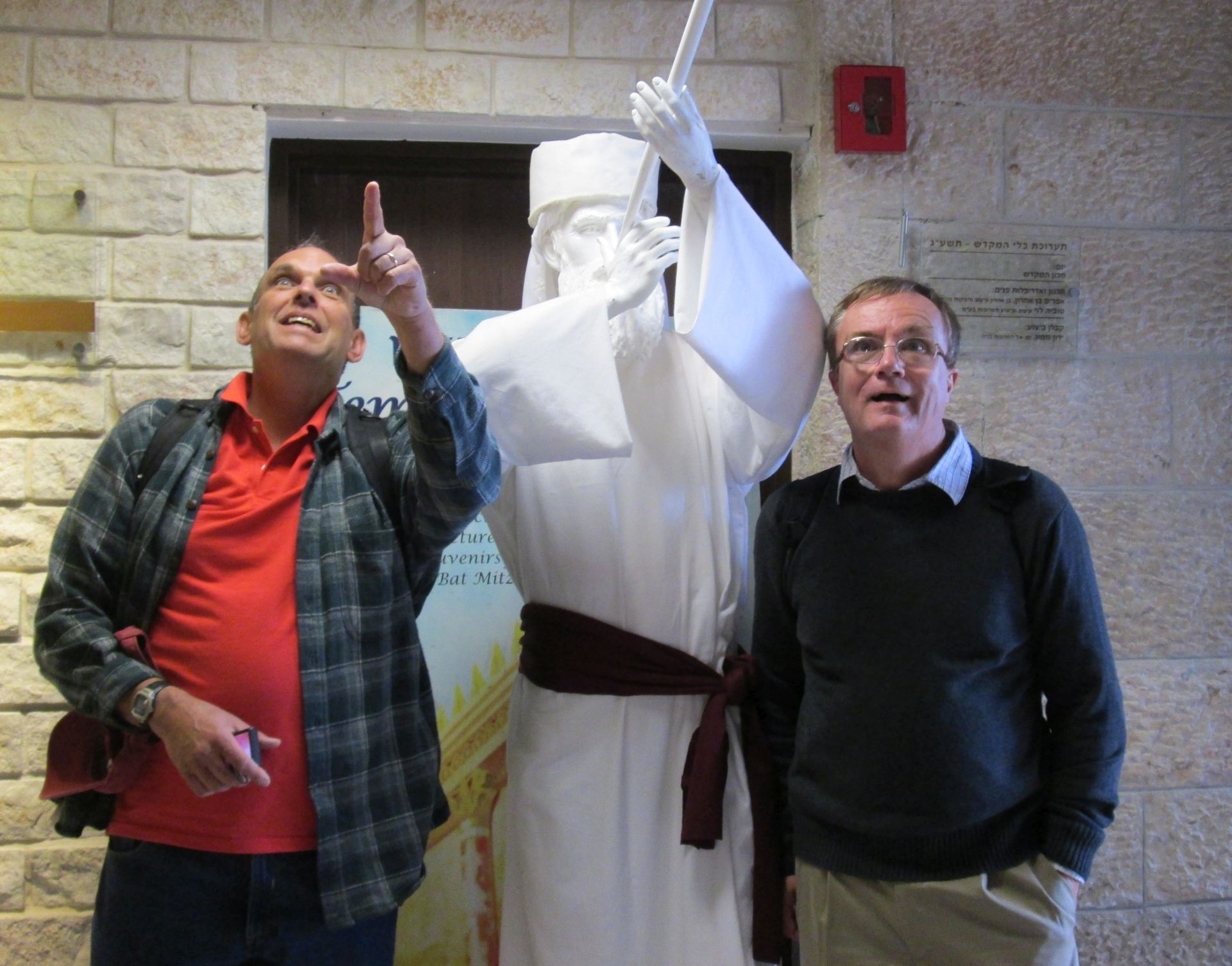






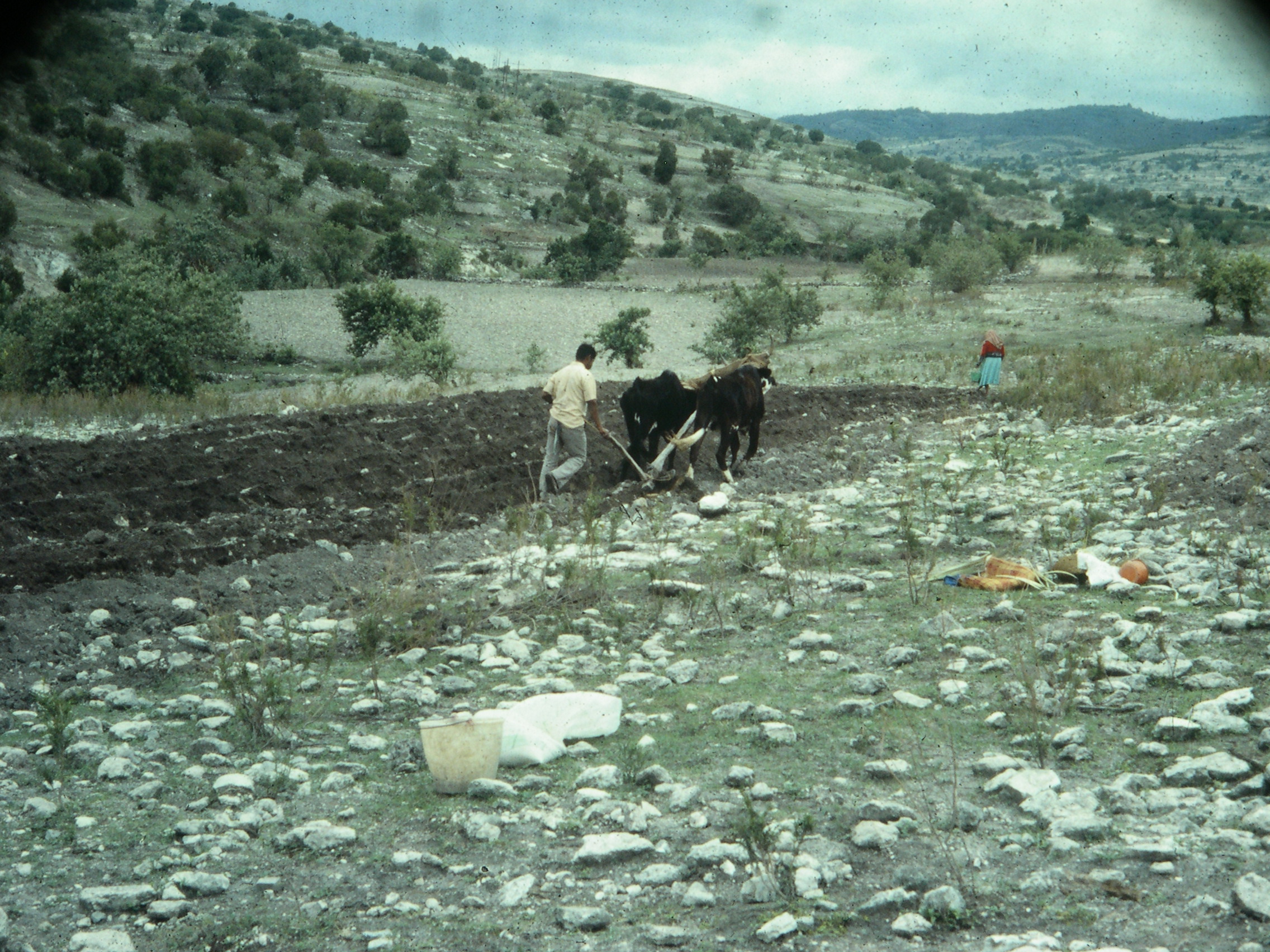 Trabajando en sus tierras rocosas
 La primera escuela
 El señor tejiendo sombreros
 El traductor enseñando a la gente
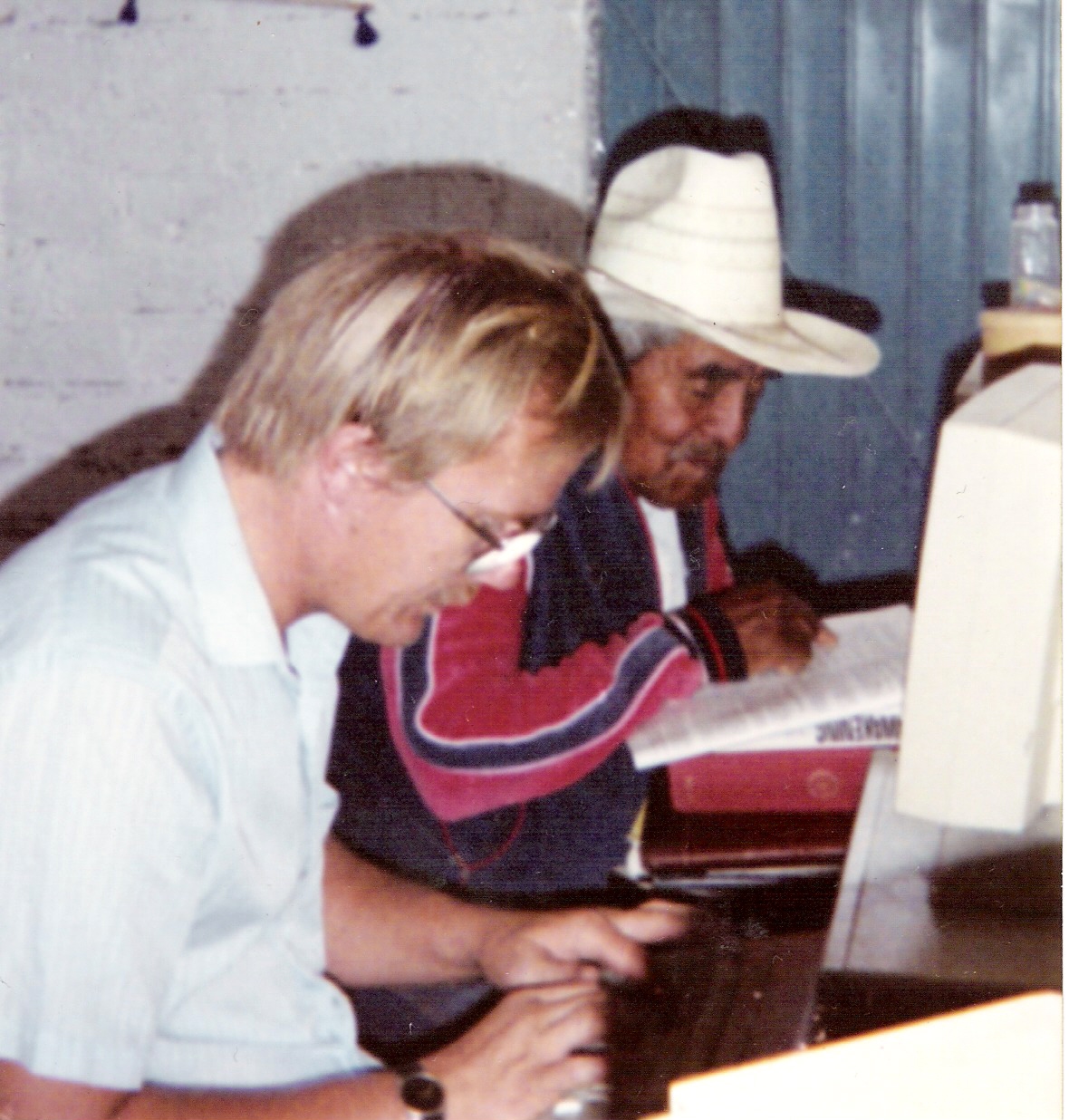 Trabajando con el lingüista
 Seeing Scripture anew